Repair Paths for Floor Scrubbers in Sydney
Check, diagnose, quote, repair: keep scrubber downtime short in Sydney.
Shop now
Picture two cleaning supervisors with the same problem on the same Monday: a battery scrubber leaving water trails across a supermarket aisle. The first books a workshop repair straight away and loses the machine for days. The second spends five minutes at the squeegee, finds a torn blade and a hose plug of grit, and is scrubbing again before the store opens. Both were reasonable. The difference was knowing which faults need a workshop and which need a spanner and a bucket.
This guide is written for the person standing next to the machine. It covers what commonly fails, how to decide whether a repair is worth booking, what Freshway's Sydney workshop says about quotes, turnaround and pick-up, and how to keep floors safe while a scrubber is away.
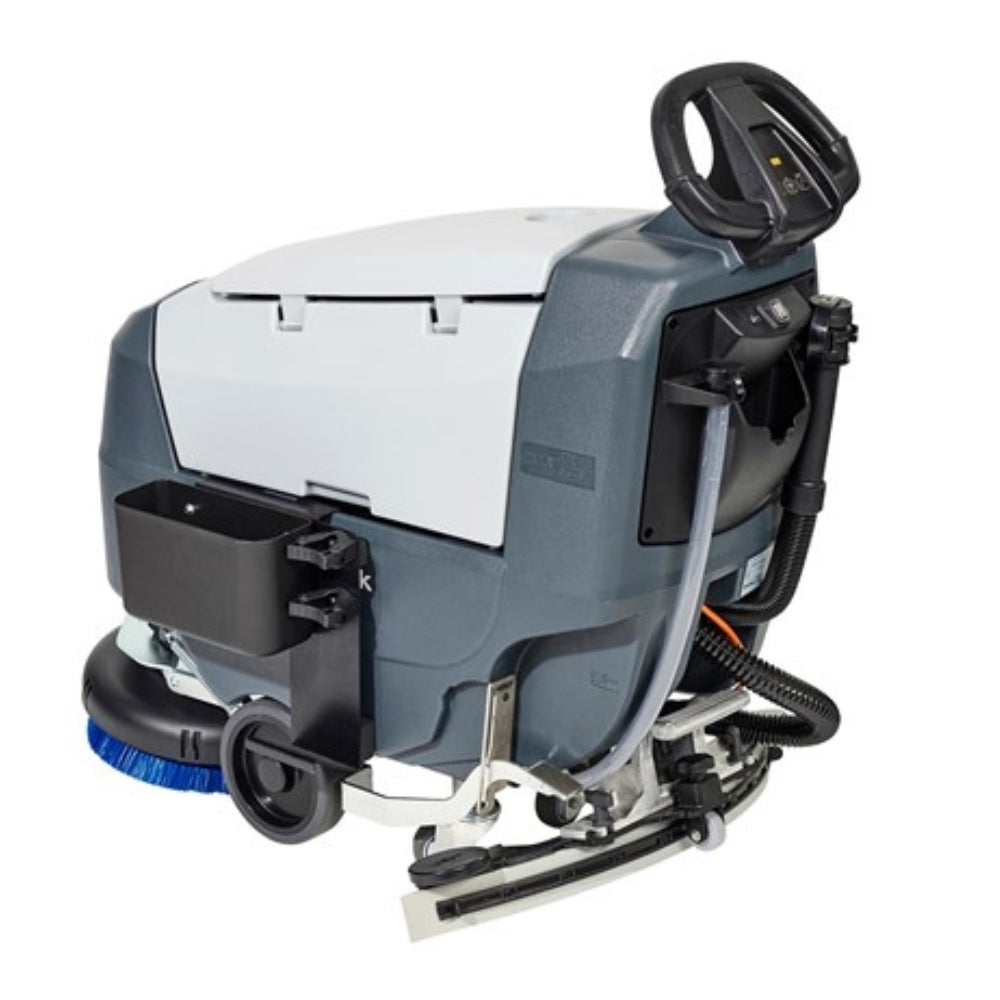
Floor scrubber repair Sydney: the short answer
Before booking a floor scrubber repair in Sydney, run the basic checks: squeegee blades, hoses, filters, tanks and the charging routine. If the fault remains, book a workshop diagnosis, approve the written quote before work starts, and plan a short-term cleaning method for the days the machine is away.
Freshway's Service & Repairs page lists floor scrubbers, polishers and sweepers among the equipment its Arncliffe workshop services, and names drive faults, battery issues, water recovery problems and control board faults as typical floor-machine jobs.
What usually fails, and what the operator notices
Most scrubber complaints start as a symptom, not a diagnosis. The table maps common symptoms to the area most likely involved, and splits what an operator can check from what belongs in a workshop.
| What the operator notices | Area most likely involved | Check on site first | Book the workshop if |
|---|---|---|---|
| Water trails or wet edges behind the machine | Squeegee and vacuum recovery | Blade wear or tears, hose blockage, full recovery tank, lid seal | Suction stays weak with new blades and a clear hose |
| No solution reaching the brush | Solution delivery | Tank level, solution filter, flow setting | Flow stays low with a clean filter and full tank |
| Short runtime or will not charge | Battery and charger | Charger connection, charging routine, battery indicator | Runtime keeps falling after full, uninterrupted charges |
| Brush will not turn or machine will not drive | Motors, drive or controls | Emergency stop, key or PIN, brush or pad fitted correctly | Nothing changes after a reset; note any error code |
| Error code or erratic display | Control electronics | Photo of the code; check the operator manual | The code returns after restarting |
The workshop column lines up with the checks Freshway lists for floor machines: motor load checks, solution flow testing, and battery and charger analysis.
Five checks before you call
These take less than ten minutes, and they clear a surprising share of "breakdowns".
- Squeegee. Look along the rear blade for nicks and rounded edges. Many machines let you flip or rotate the blade before replacing it.
- Recovery hose. Pull it off and look through it. Grit, cable ties and pad fragments collect at the bends.
- Tanks and filters. Empty and rinse the recovery tank, check the float, and clean the solution filter.
- Brush or pad. Confirm it is seated properly and not worn to the backing.
- Charging. Confirm the machine was charged fully and the charger matches the battery. SafeWork NSW's lithium-ion battery guidance says to use chargers designed for the battery type and voltage, and not to leave batteries charging unattended or for long periods.
Machines built for quick daily care make these checks easier. Freshway's listing for the Nilfisk SC401 describes a tool-free squeegee blade replacement system and easy-to-clean tanks, with a maintenance-free battery and onboard charger.

The diagnostic fee mindset
A diagnostic fee feels like paying for bad news. It is better seen as the price of a decision. Freshway's service page says a diagnostic fee applies and is credited toward the repair when the quote is approved, and that no work begins without customer approval of the quote. The final cost depends on the machine's condition, labour time and parts required.
From the supervisor's side, that makes the diagnosis useful even if you do not go ahead. You get a written view of what failed, what it will take to fix, and how long it should take. The same page says the workshop gives honest advice on repair versus replacement value, which is the question most owners of an older machine are really asking. For current fee and starting-rate details, check the service page itself.
Turnaround: what to expect
Freshway's repair FAQ says most repairs are completed in 2 to 5 business days, depending on parts availability, and the page also notes that many are completed within one week. Parts are the main variable. A common blade or brush is a different job from a control board for an older model.
Two habits shorten the wait:
- Describe the fault precisely when you book: what happens, when it started, and any error code. The four-step process on the service page begins with exactly that.
- Reply to the quote promptly. Work only begins once it is approved, so a quick answer keeps the job moving.
Once a repair is done, the service page describes a 30-day warranty for the same issue, starting from the ready-for-pick-up notification.
Prep for drop-off or pick-up
Freshway's workshop is at 208 Princes Highway, Arncliffe NSW 2205, with business hours listed as 8:00 am to 5:00 pm Monday to Friday and 8:00 am to 1:00 pm on Saturday. The service page also offers pick-up and delivery across Sydney for commercial clients, with fees that depend on location and equipment size. Whichever route you use, prepare the machine the same way.
- Drain both tanks. Empty recovery water to a sewer point, not an outside drain. The NSW EPA says washing runoff, including from work floors and equipment, must not enter any stormwater drains.
- Rinse the recovery tank and remove the brush or pad, so the technician sees the machine, not last week's soil.
- Photograph the fault, the error code and the serial plate.
- Send the charger with the machine if the complaint involves runtime or charging.
- Plan the lift. Walk-behind scrubbers are heavy; the SC401 listing gives 151 kg including batteries. SafeWork NSW's hazardous manual tasks guidance recommends mechanical lifting aids, so use a ramp or tail-lift rather than a two-person lift into a ute.
Temporary workarounds, and when to stop
While the scrubber is away, most sites fall back on a mop and bucket or a smaller machine. That keeps floors clean, but it changes the slip risk. SafeWork NSW's slips, trips and falls guidance asks whether employees have to walk on floors wet from washing and whether wet-floor signs are used correctly. Work in sections, sign every wet area, and keep mopping out of peak foot traffic.
A borrowed corded machine brings its own check. SafeWork NSW's page on electrical inspection and testing says plug-in equipment used where it is exposed to moisture must be regularly inspected and tested by a competent person, with AS/NZS 3760 setting out the methods. Check the test tag before it goes on a wet floor, and route the lead away from walkways; WorkSafe Victoria's slips, trips and falls hub lists removing electrical cords from walk areas as a control.
Stop using a faulty scrubber, and tag it out of service, if you see any of these:
- A battery that is swollen, hot, smoking or smells unusual.
- Damaged leads, plugs or exposed wiring on a corded machine.
- Water leaking into the electrical compartment.
- Brakes or drive that do not stop the machine reliably.
- Recovery so poor that the floor stays wet and slippery behind it.
Repair or replace?
A repair usually makes sense when the fault is a wear part, a single component or a battery issue on a machine that otherwise suits the site. Replacement is worth pricing when quotes keep coming back, parts are slow to source for an older model, or the site has changed. Compact machines for smaller floors and tight spaces, such as the Hako models in our Wizzard floor scrubbers collection, sit alongside larger battery machines in the main floor scrubbers collection. Our guide to battery vs corded floor scrubbers helps if the replacement question is also a format question.

Checklist for site supervisors
- Five-minute checks done: squeegee, hose, tanks and filters, brush or pad, charging.
- Fault described in writing, with photos and any error code.
- Machine drained, rinsed and tagged out if unsafe.
- Drop-off or commercial pick-up arranged; lifting plan in place.
- Quote reviewed and approved, or a repair-versus-replace decision made.
- Temporary cleaning method signed off, with wet-floor signs and section-by-section work.
- Any borrowed corded machine checked for a current test tag.
Quick-fire FAQ
Does Freshway repair floor scrubbers?
Yes. Its Service and Repairs page lists floor scrubbers, polishers and sweepers among the equipment serviced at its Arncliffe workshop.
How long does a scrubber repair take?
Freshway's repair FAQ says most repairs take 2 to 5 business days, depending on parts availability.
Will I get a quote first?
Yes. Freshway states that no work begins until the customer approves the quote.
Can Freshway collect the machine?
Pick-up and delivery is offered across Sydney for commercial clients, with fees depending on location and equipment size.
Next steps with Freshway
To book a diagnosis, use the form on the Service & Repairs page or call 1300 567 002. If your fleet also includes pressure washers, our guide to pressure washer repairs in Sydney covers that side of the workshop. For machines and supplies matched to your sector, start with shop by industry, and check each product page for current pricing and full specifications.