Schools and Childcare: Safer Vacuum Choices Backpack vs Canister
Match the vacuum to the room and the timetable, not just the dB figure.
Shop now
The quietest vacuum on this shortlist is not a backpack. Backpacks are usually pitched as the daytime option for schools, yet Freshway lists the Nilfisk VP300 HEPA TC canister at 57 dB(A) and the Nilfisk GD5 HEPA backpack at 62 dB(A). SafeWork NSW explains that every 3 dB increase doubles noise intensity, so a 5 dB gap is noticeable in a quiet library or sleep room.
Both machines sit far below the 85 dB(A) eight-hour workplace exposure level SafeWork NSW describes. For schools and childcare centres, then, the questions are disruption, dust and trip risk, not hearing damage. Brands measure noise in their own way, so treat small differences with care and compare like with like.
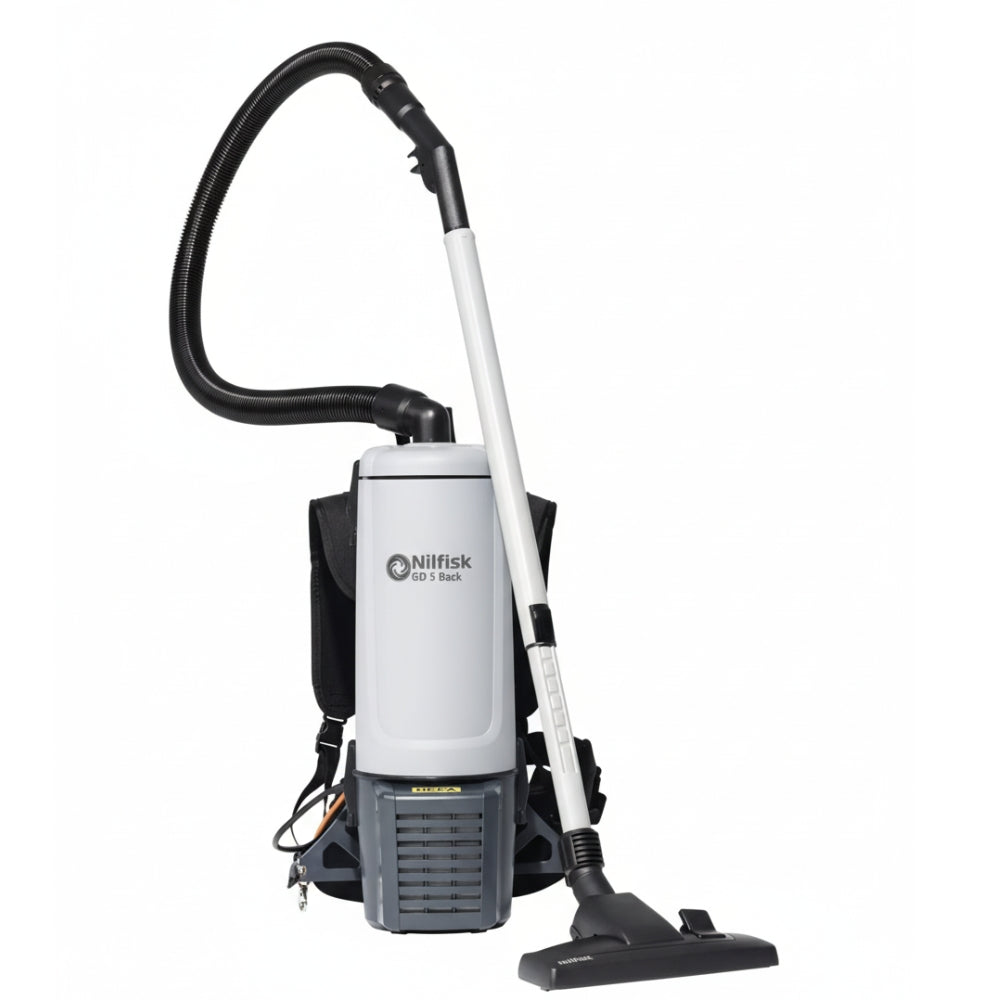
School commercial vacuum backpack: the short answer
A school commercial vacuum backpack suits classrooms, stairs, libraries and tight rows of desks, because the operator moves freely and nothing rolls behind. Canisters suit halls, corridors and staff areas where a larger bag and quiet running count. Most campuses need both, plus a HEPA filter and a plan for cords.
The rest of this guide works through the constraints that decide the mix. For the chemicals and consumables a campus needs, Freshway's school cleaning supplies guide is the better starting point.
Occupied campus constraints
A school or early learning centre is rarely empty. Children arrive early, stay late for care programs and move unpredictably between rooms. Cleaners often work in short windows before and after classes, and sometimes during them.
That is where backpacks earn their place. Tennant Australia says backpack vacuums are smaller and more manoeuvrable, so operators can work through busy areas without disturbing passers-by, and notes they are often used in offices and education facilities. It also gives the trade-off: because backpacks usually have only a floor nozzle, they may not lift dirt from carpet as well as an upright with revolving brushes. On heavily carpeted classrooms, factor that into the schedule.
Allergen and dust: HEPA helps, timing matters more
Both Nilfisk machines above are listed with H13 HEPA filters as standard. That helps, but it does not make vacuuming dust-free. ASCIA's allergen minimisation advice says HEPA vacuums may remove more allergens than other vacuums, yet all vacuuming increases the amount of dust mite allergen in the air. It suggests waiting 20 minutes before re-entering the room.
For a school or centre, that turns into a timing rule: vacuum rooms that children will use soon first, then leave them empty while you move on. ASCIA also notes that carpets can hold large amounts of house dust mite that vacuuming cannot completely remove, which is worth raising with the business manager when floors are next replaced.
If renovation dust is involved, the decision changes. Ask Freshway about dust-class machines rather than relying on a HEPA label.
Hall vs classroom: where each format wins
Classrooms are full of chair legs, bag hooks and desk clusters. A backpack goes where the operator goes and has no wheels to catch on furniture. Stairs between classroom blocks are backpack territory too.
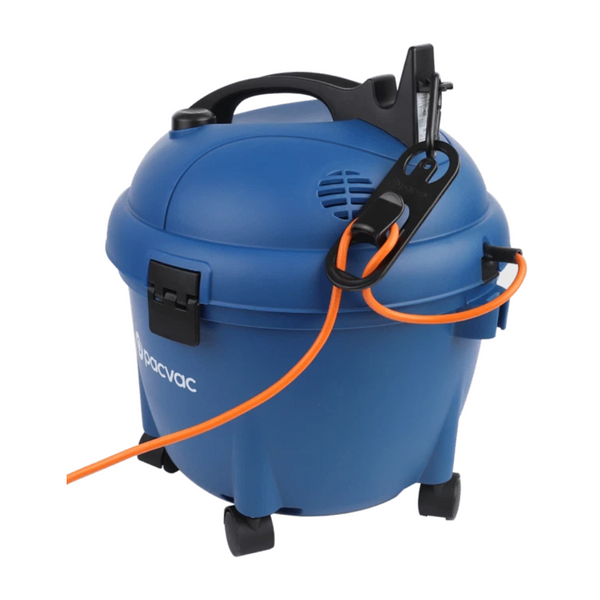
Halls, corridors and staff rooms reward a canister. Tennant Australia says canisters clean a variety of surfaces, which suits buildings with mixed floor types, and their small heads reach under desks and furniture. The VP300 HEPA TC carries a 10-litre dust bag against the GD5 HEPA's 5 litres, so on the same dust load it needs a bag change roughly half as often.
Reach matters in big rooms. The GD5 HEPA has a 15-metre cord and the VP300 HEPA TC a 10-metre detachable cable. In a 30-metre hall, a 10-metre cable means planning two or three outlet changes along the wall.
After-school windows
Battery machines remove the cord, but the window has to fit the battery. Freshway lists the Pacvac Velo Go cordless backpack with two 18 V batteries giving up to 50 minutes and a charge time of 1 hour 45 minutes. The Numatic NBV190NX Henry Cordless canister is listed at up to 80 minutes on low and 50 minutes on high, with 80% charge in 1 hour, and the battery is sold separately.
Do the sum for your window. A two-hour after-school clean on a 50-minute battery needs 120 ÷ 50 = 2.4 battery runs, so three charged sets or a corded machine for part of the shift. A single set cannot recharge in time.
In childcare, the window is often the gap while children play outside or the period after close. Build in ASCIA's 20-minute settle time before rooms are reopened.
Storage security
Machines, bags and chargers need a locked cleaner's room, not a corner of a classroom. Energy Safe Victoria advises using childproof plugs in unused power points and switching off and unplugging appliances when not in use. That advice is written for homes, and it applies just as well to a centre where children are close by.
Detachable leads help here. The VP300 HEPA TC is listed with a detachable cable, which can be stored and inspected separately. Cordless machines move the problem to the charger, so put the charging point inside the locked room and keep spare bags and filters on the same shelf.
Cord safety around children
Cords are the biggest practical difference between formats in a building full of children. SafeWork NSW slips, trips and falls guidance lists loose cords and cables among common sources of trip risk and suggests installing enough power outlets to eliminate cords on floors. WorkSafe Victoria advises removing objects such as electrical cords from walk areas in public and community services.
Energy Safe Victoria adds a child-specific point: do not let children touch or play with electrical cords. For a cleaner, that means never leaving a plugged-in machine unattended and coiling leads as soon as a room is done.
Vacuum cords are dragged, run over and coiled every day. SafeWork NSW says plug-in equipment used in conditions likely to damage it must be regularly inspected and tested by a competent person, with AS/NZS 3760 setting out the method and frequency. Keep the record or tag showing the next test date.
Recommended mixes
Start from the listed figures. All values come from Freshway product pages.
| Machine | Format | Listed noise | Filtration | Capacity | Power and reach | Weight |
|---|---|---|---|---|---|---|
| Nilfisk GD5 HEPA | Corded backpack | 62 dB(A) | HEPA H13 | 5 L | 15 m cord | 4.4 kg |
| Pacvac Velo Go | Cordless backpack | Under 69 dB | 4-stage Hypercone | 2.5 L | 2 × 18 V, up to 50 min | 4.5 kg with batteries |
| Nilfisk VP300 HEPA TC | Corded canister | 57 dB(A) | HEPA H13 | 10 L bag | 10 m detachable cable | 5 kg |
| Numatic NBV190NX Henry Cordless | Cordless canister | Not listed | Not listed in specs | 8 L | 36 V, up to 80 min on low (battery sold separately) | 7.7 kg with battery |
How those machines combine depends on the site:
| Site | Main machine | Support machine | Why |
|---|---|---|---|
| Small childcare centre | Quiet HEPA canister for playrooms and sleep rooms after close | Cordless backpack for quick spills while children are present | Low noise and no cord near children |
| Primary school | HEPA backpack on each classroom run | Canister for library, staff room and corridors | Desks and stairs favour backpacks; open rooms favour bags |
| Secondary school with hall | HEPA backpacks for classroom blocks | Canister for the hall and admin, plus a cordless unit for daytime | Long cord runs in the hall, mobility in blocks |

Checklist for site supervisors
- Listed dB(A) for each machine, compared model by model.
- HEPA filter fitted as standard, with spare filters and bags in stock.
- Cord length checked against outlet spacing in halls and corridors.
- Test and tag record current for every corded machine and charger.
- Battery runtime checked against the cleaning window, with spare sets if needed.
- Harness adjusted to each operator before the first backpack shift.
- A 20-minute settle time before children re-enter vacuumed rooms.
- Machines, chargers and leads locked away out of children's reach.

Frequently asked questions
Is a backpack vacuum quieter than a canister?
Not always. Freshway lists the Nilfisk GD5 HEPA backpack at 62 dB(A) and the VP300 HEPA TC canister at 57 dB(A). Compare the listed figures model by model.
Does a HEPA vacuum stop allergens in classrooms?
It helps but does not stop them. ASCIA says HEPA vacuums may remove more allergens, yet all vacuuming raises airborne dust mite allergen, so wait 20 minutes before re-entering.
Are cordless vacuums a good choice for childcare centres?
They take the cord off the floor, which suits rooms with children nearby. Check runtime against your cleaning window and keep chargers in a locked room.
How often do school vacuums need test and tag?
SafeWork NSW says it depends on the workplace and the risk, with AS/NZS 3760 setting out methods and frequency. Keep a record or tag showing the next test date.
Next steps with Freshway
List your rooms by type, the cleaning windows and where outlets sit. Then compare machines in the backpack vacuums and canister and barrel vacuums collections, and check each product page for current pricing. For hygiene, nappy-change and chemical storage rules in early learning settings, read Freshway's childcare centre cleaning supplies guide. The Arncliffe team can help confirm filters, bags and spare batteries before you order.