Freshway Pressure Washer Hub: Collections Parameters and Guides
Start with the job and the power outlet, then let the collection narrow itself.
Shop now
Two machines, two buyers, one search. Freshway lists the Kärcher HD 4/10 X Plus Classic at up to 145 bar and 400 litres per hour on a 1.8 kW single-phase motor. It lists the Kränzle KHD10/122TS at 120 bar and 10 litres per minute on a 15 amp plug. The Kärcher has more pressure. The Kränzle moves more water, and on the bar × L/min figure used in Australian safety guidance it comes out ahead: 1,200 against about 967.
Neither machine is right or wrong until you know the job, the outlet and the water supply. This hub is a map of where to go next: which Freshway range to open, which Knowledge primer to read first and where the job guides live, so you do not read the same explanation three times.
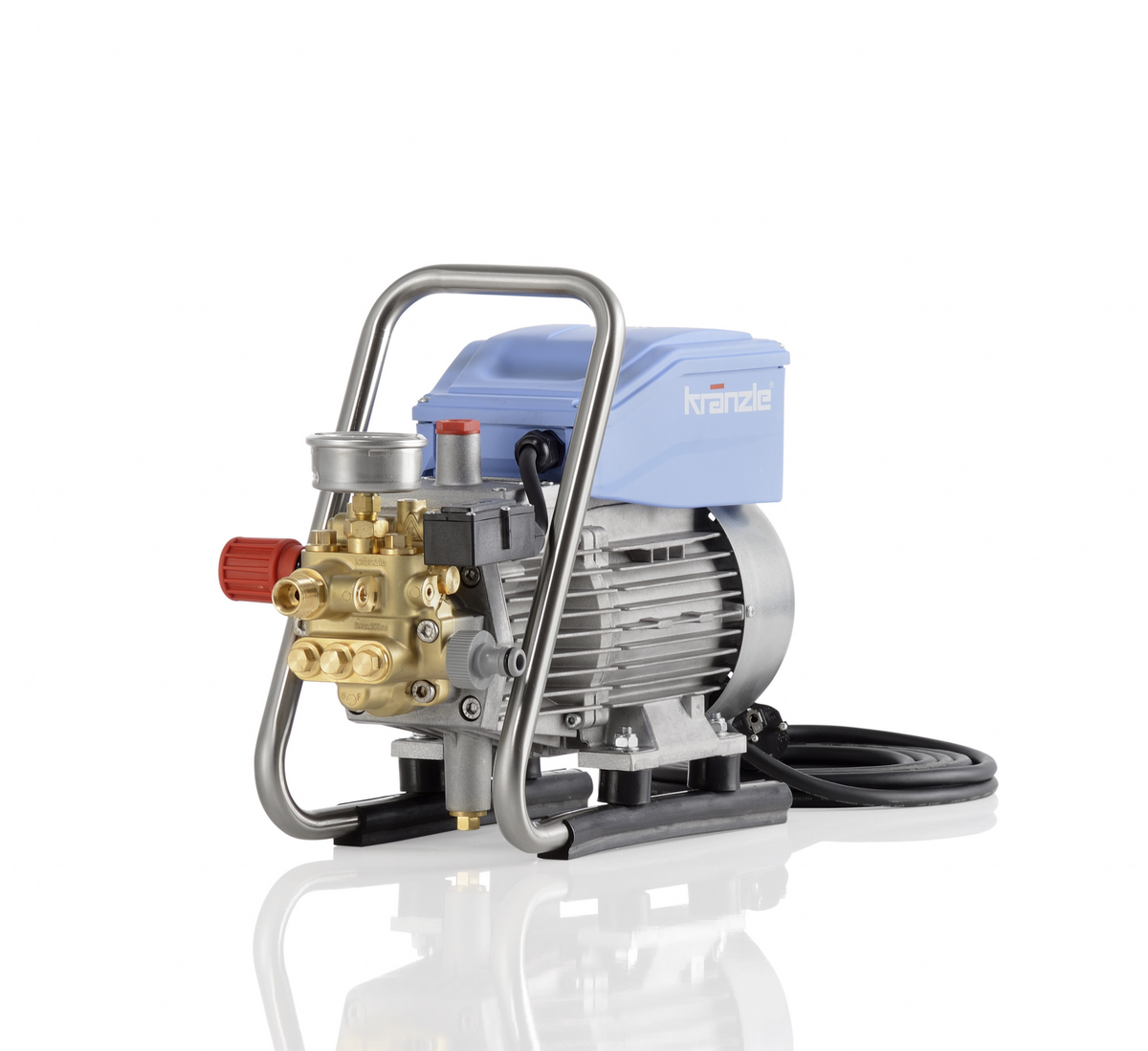
Freshway pressure washers collection: the short answer
The Freshway pressure washers collection covers electric, petrol and hot water machines plus accessories. Start with power on site and the soil you are removing, then compare working pressure, flow and bar × L/min. Use the Knowledge primers for the numbers and the Guides hub for job-specific advice before you shortlist.
Everything starts from the main pressure washers and cleaners collection. The ranges below sit under it in the site menu.
Collection map: where each machine type sits
Each range overlaps a little, because a hot water machine can also be electric and commercial. Use the "start here if" column to pick your first stop.
| Range | What it holds | Start here if | Example on Freshway |
|---|---|---|---|
| Electric | Kärcher K-series home machines through to 15 A and three-phase commercial units | Mains power is within hose reach | Kränzle KHD10/122TS: 120 bar, 10 L/min, 15 A plug |
| Petrol | Engine-driven cold water machines from DeWalt, Kärcher, B.A.R and others | There is no suitable power at the job | DeWalt DXPW4415: 4,400 PSI maximum, 15 L/min, 420cc engine |
| Hot water | Machines with an onboard burner, electric or engine-driven | You are removing oil, grease or heavy soil | Kränzle CA11-130: 130 bar, 11 L/min, 240 V 15 A, diesel burner |
| Commercial | Machines for daily trade, fleet and contract use across power types | The machine will work most days | Kärcher HD 4/10 X Plus Classic: up to 145 bar, 400 L/h |
| Accessories | Hoses, nozzles, guns, lances, surface cleaners and foam gear | You are extending or replacing a kit | Match parts to the machine's rated pressure and flow |
The accessories note is not a formality. WorkSafe Victoria, summarising AS 4233.1, says operator training should cover why all parts, fittings and hoses must be the right size, compatible and rated equal to or above the equipment's maximum operating pressure.
Parameter primers to read before you shortlist
Four Knowledge articles carry the numbers, and each does a different job. Read them in this order:
- Units first. Pressure washer parameters explained converts bar, PSI and L/min and shows why bar × L/min appears in safety documents.
- Then the trade-off. Flow rate vs pressure matches jobs to pressure or flow and covers water supply and 10 A outlets.
- Then the comparison. The commercial pressure washer spec comparison framework turns those numbers into a weighted scorecard for your job, power source, heat option, accessories and service.
- Then the pump. The framework links on to the pump types guide, which explains axial and crankshaft drives and time in bypass.
If you only have time for one, use the comparison framework with your own job details, and come back to the units article when a figure needs converting.
Scenario posts: jobs, surfaces and faults
Job-specific advice lives in the Freshway pressure washers guide. It groups the older articles by question: which machine fits the job; electric, petrol, diesel or hot water; nozzles, hoses and accessories; what to do when a machine stops working; working safely; and cleaning specific surfaces such as driveways, pavers, timber decks and building exteriors.
Two Australian rules apply to almost every scenario there:
- Asbestos. A SafeWork NSW safety alert says never to use high-pressure water or compressed air on asbestos products, and to use a licensed asbestos removalist. Older fibre-cement roofs and walls need checking before anyone quotes a wash.
- Runoff. NSW EPA says washing runoff must not enter stormwater drains. Washing of vehicles, equipment or work floors should be confined to a wash bay draining to sewer, which needs council approval through a Trade Waste Agreement.
B2B buying: trade accounts and repeat orders
Contractors and fleet operators usually buy more than one machine and a steady flow of hoses, nozzles and chemicals. Freshway's B2B credit account page describes 30-day payment terms for approved accounts, credit limits on approval, invoice-based ordering with purchase order references, and help with recurring supply, bulk orders and safety data sheets. The application asks for business details, including an ABN.
One practical tip for fleets: standardise fittings. The KHD10/122TS listing, for example, uses a D12 quick-release plug-in system, so guns and hoses on the same system can move between machines. Ask about compatibility before mixing brands on one site.
Repairs and servicing in Sydney
Freshway's Service & Repairs page lists pressure washers among the equipment its Sydney workshop handles, covering pressure loss, leaks, overheating, blocked nozzles and electrical faults, with pump testing and pressure diagnostics. Customers get a quote before work begins, repairs carry a 30-day warranty for the same issue, and commercial clients across Sydney can use pick-up and delivery. The page also names Freshway an official DeWalt repair partner.
That matters for compliance as well as uptime. WorkSafe Victoria's summary of AS 4233.1 says only the maker, its agent or competent persons should repair or maintain high-pressure water jetting equipment.
Starter path: from job to shortlist
Work through these steps before opening any product page:
- Name the soil. Pumps Australia says cold water may not shift oil and grease, which harden on contact with cold, and that hot water machines cut through heavy grease and caked-on mud. Grease points you to the hot water range.
- Check the power. Pumps Australia notes that single phase (240 V) and three phase (415 V) are the common supplies in Australia. The HD 4/10 X Plus Classic at 1.8 kW draws about 7.5 A at 240 V (1,800 ÷ 240), while the KHD10/122TS and CA11-130 are listed for 15 A plugs. No power at the job points to petrol.
- Work out the class. Multiply bar by L/min. WorkSafe Victoria gives Class A as 800 to 5,600 bar litres per minute and Class B as above 5,600. Class B operators must be trained through a registered training organisation.
- Check the water. Pumps Australia's rule of thumb is twice the machine's flow at the tap, so 20 L/min for a 10 L/min machine. Its bucket test: a 10-litre bucket filling in 15 seconds gives (60 ÷ 15) × 10 = 40 L/min.
- Plan the electrics. SafeWork NSW says plug-in equipment exposed to conditions such as moisture must be regularly inspected and tested by a competent person, under AS/NZS 3760. A pressure washer qualifies.
- Shortlist and confirm. Pick two or three machines, check each product page for current pricing, and ask Freshway's Arncliffe team about fittings and service parts.
Here is how the four example machines come out on the class sum, using each listing's figures:
| Machine (Freshway listing) | Pressure | Flow | bar × L/min | Power |
|---|---|---|---|---|
| Kärcher HD 4/10 X Plus Classic | Up to 145 bar | 400 L/h (6.7 L/min) | about 967, Class A | 1.8 kW single phase |
| Kränzle KHD10/122TS | 120 bar | 10 L/min | 1,200, Class A | 240 V, 15 A plug |
| Kränzle CA11-130 (hot water) | 130 bar | 11 L/min | 1,430, Class A | 240 V, 15 A, diesel burner |
| DeWalt DXPW4415 (petrol) | 4,400 PSI maximum (about 303 bar) | 15 L/min | about 4,550, Class A | 420cc petrol engine |
The DeWalt figure uses its maximum pressure converted at 14.5 PSI per bar (4,400 ÷ 14.5 ≈ 303), so its working figure will be lower. All four sit in Class A.

Brand paths: Kärcher, Kränzle, Nilfisk, DeWalt and more
- Kärcher runs from the home K-series to the commercial HD and hot water HDS machines. Kärcher Australia's K-series comparison chart lists a maximum feed temperature of 40 °C for the K2 to K5 and 60 °C for the K7, and a one-year trade warranty on the K5 and K7 only. Freshway's listing for the HD 4/10 X Plus Classic describes automatic pressure relief in bypass.
- Kränzle machines on Freshway include compact cold water units, wall-mounted units and the Therm hot water range. The KHD10/122TS listing describes a Total Stop system that shuts the motor down when the trigger is released.
- Nilfisk covers cold water MC models and hot water MH and Magnum machines, from compact units with built-in hose reels to industrial three-phase machines.
- DeWalt has several petrol models in the range, alongside B.A.R and PowerShot machines with Honda engines.
Sticking with one brand can make sense for fleets, because hoses, guns and service parts may carry across. For a single machine, start from the job and let the brand follow.

Frequently asked questions
Isn't the highest PSI pressure washer the strongest cleaner?
Not by itself. Freshway lists the Kärcher HD 4/10 X Plus Classic at up to 145 bar and the Kränzle KHD10/122TS at 120 bar, yet the Kränzle's bar × L/min is higher: 1,200 against about 967.
Can a home K-series machine do commercial work?
It can manage light jobs, but check the warranty terms first. Kärcher Australia's K-series chart lists a one-year trade warranty on the K5 and K7 only.
Can I feed hot tap water into a cold water pressure washer?
Only within the listed maximum feed temperature. Kärcher Australia's chart gives 40 °C for the K2 to K5 and 60 °C for the K7. For grease, choose a hot water machine.
Isn't training only needed for big Class B machines?
No. WorkSafe Victoria's summary of AS 4233.1 says operators should be trained by a competent person, with Class B training through an RTO and refreshers at least every two years.
Next steps with Freshway
Note the soil, the outlet and the tap flow at your main job, then open the pressure washers collection and filter to the matching range. If two machines look similar, run them through the comparison framework above. Check each product page for current pricing, and call the Arncliffe team to confirm fittings, accessories and service before you order.