Pressure Washing Solar Panels Safely on Australian Commercial Roofs
Keep the jet off the modules: isolate, brush gently and follow the panel maker.
Shop now
The quote said "pressure clean roof and solar array". The contractor arrived with a 200-bar machine and a turbo nozzle, cleaned the metal roof well, then swept the same jet across forty panels. Two weeks later the owner's solar installer found water marks inside a junction box and lifted edge sealant on a corner module. Nobody could say which pass did it.
Can you pressure wash solar panels on a commercial roof?
Pressure washing solar panels on commercial roofs in Australia is usually the wrong method. Do not aim a high-pressure jet at modules. Follow the panel maker's cleaning instructions, isolate and inspect the system first, and if a pressure washer is used at all, run it as a low-pressure water supply to a soft rotary brush.
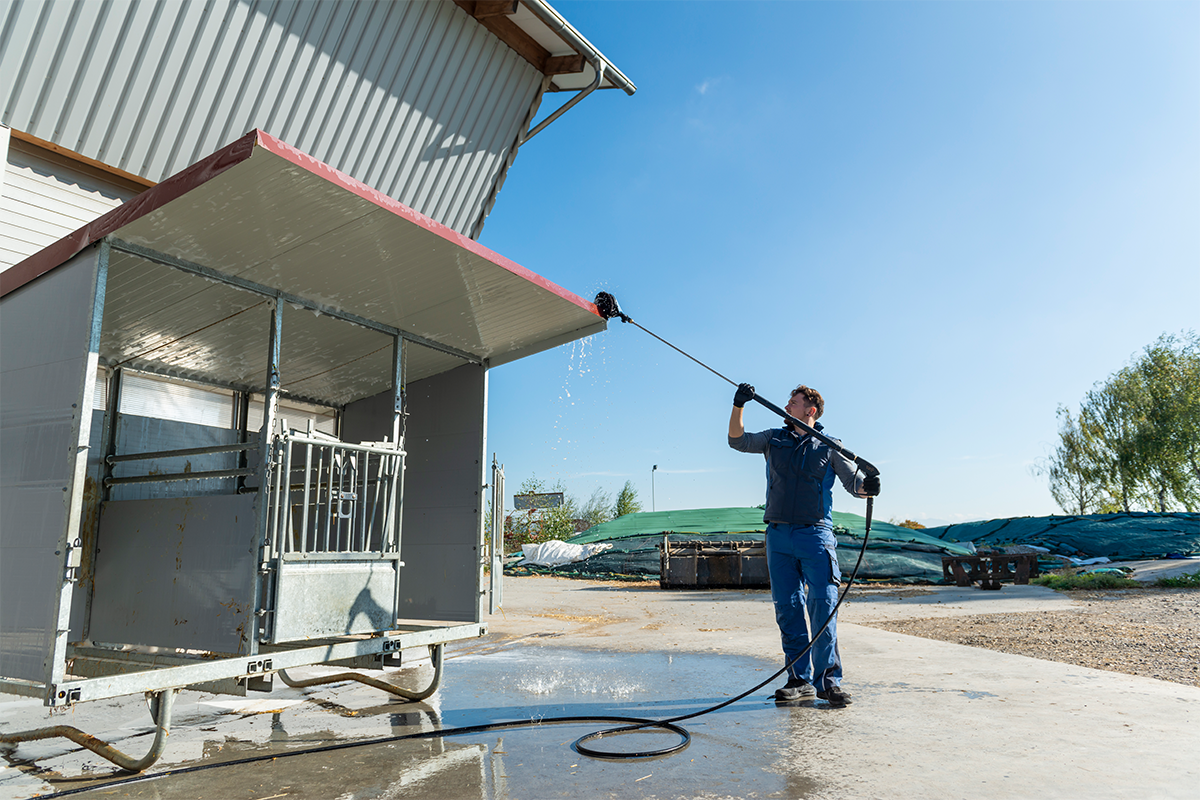
RACV's guide to cleaning solar panels safely says plainly not to use a pressure washer because of the risk of damage, and recommends a soft brush or a light hose spray. Commercial arrays are bigger and higher, but the glass, seals and junction boxes are the same kind of components. This guide is for facility managers and buyers deciding whether a solar clean belongs in a pressure-washing contract at all, and what equipment to accept on site if it does.
Why high bar damages panels and seals
A pressure washer concentrates force on a small area. That is what makes it useful on concrete and roof sheeting. On a module, the same jet can drive water past frame seals and cable glands, erode edge sealant, and chip anti-reflective coatings. Warranty terms are set by each panel maker, so a single clean with the wrong tool can become a warranty argument. The default answer for the array is lower pressure, more water volume and gentle agitation.
Low-pressure and high-purity approaches
There are three practical methods for commercial arrays:
- Soft brush and hose. A soft-bristle brush on a pole with mains-pressure water. Slow but low risk.
- Purified water and a water-fed pole. Deionised water rinses off without spotting. The Freshway guide to water-fed pole systems covers reach and water quality.
- Rotary brush on a pressure washer. The machine's flow spins a soft brush head. The jet does not hit the glass; the bristles do the work.
Detergents are a separate decision. Many panel makers ask for water only, so do not add chemical unless the cleaning instructions allow it.

Reading the brush numbers: a short derivation
Rotary brushes publish a flow window and a pressure ceiling, and both have to match the machine.
| Listed figure on Freshway | Value | What it means on the roof |
|---|---|---|
| Kranzle 500 mm rotary washbrush maximum operating pressure | 20 bar (2,000 kPa) | The brush is a low-pressure tool; it is not a jet |
| Kranzle 500 mm and 1000 mm brush flow range | 10 to 20 L/min | Below 10 L/min the head may not spin properly |
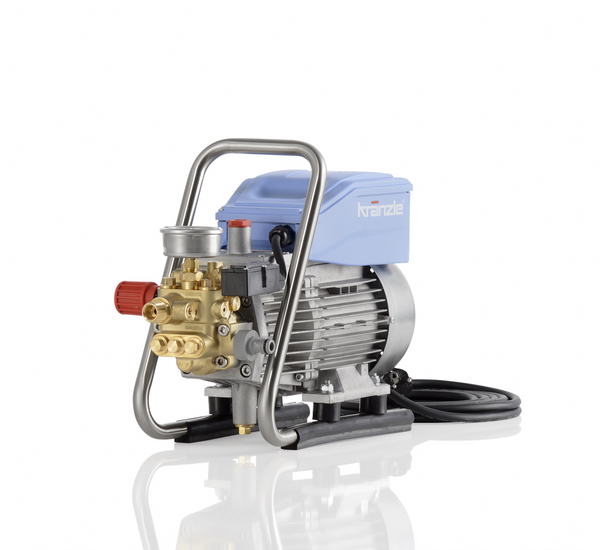
| Kranzle K1152TST electric washer | 120 bar, 10 L/min | Flow sits at the bottom of the brush window |
| Brush maximum water temperature | 35 °C | Run hot-water machines cold for brush work |
The arithmetic is simple: 120 bar divided by 20 bar is 6, so the machine's listed pressure is six times the brush's listed ceiling. That gap is the point. The brush is designed to use the machine's flow, not its pressure, and the jet never reaches the glass. Before buying, confirm the coupling: both Kranzle brushes are listed with a D12 quick-connect inlet and need a D12 trigger gun.
Height and fall controls
Most commercial arrays sit on roofs, which makes the clean a work-at-height task before it is a cleaning task. SafeWork NSW sets out the duties for working at heights, including controls such as edge protection, anchor systems and safe access. Never stand, kneel or rest equipment on modules. Ask the building owner for the roof access plan, anchor certification and any fragile-roof areas before you price the job. A 1000 mm lance with an adjustable head lets the operator reach rows from a walkway instead of leaning over the array.
Electrical isolation mindset
Solar modules generate voltage whenever light falls on them, so water and damaged components are a real hazard. The WA Government's solar PV systems guidance says the system should be shut down before anyone accesses the rooftop, gutters or panels, and that repairs are for licensed electricians. On a commercial site, that means the cleaning contractor coordinates isolation with the site's solar maintainer, does a visual check for cracked glass or exposed cable before wetting anything, and stops if damage is found. SafeWork NSW's electrical and power pages cover the wider duties for plug-in equipment such as the pressure washer itself.
Soiling types in Australian climates
Inland dust, coastal salt, pollen, bird droppings and smoke residue all appear on Australian arrays. Light dust often rinses off with water and a soft brush. Bird droppings and baked-on residue need dwell time with water and gentle agitation, not more pressure. Check the Bureau of Meteorology's current climate summaries when planning: after a long dry spell, a rinse is more likely to help than straight after heavy rain.
When not to wash
Postpone the clean if any of these apply:
- The system cannot be isolated or the solar maintainer has not confirmed the shutdown.
- Visual checks show cracked glass, lifted frames, scorch marks or exposed cable.
- The modules are hot from midday sun and the only water available is cold.
- Wind, rain or roof conditions make the access plan unsafe.
- The panel maker's instructions prohibit the method you were asked to use.
Spec accessories for roofs
If a pressure washer is part of the roof job, choose the accessories first and the machine second. A rotary brush with the right flow window and lance length, a hose long enough to keep the machine on the ground or a safe deck, and a trigger gun with the matching coupling are the core kit. Compare options in the pressure washer accessories collection, and keep the high-pressure nozzles for the roof sheeting and gutters away from the array. WorkSafe Victoria's high-pressure water jetting safety alert is a useful reminder of injury risk from the jet itself.

Contractor briefing checklist
Use this list when a solar clean is added to a pressure-washing scope:
- Panel maker and model, with its cleaning instructions attached.
- Isolation arranged with the solar maintainer, and who confirms it on the day.
- Roof access plan, anchors and fall protection confirmed.
- Method stated: water only or approved detergent, brush or water-fed pole, no jet on modules.
- Machine flow and coupling checked against the brush listing.
- Stop rule for damage, heat or weather.
For the rest of the pressure-washing scope, the Freshway commercial pressure washing safety checklist covers PPE, exclusion zones and water run-off.
Frequently asked questions
Is a low-pressure setting on a normal lance safe for panels?
Not necessarily. A narrow jet still concentrates force near seals and edges. Use a soft rotary brush or a water-fed pole, and follow the panel maker's instructions.
Can we use a hot-water pressure cleaner with the rotary brush?
Only with the burner off. The Kranzle brushes are listed with a 35 °C maximum water temperature, and hot water on cool glass can stress the panel.
Do we need the solar installer on site?
You need the system isolated and checked by someone competent to do it. On commercial sites that is usually the solar maintainer or a licensed electrician.
Should detergent go on solar panels?
Only if the panel maker's cleaning instructions allow it. Many specify water only, so check before adding any chemical.
Next steps with Freshway
Confirm the method with the building owner and solar maintainer first, then match the accessory to the machine. Check flow, couplings and temperature limits on each product page in the electric pressure washer and accessories ranges, and contact Freshway if you need help pairing a brush with an existing machine.