Sydney Repairs: When Parameter Symptoms Mean Book a Service
Know which symptoms are a nozzle swap and which mean book the workshop.
Shop now
Three questions decide most pressure washer repair bills: how long the machine ran after the fault appeared, whether the pump ran dry or hot, and whether anyone adjusted something they should not have. A machine stopped at the first sign of trouble is usually a seal and valve job. One pushed through a week of leaks and knocking can need a pump rebuild.
Our earlier post on pressure washer repairs in Sydney introduces our service. This guide is for engineers and supervisors who need to decide, from symptoms, when to stop a machine and book it in, and what typically makes up the repair.
Pressure washer repair in Sydney: the short answer
Book a service when a pressure washer knocks, leaks water or oil from the pump, cycles on and off with the trigger closed, overheats, trips power, or loses pressure after inlet, filter and nozzle checks. Stop using it straight away; running a damaged pump usually turns a seal repair into a larger rebuild.
Symptom to cause map
| Symptom | Likely area | Safe first check | Book service if |
|---|---|---|---|
| Low pressure, steady | Nozzle, inlet supply | Swap nozzle, bucket test tap | Still low after checks |
| Surging or pulsing | Inlet air, unloader, valves | Inlet filter, hose washers | Continues with good supply |
| Water dripping under pump | Seals or O-rings | Note where it drips | Any visible pump leak |
| Oil in water or milky oil | Oil seals | Check oil sight glass | Always |
| Motor cycles with gun shut | Leak downstream or valve fault | Look for drips at fittings | No external leak found |
| Knocking or rattling | Valves, cavitation, bearings | Stop machine | Always |
| Trips RCD or breaker | Motor, switch, lead | Try a known-good circuit once | Repeats |
Our article on why a pressure washer pulses or surges explains the pulsing row in more detail.
Read the table left to right. The safe first check is something an operator can do on site in a few minutes with the machine stopped and pressure released. If that check does not clear the symptom, the fault is inside the machine, and more site-level fiddling usually adds damage rather than finding the cause.
Safe stop rules
Stop and tag the machine out of service when any of these appear:
- Oil in the water or water in the oil.
- Pump knocking.
- Hose or fitting damage near the gun.
- Electrical smell, heat at the plug, or repeated RCD trips.
SafeWork NSW's machinery and equipment guidance requires faulty plant to be removed from use until repaired. WorkSafe Victoria's high pressure water jetting alert explains why damaged hoses and fittings are a serious injection risk. For electrical faults, SafeWork NSW's electrical inspection and testing page applies.
What makes up a repair
Without quoting prices, which change, a pressure washer repair usually includes:
- Diagnosis time: shorter when the fault is well described.
- Parts: seals, O-rings, valves, unloader parts, hoses, fittings.
- Labour: pump strip-down and reassembly, testing.
- Extra damage: cracked manifolds or scored pistons if the machine ran dry or hot.

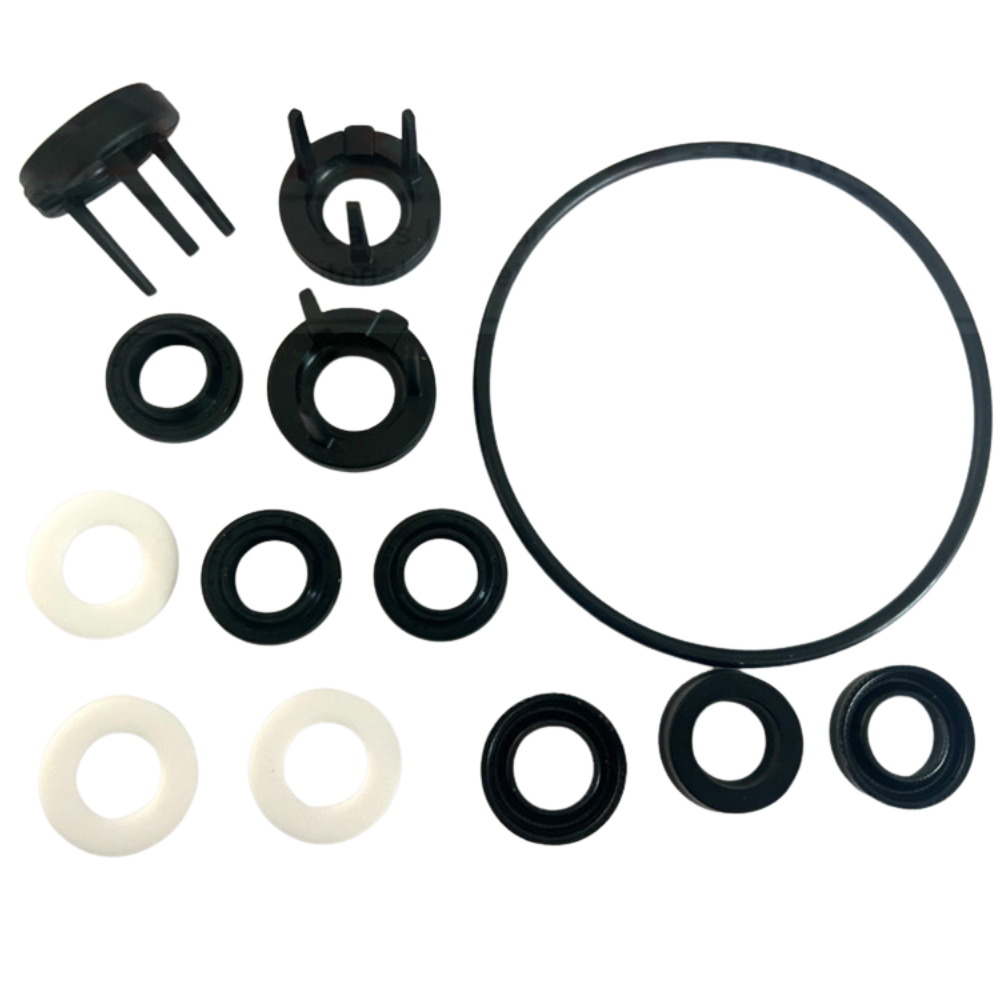
Seal kits are a typical first repair. Freshway lists the Karcher K7 pump seal kit (4.100-834.0), a set of genuine high-pressure seals and O-rings for K7 series pumps. A kit like this addresses leaks and pressure loss caused by worn seals; it will not fix a cracked manifold, which is why stopping early matters. For current pricing, check the product page.
Preparing the machine for service
Jetblaster's guide on what to tell your repair technician recommends noting whether the machine moved to another tap or supply, or had a different hose, gun, lance or nozzle fitted. Before dropping off the machine:
- Write the symptom in one or two sentences.
- Note when it started and what changed (new site, new hose, new nozzle).
- Bring the hose, gun and lance used when the fault appeared.
- Drain water; for petrol units, note fuel and oil levels.
- Photograph leaks or damage.
Temporary workarounds that are acceptable
Some fixes are fine while a service is booked:
- Swapping a worn nozzle for a new one of the correct size.
- Cleaning or replacing an inlet filter.
- Replacing a damaged hose washer.
- Using a shorter hose if a joiner is leaking.

Fittings must match the machine. Freshway lists the Kärcher hose joiner (4.403-002.0) with M22 x M22 threads rated to 160 bar and 60 °C; that rating rules it out for higher-pressure or hot-water machines. Never use tape, clamps or mismatched adaptors to stop a high-pressure leak.
What to expect from a service
A workshop will usually diagnose, quote, then repair once approved. Under Australian Consumer Law, products and repair services come with consumer guarantees; business.gov.au summarises Australian Consumer Law for businesses. Keep invoices with the machine's service record.
Our service and repairs page explains how to book a repair with Freshway in Sydney.
Keeping a service history
A short service record on each machine saves time at every repair. Log operating hours or job counts, oil changes, seal kits fitted, nozzles replaced and each fault with its date. Technicians can then see whether a symptom is new or recurring, and managers can see when a machine is costing more in repairs than it returns in work.
Mistakes that raise the bill
- Running a leaking pump "until the end of the job".
- Turning up the unloader to chase lost pressure.
- Running the pump without water.
- Ignoring milky oil.
- Fitting adaptors that are not rated for the machine.
Frequently asked questions
Is low pressure always a pump problem?
No. A worn nozzle, low inlet supply or blocked filter is more common. Check those before booking a pump repair.
Can I keep using a pressure washer that leaks under the pump?
It is better to stop. Leaks usually mean worn seals, and running on can damage valves and pistons.
What should I bring to the service?
The machine, the hose, gun and lance used when the fault appeared, and a short written description of the symptom.
Why did the repair cost more than a seal kit?
If the pump ran dry, hot or damaged for long, parts beyond the seals may need replacing.
Next steps with Freshway
Print the symptom table for each vehicle, keep spare nozzles and filters, and book in early. Spare parts sit under pressure washer accessories; check each product page for current pricing and full specifications.