Measuring Slip Resistance After Scrubbing on Australian Hard Floors
Prove floors are safe after scrubbing with residue, dry and traction checks.
Shop now
A school hall in western Sydney reopened twenty minutes after a scrubber-dryer pass looked "bone dry" under LED lights — then logged three same-level slips before lunch. Measuring slip resistance after scrubbing is not a laboratory hobby for Australian hard floors; it is how supervisors prove the aisle is ready for traffic when residue, overdosing and incomplete drying hide in plain sight.
Why clean floors can still be slippery
Slip resistance after floor scrubbing Australia means verifying traction after solution, pad soil and drying are controlled — not trusting a glossy or visually dry look. Use low-residue chemistry, confirm the squeegee left no film, delay reopening until a practical dry check passes, and call specialists when AS 4586 testing is required.
SafeWork NSW lists contaminants such as water among common causes of slips, trips and falls on the same level. WorkSafe Victoria's slips, trips and falls guidance and WA's WorkSafe slips pages push the same operational message: cleaning is part of slip control, not a free pass to reopen early.
Residue and overdosing
Detergent left behind is a traction problem dressed as shine. Auto-scrubbers that meter too rich, or operators who tip "a bit extra for the corners", leave a surfactant film that looks clean until a leather sole hits it. Prefer concentrates with published dilution bands and low foam suited to machines.
Agar Superforce lists dilution from about 1:160 for light soil to 1:50 for heavy soil on auto-scrubbers and mopping — stay inside the label, not above it. Agar Fresh Mop lists roughly 1:120 for general cleaning and 1:50 for heavy soil as a daily maintainer on sealed hard floors. WorkSafe Victoria's hazardous substances advice still applies to storage and SDS access in the cleaners' room. Confirm system intent on Agar's Australian site alongside the Freshway listings.
Drying verification
Visual dryness under cool LED lighting lies. Build a three-point check before removing signage:
- Hand wipe with a clean dry microfibre — any transfer means wait or re-scrub with clear water.
- Walk the path in clean rubber-soled shoes and note any skate or squeal.
- Inspect low spots, expansion joints and under radiator edges where squeegees skip.
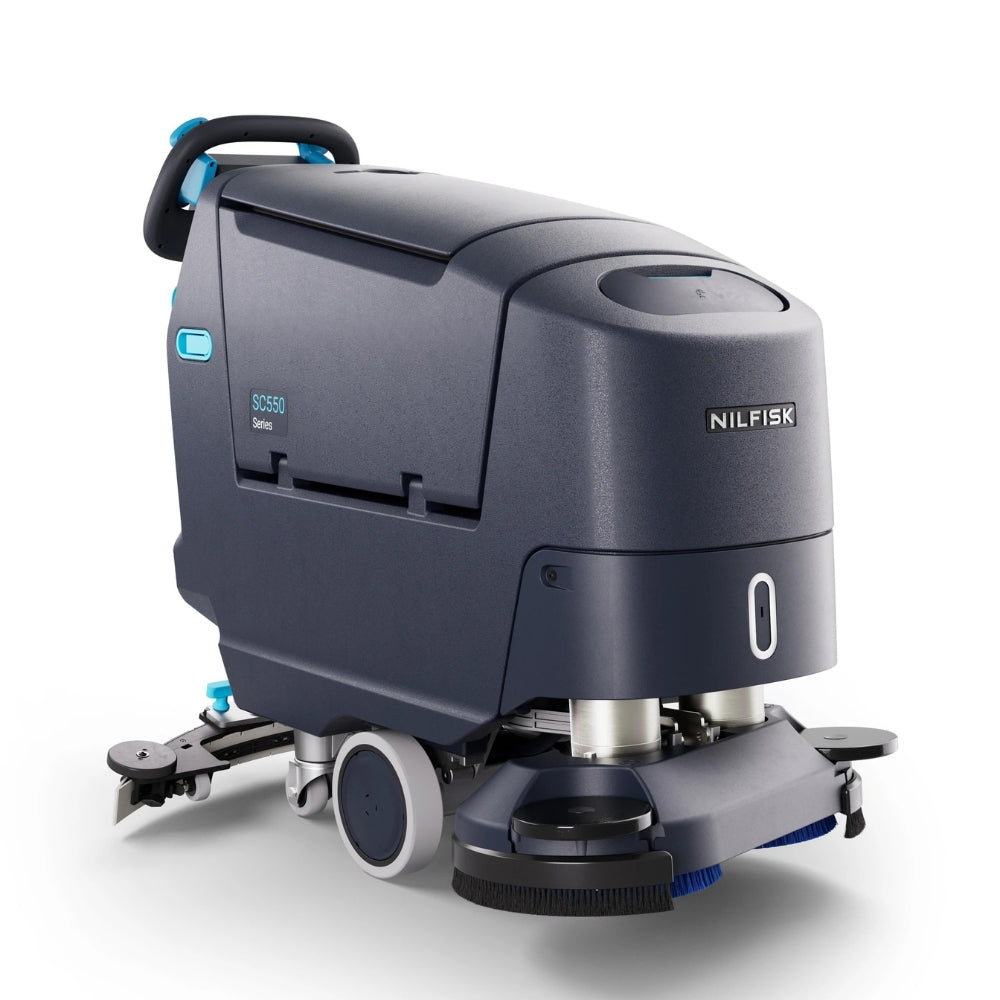
Machine recovery matters. The Nilfisk SC550 lists 50 L solution and 50 L recovery tanks with cylindrical 508 mm or disc 610 mm decks — a sealed squeegee and emptied recovery tank are as important as pad choice when you claim the floor is dry. Theoretical productivity figures on the listing (up to 2,550–3,050 m²/h) only help if the vacuum shoe is actually recovering water.

When specialists test
Some facilities, especially those managing public liability or fit-out handover, commission wet pendulum or other instrumented tests against Australian slip standards. Standards Australia publishes AS 4586 (slip resistance classification of new pedestrian surface materials); the catalogue entry is also mirrored via the Standards Australia store listing. Supervisors should not improvise pendulum numbers — call an accredited tester when the contract or insurer asks for classifications, and keep cleaning logs that show chemistry, dilution and dry time for the same date.
Choosing low-residue chemistry
- Match detergent to soil: neutral daily maintainers for sealed vinyl; stronger degreasers only where grease is proven.
- Meter through the scrubber's chemical system instead of bucket guesswork.
- Avoid stacking maintainer, polish and degreaser on consecutive nights without a scrub-to-rinse reset.
- Keep SDS and labels with the machine trolley so night crews do not improvise.
NSW EPA waste guidance still applies to disposing of spent solution and empty containers through the site's approved stream — do not tip recovery-tank contents into stormwater.
Signage during drying
Wet-floor signage is a control, not decoration. Place signs at every entry to the scrubbed zone, including staff shortcuts from the dock. Leave them until the practical dry check passes, not until the crew wants to go home. If night fill must cross the zone early, create a dry walking lane with a second squeegee pass rather than removing signs while the main path is still filming.
Linking pad choice to traction
Aggressive pads cut finish and can leave a powder that becomes slippery when damp. Soft daily pads clean without destroying the seal that provides designed texture. Change pads when they load with soil — a glazed pad burnishes detergent into a film instead of lifting it. Pair pad choice with the machine deck listed for your scrubber and the chemistry on the label.
| Check | Pass signal | Fail / action |
|---|---|---|
| Dilution | Within label band (e.g. Superforce 1:160–1:50) | Remix tank; do not "strengthen" by eye |
| Squeegee seal | Even dry trail behind machine | Replace blade; slow down; re-pass |
| Microfibre wipe | Cloth stays clean | Residue present — rinse pass |
| Walk test | No skate under rubber sole | Extend dry time / keep signs |
| Specialist test | AS 4586 result meets site brief | Engage tester; hold reopen if required |
Practical checks supervisors can do
You do not need a pendulum on every night shift. You do need a repeatable close-out:
- Log chemical name, dilution and pad type on the job sheet.
- Confirm recovery tank was emptied so dirty water was not redeposited.
- Keep a dedicated dry microfibre in a sealed bag for the wipe test.
- Photograph signage placement on high-risk jobs when the client requires evidence.
- Escalate to instrumented testing after incidents or before major reopenings.
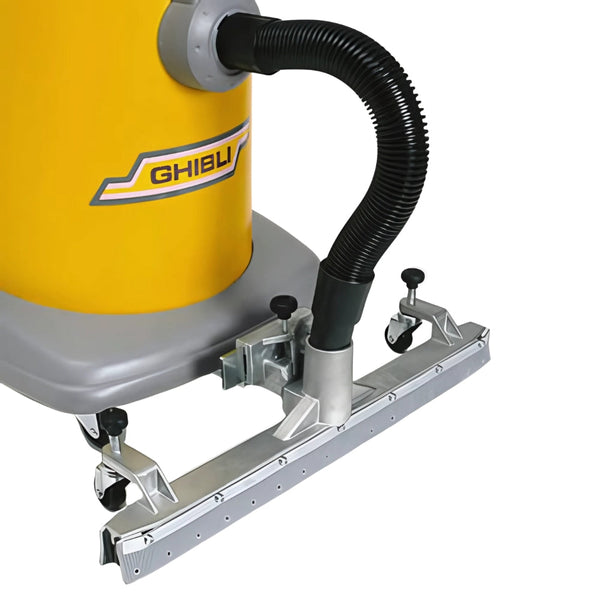
Manual water control still helps at edges and entries. An Oates 600 mm aluminium neoprene squeegee head (B-13119) lists a 600 mm blade on an aluminium channel for pushing residual water to drains when the scrubber cannot reach — useful at door thresholds after the machine pass.

Frequently asked questions
Is a visually dry floor safe after scrubbing?
Not always. Residue or thin films can remain — use a microfibre wipe and walk test before removing wet-floor signs.
When should we book an AS 4586 slip test?
When a contract, insurer or incident review requires classified results — supervisors still run practical dry checks every shift.
Does stronger detergent clean better for traction?
No. Overdosing leaves slippery film; stay inside the label dilution and rinse if the wipe test fails.
What machine feature most affects post-scrub dryness?
Effective solution recovery through a sealed squeegee and emptied recovery tank — tanks alone do not guarantee a dry trail.
Next steps with Freshway
Match scrubbers in floor scrubbers with chemistry from Agar floor cleaners, keep edge tools in floor squeegees, and review pads via scrubbing pads. Write dilution, dry-check and signage steps into the site cleaning specification before the next night program.