Safety: Signage Traction and Chemical When Scrubbing Public Floors
Signs, dry passes and the right chemical keep the public upright while you scrub.
Shop now
What happens in the thirty seconds after your scrubber passes a shopping centre entrance? If the squeegee is set right and the floor is dry, nothing. If a strip of water is left behind, the next person in wet shoes is the incident report. Public floor safety is decided by the machine settings, the signs, the chemical and the route, all at once.
An older post, say goodbye to dangerous slippery floors, introduced the basics. This article is a case-based review for cleaning staff who scrub floors while the public is present.
Floor scrubber public safety: the short answer
When scrubbing public floors, set out wet floor signs before starting, work in sections that keep a dry path open, check the squeegee leaves the floor dry, use the correct chemical dilution from the safety data sheet, and slow down near entries and corners. Remove signs only once the floor is dry.
The slip control hierarchy
Work health and safety law expects risks to be controlled in order, starting with the most effective. SafeWork NSW's slips, trips and falls guidance lists contamination such as water and cleaning residue as a main cause. Applied to scrubbing:
- Eliminate: scrub when the area is closed, where possible.
- Substitute or engineer: use a scrubber-dryer that leaves the floor dry rather than a mop and bucket.
- Administrative: signage, sectioning and timing.
- PPE: slip-resistant footwear for staff.
WorkSafe Victoria's slips and trips guidance gives similar advice for cleaning methods.
Case one: a café strip at lunchtime
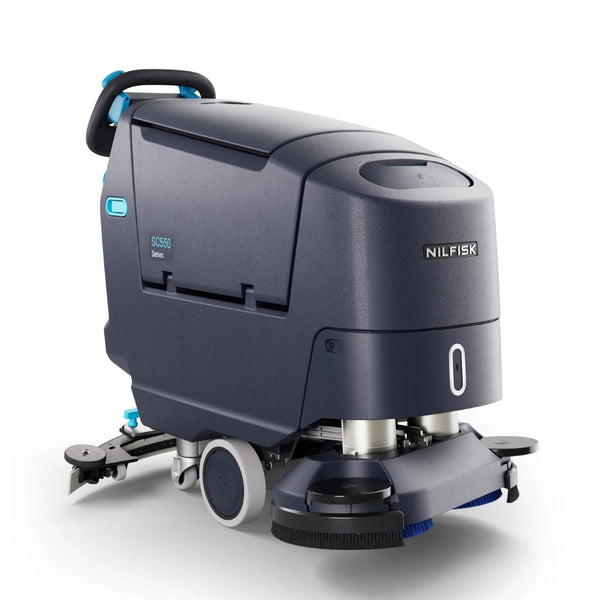
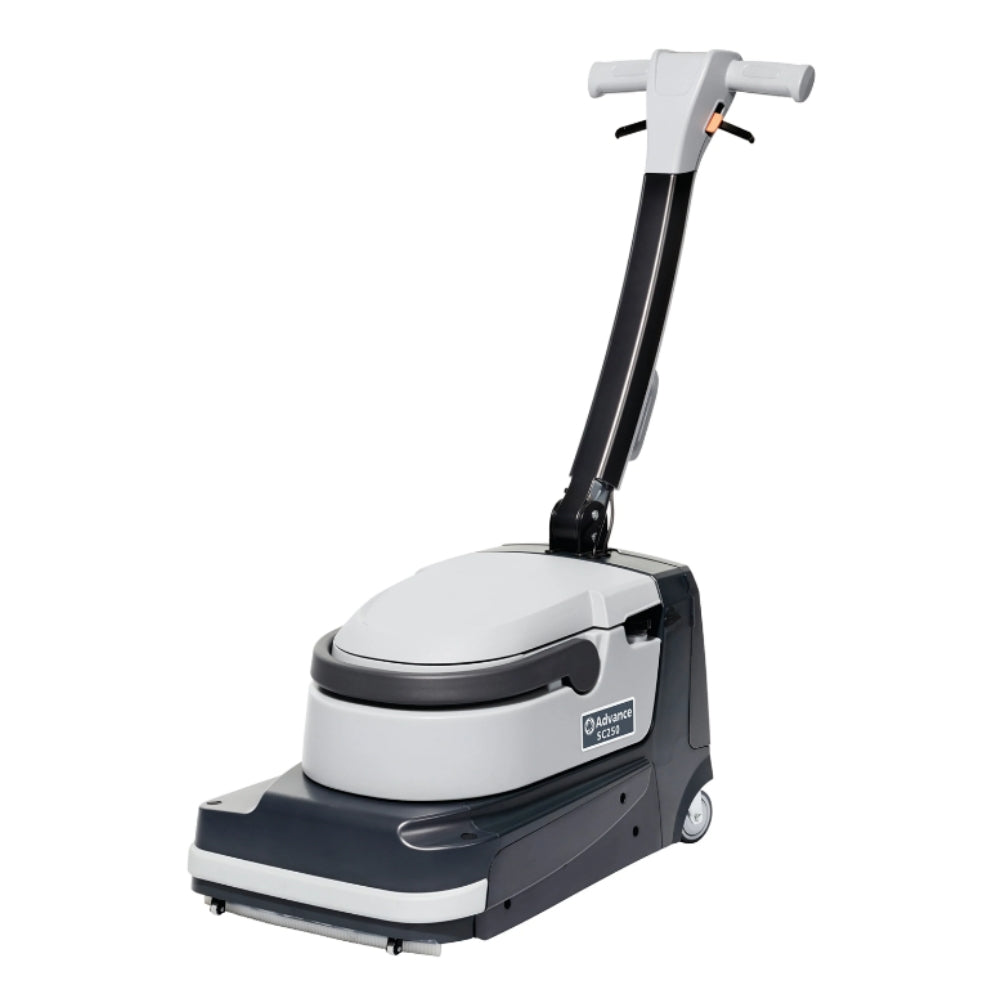
A compact battery scrubber cleans a busy food court. The crew places signs at both ends of the lane, scrubs half the width, leaves a dry walkway, then swaps sides.

Freshway's listing for the Nilfisk SC250 describes a lithium-ion battery system for cordless operation, a 34 cm cleaning path and a productivity rate of up to 1,438 m²/h, with scrubbing and suction drying in one pass. No cord means no trip hazard across the walkway.
Signage that works

Freshway lists the EDCO 19093 caution sign as a fluorescent yellow A-frame, 300 mm wide by 620 mm high, in high-impact plastic that folds flat. Place signs:
- At every approach to the wet area, not just one end.
- Before the machine starts, and in the line of sight of people walking in.
- Where they do not become a trip hazard themselves.
Remove them as soon as the floor is dry; signs left up all day get ignored.
Traction: check the floor, not the machine
Most floors are slip resistant when clean and dry. Residue from overdosed chemical or a squeegee that leaves water reduces traction. After each pass:
- Look back at the floor at a low angle for water trails.
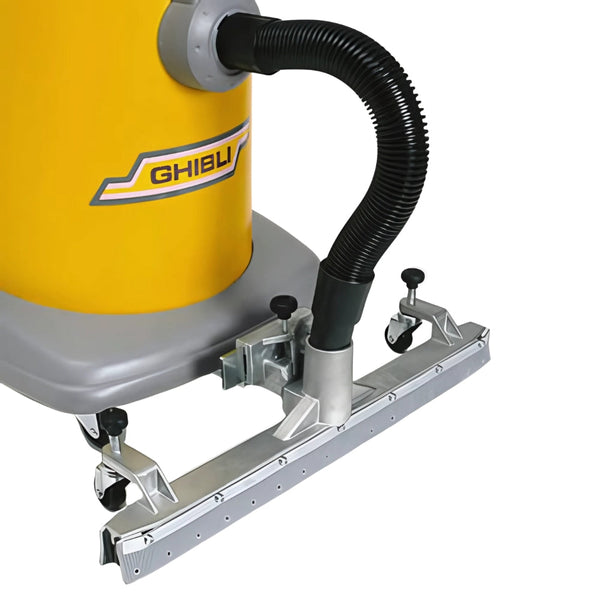
- If trails appear, stop and check squeegee blades and suction.
- Re-scrub or dry the trail before letting traffic in.
Chemical safety and the SDS
Read the safety data sheet for every product used in the scrubber. Check dilution, PPE, first aid and compatibility. SafeWork NSW's hazardous chemicals page explains the duty to have SDS available and labels correct. Never mix products in the solution tank.
Public flow and machine handling
- Slow down at entries, lifts and corners.
- Keep a spotter or barrier in very busy areas.
- Do not leave the machine unattended where children can reach it.
- Plan routes so the operator walks forward, facing pedestrians.
Pushing and turning machines is also a manual task; SafeWork NSW's hazardous manual tasks guidance applies to long shifts.
Incident examples and what changed
| Incident | Cause found | Change made |
|---|---|---|
| Customer slipped at entry mat edge | Water trail from worn squeegee | Weekly blade check added |
| Child touched machine controls | Machine left running unattended | Key removed when parked |
| Staff member slipped behind machine | Overdosed chemical left residue | Dilution chart on tank |
| Complaint about signs left all day | No sign removal step | Signs logged out and in |
Timing the work
The safest time to scrub is when nobody is there. Where trading hours make that impossible, pick the quietest window: mid-morning in shopping centres, after the lunch rush in food courts, between classes in schools. Scrub entries and lift lobbies last in a morning shift, because people track in water from outside on wet days and the floor may need a second pass. On rainy days, add extra entry matting and check entries every hour rather than scrubbing them repeatedly. WorkSafe Victoria lists slips and manual handling among injury hotspots in cleaning, which is a useful briefing note for supervisors planning shift timing.
Training points
New operators should show they can set up signs, adjust the squeegee, read an SDS, and stop and dry a trail. Refresh training whenever a new chemical or machine arrives. Review incidents monthly. More floor machines are listed in floor scrubbers.
Public floor scrubbing checklist
- Signs out at every approach.
- Machine checked: squeegee, suction, tank levels.
- Chemical diluted to SDS directions.
- Section plan keeps a dry walkway.
- Look back for trails after each pass.
- Signs removed only when dry.
Frequently asked questions
Do I need wet floor signs with a scrubber-dryer?
Yes. Even a good scrubber leaves the floor damp briefly, and edges or turns can leave water. Signs warn people until the floor is dry.
Is mopping safer than a scrubber in public areas?
Usually not. A scrubber-dryer recovers water in the same pass, while a mop leaves the floor wet for longer.
What if a customer walks through the wet section anyway?
Stop the machine, keep the area signed and dry the path. Record the near miss and review the section plan.
How much chemical should go in the tank?
Follow the dilution on the label and safety data sheet. Overdosing leaves residue that can reduce traction.
Next steps with Freshway
Stock enough signs for every approach, print the checklist for each machine and add squeegee checks to the weekly routine. Signs and supplies are listed under janitorial supplies; check each product page for current pricing and full specifications.