Commercial Scenarios: Hospitality Kitchens Grease Yards and Bins
Sort out where the wash water goes before you choose the hot water machine.
Shop now
Two venues share a laneway. The first hoses its bin bay after close with a garden hose and a stiff broom; a grey film of fat builds on the pavers, the smell lingers into the next service, and the rinse water runs to the gutter grate. The second sweeps solids first, runs a hot-water pressure cleaner on a set night and keeps the water inside a drained wash area. The second yard is cleaner, and it is also the one on the right side of the rules.
This guide is for the people who buy and specify the equipment for restaurant yards, loading docks and bin rooms. It reads the NSW and Sydney Water requirements that shape the job, then turns them into spec bands, a chemical approach and a supervisor's checklist, using Freshway listings as examples.
Pressure washer hospitality grease: the short answer
For hospitality grease yards and bin bays, choose a hot-water pressure cleaner that runs on power the site actually has, sweep and scrape solids first, and control where every litre of wash water goes. In NSW, washing runoff must not reach stormwater, and wash water sent to sewer needs trade waste approval.
The machine is the easy part. Most of the risk in this job sits in the water you make, so the regulations come first below.
Grease soils: what you are cleaning
Yard and bin bay soil is a mix of fats, oils and grease, food solids, sugars and sauce residues, ground in by foot traffic and bin wheels. Sydney Water's retail food trade wastewater page lists the same ingredients in kitchen wastewater: food particles, fats, oils and grease, and organic material that feeds microorganisms in the sewer and causes odours.
The food rules set the standard you are cleaning to. FSANZ's guide to Standard 3.2.3 notes that Standard 3.2.2 requires food premises to be kept clean, with no accumulation of garbage (except in containers), food waste, dirt, grease or other visible matter.
What the rules say about where the water goes
This is the section most buyers skip, and it decides how the job is set up.
- Stormwater is off limits. NSW EPA's stormwater guidance says runoff from any washing activity must not enter stormwater drains. Washing of equipment or work floors should be confined to a designated wash bay draining to a collection pit and then to sewer, which requires council approval through a trade waste agreement.
- Do not hose spills into drains. Sydney Water tells food businesses to wipe or sweep spills rather than hose them into drains, never to put food scraps or used cooking oil into a sink or grease trap, and to store waste oil in sealed containers in a bunded area for collection.
- Pre-treatment is standard. Sydney Water's grease trap and pre-treatment page says most retail food businesses need in-sink and in-floor bucket traps, a correctly sized grease trap and backflow prevention, with a Wastesafe transporter to empty and service the trap.
- Temperature matters. Sydney Water lists wastewater above 25°C as a problem because oil and grease are not cool enough to separate in the grease trap.
Read together, these points mean a pressure cleaner cannot simply be pointed at a yard and left to drain wherever gravity takes it. Agree the wash area, the drainage path and any approvals with the site owner before the first clean.
Hot water value, and its catch
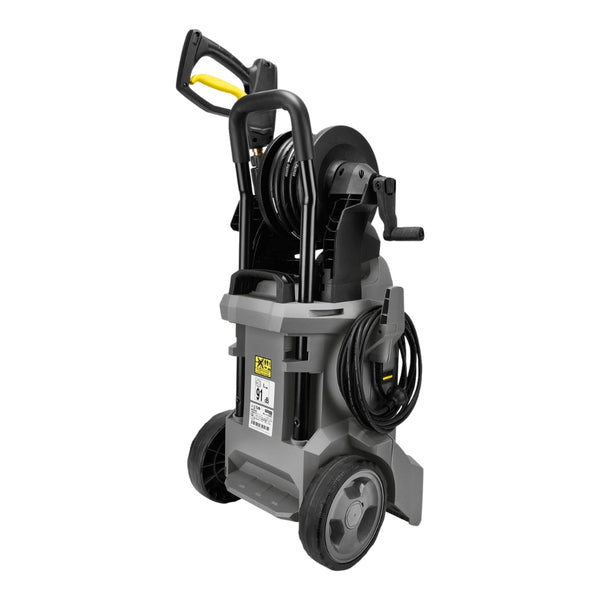
Fat that is solid at yard temperature is hard to shift with cold water alone. Freshway's listing for the PowerShot HotWash HW1408 describes hot water dissolving sticky grease and oil faster than cold water, and names loading docks and garbage compactor areas at food and beverage facilities among its uses. It heats water up to 60°C with a 4-litre diesel boiler and runs on a standard 10 A, 240 V plug.
The catch is the 25°C point above. Hot wash water that reaches a grease trap can carry fat straight through it. Before the first hot wash, ask whoever holds the site's trade waste approval how yard wash water is meant to be handled, and let water cool or collect it where your approval requires. Hot water also brings a burn risk: WorkSafe Victoria's cleaning injury hotspots page lists protective equipment such as aprons against hot water burns.

Containment: work done before the trigger is pulled
The less loose material you wash, the less polluted water you make. NSW EPA says spills should be cleaned up immediately by dry methods, with a labelled spill kit on hand, and reminds businesses to pick up litter that has fallen on the ground after bin collection.
- Move bins out and sweep or scrape food solids into a bin.
- Soak up oil spots with absorbent from the spill kit and bag it.
- Check the floor waste, grates and bucket traps are clear and in place.
- Block or cover any stormwater grate that the wash area could drain towards.
- Only then apply detergent and start washing, working towards the approved drain.
Bin rooms and garbage areas
FSANZ's guide to Standard 3.2.3 describes how a garbage room should be built so it can be cleaned: impervious, coved floors, a hose tap connected to a water supply, and floors graded and drained to an appropriate floor waste system. If your bin room lacks those features, a pressure cleaner will move the problem rather than remove it.
The same guide says garbage containers and areas are not required to be sanitised, and that washing containers thoroughly with detergent and water should remove residues likely to attract pests. That is a good fit for a hot-water wash with a detergent pre-spray. Tight-fitting lids, which the guide uses as an example fix for pest problems, keep the bay cleaner between washes.
Spec bands: what to check on a pressure washer
For a buyer, three numbers do most of the work: the power supply the site can offer, the water temperature, and pressure times flow. The table compares three Freshway listings that suit different hospitality setups.
| Listing | Power supply | Pressure and flow | Water temperature | Bar × L/min |
|---|---|---|---|---|
| PowerShot HotWash HW1408 | 240 V, standard 10 A plug | 140 bar (2,030 PSI), 8 L/min | Up to 60°C, 4 L diesel boiler | 1,120 |
| Kränzle CA11-130 | 240 V, 15 A single phase | 130 bar (1,885 PSI), 11 L/min | 140 to 150°C steam level, 25 L diesel tank | 1,430 |
| Kränzle WS-RP1000TS | 415 V, 20 A | 200 bar (2,900 PSI), 16 L/min | Cold-water unit, inlet water up to 60°C | 3,200 |
The HW1408 suits a venue with only standard outlets. The CA11-130 needs a 15 A outlet and weighs 150 kg according to its listing, so it belongs on a level path to the yard. The WS-RP1000TS is a fixed wall or floor unit for a dedicated wash point, such as a large venue's bin room or a central dock, where three-phase power can be run in. All three fall within Class A on the bar × L/min test covered in the safety section. Browse more options in Freshway's hot water pressure washers and electric pressure washers ranges.

Chemical helpers
Detergent does the dissolving; the pressure cleaner does the rinsing. Use a pre-spray, give it dwell time, then rinse with the fan nozzle. WorkSafe Victoria's cleaning hotspots page says to treat all chemicals as potentially dangerous unless the safety data sheet or label says otherwise, and to use a less harmful product where you can, giving a non-bleach cleaning product as an example. Sydney Water also asks food businesses to avoid bleach and caustic soda and use as little product as possible.
For a wider look at kitchen chemistry, Freshway's guide to restaurant and commercial kitchen cleaning chemicals covers degreasers and sanitisers by task.
Safety and WHS notes for Australian sites
WorkSafe Victoria's high-pressure water jetting alert warns that the jet can pierce skin and inject contaminated material, which matters in a yard full of food waste. It sets Class A at 800 to 5,600 bar litres per minute, so all three machines in the table sit in Class A, and says operators should be trained by a competent person.
Electric machines in a wet yard need RCD protection. SafeWork NSW's RCD guidance covers plug-in equipment used where it is exposed to moisture. SafeWork NSW's hospitality page also lists slips, trips and falls in kitchens and bars among the industry's common harms, so keep staff and patrons out of the wash area until it has drained and dried.
Checklist for site supervisors
- Wash area, drainage path and trade waste approval confirmed with the site owner.
- Stormwater grates near the wash area identified and protected.
- Solids swept, oil spots absorbed, bins moved out.
- Power outlet rating matches the machine; RCD in place for electric units.
- Burner units run where exhaust can clear.
- Operator trained; eye protection, gloves and apron on.
- Detergent chosen from the safety data sheet, not the strongest bottle on the shelf.
- No grease spills hosed into floor wastes, and no hot wash water sent to the grease trap unless your approval allows it.
- Wash area kept closed until dry.
Frequently asked questions
Can I wash a restaurant bin bay into the stormwater drain?
No. NSW EPA says runoff from washing must not enter stormwater drains. Confine washing to a designated area that drains to sewer under a trade waste agreement, and sweep solids up first.
Do I need a hot water pressure cleaner for kitchen grease?
Hot water helps shift fats that are solid at yard temperature, which is why most grease yards suit a hot-water unit. Check how your trade waste approval treats hot wash water, because Sydney Water says water above 25°C stops grease separating in the trap.
Will a hot water machine run on a normal power point?
Some will. Freshway lists the PowerShot HotWash HW1408 on a standard 10 A, 240 V plug, while the Kränzle CA11-130 needs a 15 A single-phase outlet. Check the listing before you order.
Do bins need to be sanitised after washing?
FSANZ's guide says garbage containers and areas are not required to be sanitised. Washing them thoroughly with detergent and water should remove residues that attract pests.
Next steps with Freshway
Start with the site, not the machine: note the outlets available, where the wash water can legally go and how often the yard needs a full wash. Then shortlist machines from the hot water range and check product pages for current pricing and stock. Freshway's shop by industry page groups supplies for hospitality and other sectors, and its service and repairs workshop in Sydney handles pressure washer faults such as pressure loss, leaks and overheating.