Repair or Replace: Backpack and Canister Vacuum Decision Guide
Repair when the failed part is listed and the body is sound; retire it when it is not.
Shop now
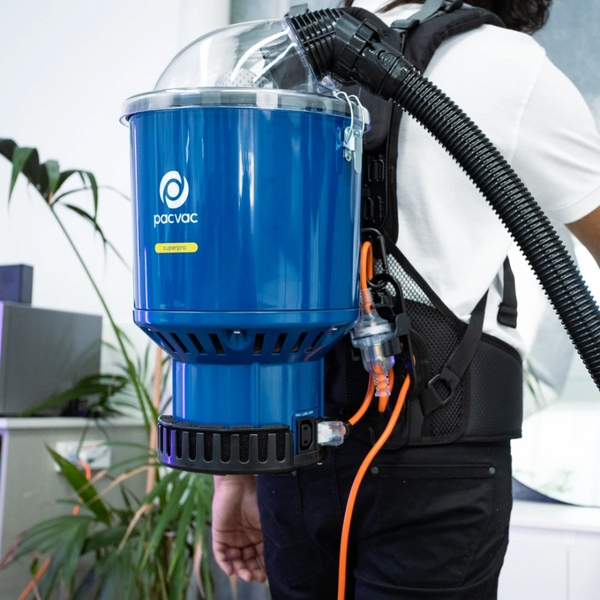
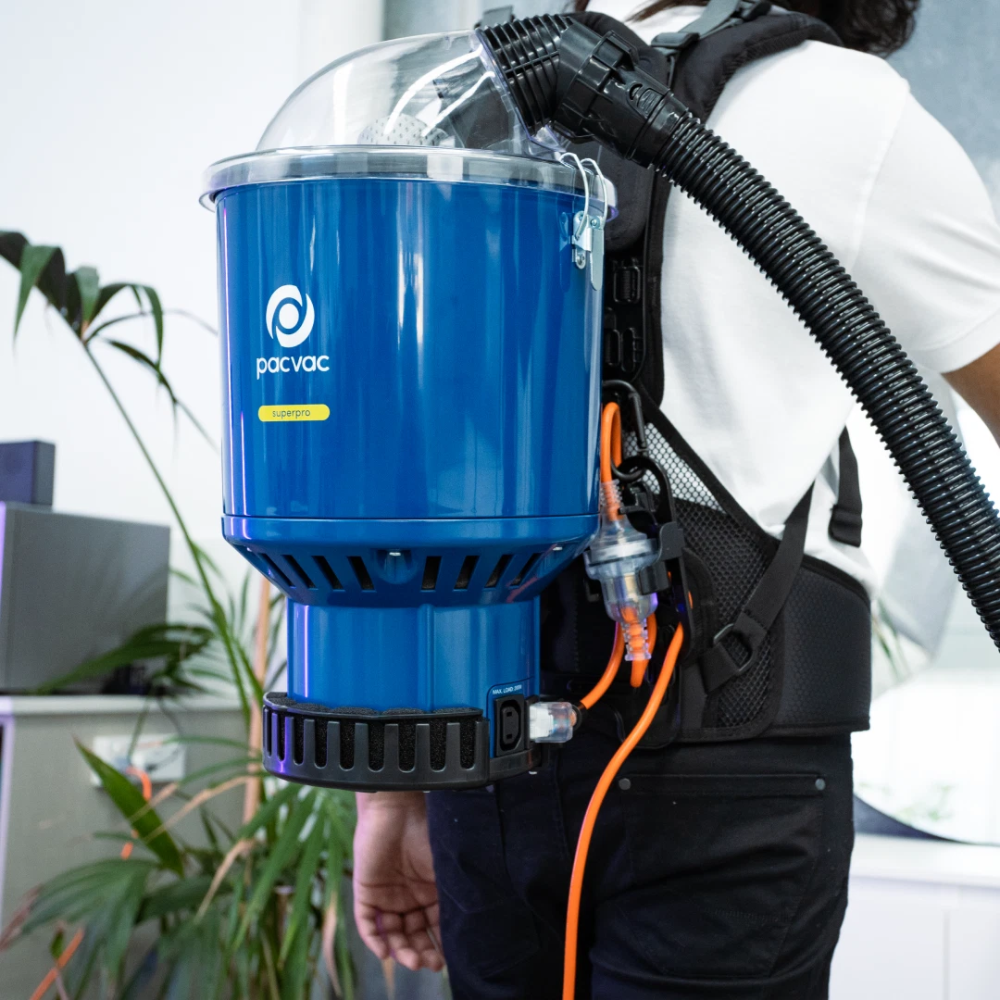
Picture two machines coming off the same office contract in the same week. One is a Pacvac Superpro 700 backpack that cuts out whenever the cleaner turns to the left; the short lead at the hip has been yanked once too often. The other is a canister that has run with a packed bag for a month, now smells hot and barely lifts grit from the entry mats. Both are out of action. Only one is an easy call.
This guide is written for the people who use and supervise commercial vacuums every shift. It sorts common faults into "fix it" and "retire it", shows how to weigh cost without guessing at prices, and sets out the safety stops that override both. Freshway listings are used as worked examples throughout.
Repair or replace commercial vacuum: the short answer
Repair a commercial vacuum when the fault sits in a replaceable part, such as the cord, short lead, hose, harness, filters or a motor still listed for that model. Replace it when the body is cracked, parts for the model are no longer available, or the same fault returns after a proper repair.
The deciding question is rarely the age of the machine. It is whether the failed part can be bought, fitted and tested quickly enough to keep the contract running.
Failure modes: what the symptom is telling you
Most backpack and canister faults fall into a handful of patterns. The table maps each one to the usual cause and the signals that point towards repair or replacement.
| Symptom | Usual cause | Points to repair | Points to replace |
|---|---|---|---|
| Suction drops off | Full bag, clogged pre-motor filter, split hose or cracked connector | Filters and bags are service items. Pacvac's SEK001 kit for the Superpro range bundles the cone filter, exhaust filter, motor filter cage and bags. | Suction stays low after a full filter and hose change, and the motor tests weak |
| Cuts out when moving | Damaged cord, short lead or plug | Pacvac's pigtail system splits the power lead: the long cord plugs into the 420 mm SHL001 short lead's C13 socket, so a cut cord is swapped, not hardwired | Damage is inside the body wiring or the switch housing is broken, and no part is listed |
| Motor smells hot or labours | Blocked airflow from a full bag or blocked hose; worn motor | Airflow restored and motor checks out, or a replacement motor is listed for the model | Motor has failed and no compatible motor is sold |
| Hose pulls out or whistles at the machine | Stretched or cracked machine-end connector | Connectors and complete hoses are listed for most popular models | Socket in the body itself is cracked |
| Harness sags or straps fray | Normal wear on backpacks | Harness kits are listed by model | Frame the harness mounts to is cracked |
A machine with a cracked body, lid or motor housing is usually the clearest replace signal, because the part that holds everything else together is the one that has failed.
Cost signals without prices
You do not need a price list to see which way a decision is leaning. Compare these signals instead:
- Which part failed. Leads, hoses, filters and harnesses are small parts. A motor is the expensive single part in most vacuums.
- How many parts failed. One worn part is maintenance. Three at once usually means the machine has been under-serviced for a long time.
- Labour and testing. Swapping a plug-in cord is quick. A motor change means opening the machine and testing it afterwards.
- Downtime. Count the shifts the contract runs one machine short, not just the workshop bill.
- The replacement quote. Put the repair quote beside the current price on the replacement machine's product page and compare like with like.
Age, parts and the rules that still apply
Age matters mostly because of parts. A machine that is still sold usually has its filters, hoses, leads and harnesses listed. Freshway's vacuum parts and accessories range is the place to check before you write off an older unit.
Check warranty and consumer rights before paying for a repair on a newer machine. Business.gov.au's guide to the Australian Consumer Law says customers can ask for a repair, replacement or refund if goods do not meet a consumer guarantee, and that these guarantees may apply even after the maker's warranty period has ended. Whether they cover a particular business purchase depends on the price and type of goods, so read the conditions.
Repairability is also a policy issue. The Productivity Commission's right to repair inquiry examined people's ability to repair faulty goods and reach repair services at a competitive price, and how better access to repairs could reduce e-waste.
Safety stops: when the machine comes off the floor today
Some faults are not a cost question at all. Tag the machine out and keep it off the floor if you see exposed or cut cord insulation, a cracked plug, scorch marks, sparking, a burning smell that does not clear once airflow is restored, or a test tag that is out of date.
SafeWork NSW says plug-in electrical equipment used where it is likely to be damaged must be regularly inspected and tested by a competent person, with AS/NZS 3760 setting out the methods and the record kept until the next test. Its RCD guidance covers equipment that is frequently moved during normal use, which describes a vacuum on almost any contract, and says RCDs used at work must be tested regularly.
Cords are a trip risk as well as an electrical one. SafeWork NSW lists loose cords and cables among common sources of slips, trips and falls, so a lead that has been taped and re-taped is a repair, not a workaround.
Covering the gap while a machine is out
Treat a spare machine as hire you already own. WorkSafe Victoria's vacuuming guidance suggests a vacuum cleaner on each level of a multi-level building to cut lifting and carrying, and the same logic gives you a ready substitute when one goes in for repair.
Keep the spare the same model as the rest of the fleet where you can. The hoses, wands, filters and harness then swap straight across, and cleaners are not learning a new machine on the night it matters.
Freshway repairs overview
Freshway's service and repairs workshop in Sydney covers backpack vacuums from Pacvac, Numatic, Nilfisk and Kärcher with suction, motor, cord and switch faults, and commercial and wet and dry vacuums with motor diagnostics, seal, hose and airflow checks and performance testing.
The page sets out how the process works. You describe the fault, receive a quote covering diagnostics, parts, labour and turnaround before any work starts, and a diagnostic fee is credited toward the repair when the quote is approved. Repairs carry a 30-day warranty for the same issue from the ready-for-pickup notice, and commercial clients across Sydney can use pick-up and delivery. The workshop also gives advice on repair versus replacement value.

Decision tree
- Is it safe? If the cord, plug or housing is damaged, or the test tag is out of date, tag it out first.
- Is it a service item? Change the bag, filters and check the hose. Retest suction before going further.
- Is it under warranty or a consumer guarantee? Contact the seller before paying for any repair.
- Is the failed part listed for this model? If yes, repair. If no, the machine is close to retirement.
- Has this fault been repaired before? A repeat motor or electrical fault after a proper repair points to replacement.
- Is the body sound? A cracked body or motor housing ends the decision.
Canister motor failure is a good test of the tree. Freshway lists the Cleanstar Aerolite VBP1400-12, a 240 V, 1,400 W single-stage flow-through motor, as compatible with the Pullman AS4, Nilfisk GD910, SALTIX 3 and VP300. If your machine is on a list like that and the body is sound, a motor change is a repair. If it is not, start pricing a replacement.

Replacement maths: compare like with like
If the answer is replace, check what the new machine changes for the cleaner, not just the badge. Take a fleet weighing up the Pacvac Velo against its existing Superpro 700, using Freshway's listings:
- Weight: 3.9 kg for the Velo against 5.4 kg for the Superpro 700 (listed excluding cord and hose). That is 1.5 kg less, about 28% lighter.
- Airflow: 28.2 L/s against 38 L/s, about 26% less.
- Dust capacity: 2.5 litres against 5 litres. Half the capacity means roughly twice as many bag changes for the same dirt load.
- Warranty: the Velo listing states 2 years on body and motor.
Neither machine is "better". A lighter unit suits long shifts on lightly soiled floors; a larger bag suits gritty entries and big floor plates. WorkSafe Victoria's guidance also says vacuum cleaners should be emptied frequently to reduce weight, which favours whichever model your team will actually empty on time.
A simple log to keep
A one-line entry per event is enough to make the next decision obvious. Record the date, machine ID or serial, site, symptom, action taken, parts fitted, test tag date and the days it was out of service. After a few months the log shows which machines keep coming back and which faults are really cleaning-practice problems, such as bags left to overfill. For a schedule that heads off many of these faults, see Freshway's guide to cleaning equipment maintenance that prevents downtime.
Frequently asked questions
How old is too old to repair?
There is no fixed age. Repair while the body is sound and parts for the model are still listed; retire it when they are not.
Is a cut cord worth fixing?
Usually, yes. On Pacvac backpacks with the pigtail system, the long cord plugs into a short lead, so a cut cord is replaced rather than hardwired. Have the machine inspected and tested before it goes back into service.
Should I keep running a vacuum that smells hot?
No. Switch it off, clear the bag, filters and hose, and stop using it if the smell continues.
Does a Freshway repair come with a warranty?
Yes. Freshway's service page states a 30-day warranty for the same issue from the ready-for-pickup notice.
Can a canister motor be replaced?
Often. Check whether a compatible motor is listed for your model, then weigh the repair quote against a replacement machine.
Next steps with Freshway
Pull the log for every machine that has been in for repair this year and run each one through the decision tree. For machines worth keeping, order the service parts now. For machines that are done, compare replacements in the Pacvac backpack vacuum range and the canister and barrel vacuum range, and check product pages for current pricing and stock. When you are unsure which way to go, book a diagnosis with Freshway's Sydney workshop and ask for the repair-versus-replace view with the quote.