Duty Cycle and Hours-per-Week: Sizing Commercial Pressure Washers
Count the motor hours each week first, then pick the pump, motor and power to match.
Shop now
Two buyers ask for the same thing: a 240 V pressure washer around 2,000 PSI. The first is a strata maintenance contractor who washes bin bays and paths for about four hours a week. The second runs a small vehicle wash area that has a gun in someone's hand for six hours every weekday. On paper the requests match. In service, the second machine works more than seven times as many hours as the first.
That gap, not the pressure figure, is what should decide the purchase. This guide looks at it from an engineer's angle: what duty labels really mean, how to turn your roster into a weekly hours figure, and where the cost of getting it wrong turns up.
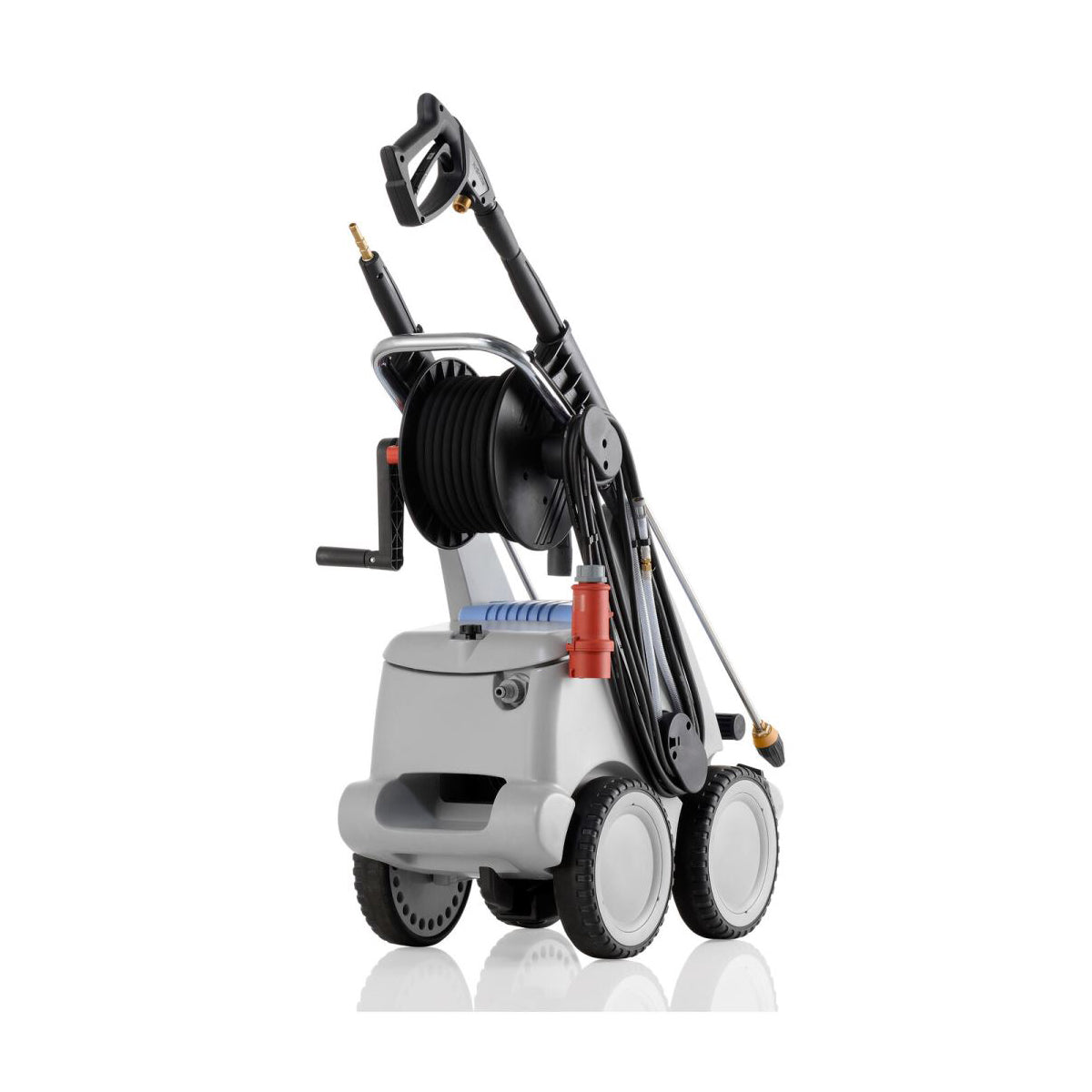
Pressure washer duty cycle commercial: the short answer
Size a commercial pressure washer on weekly motor-running hours, not PSI. One Australian supplier's catalogue groups machines as domestic or light commercial up to 6 hours a week, commercial at 6 to 20, and industrial above 20. Count your hours honestly, pick the band, then check pump, motor speed and power supply.
The sections below explain each of those checks, with Freshway listings as worked examples.
Duty labels decoded
Few spec sheets print a duty cycle. Instead you see words such as home, professional, medium-duty or industrial, and they are not standardised across brands. An Aussie Pumps selection guide from 2017, hosted on the Alpha PMS website, is one of the clearer Australian examples. Its pressure cleaner catalogue labels models as domestic or light commercial (up to 6 hours per week), commercial (6 to 20 hours per week) and industrial (20 or more hours per week).
Victorian supplier Jetblaster makes the same point from the hardware side. Its article on pressure washer differences says control systems, safeties and component quality are what separate domestic, semi-professional, commercial, industrial and heavy industrial machines. For petrol units, it contrasts reduction gearbox drives on industrial machines with direct drive on domestic to professional ones.
Freshway's listings use the brand's own words, and they are worth reading closely. The Kärcher K 4 Compact is listed under Kärcher's Home and Garden series. The Nilfisk MC 4M is described as a medium-duty commercial machine. The Kränzle Quadro 599TST and the Powershot HW-2021 are described as industrial units.
Hours mapping: turning a roster into a weekly figure
Count motor-running time, not just spraying time. A machine without an automatic stop keeps the pump turning between trigger pulls, so walking around a vehicle or moving a hose still counts. Then multiply out:
- Hours per session. From switch-on to switch-off, including set-up and breaks with the motor running.
- Sessions per week. Include weekend and seasonal peaks, not an average quiet week.
- Weekly hours. Hours per session × sessions per week.
The strata contractor in the opening example works 2 hours × 2 sessions = 4 hours a week, which sits in the lowest band. The vehicle wash area works 6 hours × 5 days = 30 hours a week, well into the industrial band. Add a Saturday shift and it becomes 36 hours. If your answer lands close to a band edge, size up, because hours usually grow once a reliable machine is on site.
An hour meter takes the guesswork out of later decisions. Freshway lists the Powershot HW-2021 with a built-in hour meter for service tracking. Where a machine has none, a simple logbook next to the bay does the same job.
Pump and motor matching
Once the band is clear, the pump and motor have to match it. The listings give you three useful signals.
- Motor speed. Freshway lists the Quadro 599TST and HW-2021 with 1400 RPM motors and the MC 4M at 1450 RPM. The 599TST listing contrasts its 4-pole motor with 2800 RPM motors.
- Pump construction. The 599TST and MC 4M are both listed with brass pump heads and ceramic-coated pistons. The HW-2021 is listed with a brass head and ceramic pistons.
- Idle protection. The HW-2021 listing includes a delayed Total Stop system, which it says reduces pump wear and energy consumption, plus dry run protection.
Freshway's guide to pressure washer maintenance by duty hours covers how those same hours drive the service schedule once the machine is bought.

Where the cost of ownership goes
Purchase cost is only the first line. Prices change, so check each product page. The other lines depend on hours.
- Pump wear. Seals, valves and oil wear with running hours, and a light-duty pump in a heavy-duty role reaches them sooner.
- Downtime. A machine off for repair can stop a wash bay or a cleaning round. More hours means more lost work per breakdown.
- Labour. Flow sets rinse speed. The K 4 Compact is listed at 420 L/h, which is 7 L/min. The Quadro 599TST is listed at 10 L/min, so the same rinse water goes on in 70% of the time.
- Power and installation. The 599TST needs a 15 A socket. The HW-2021 needs 415 V, 20 A three phase. Factor in an electrician if the site does not already have the outlet.
- Compliance. SafeWork NSW says plug-in equipment used where it is exposed to moisture, heat, vibration or similar conditions must be regularly inspected and tested by a competent person, with frequency set by the workplace and its risks.
Warranty terms are a cost line too. The 599TST listing states a 10-year pump head warranty and a 5-year commercial warranty. The HW-2021 listing states a 2-year commercial warranty, with 3 years on the burner coil. Read the commercial-use wording before comparing.
Overbuy vs underbuy
Underbuying is the familiar failure. A home-series machine doing 20 or more hours a week will reach its wear limits early, and the downtime lands on the busiest days. Overbuying has costs as well: three phase wiring, more weight to move, and burner fuel and servicing on a hot water unit that only ever needed cold water.
Hours also raise the safety load. The SafeWork NSW noise code of practice sets the exposure standard at 85 dB(A) averaged over eight hours, so a long weekly roster near a loud unit needs a noise check. SafeWork NSW's carbon monoxide guidance asks for adequate ventilation around petrol-powered plant, which counts more as engine hours go up.
Spec-sheet fields to check on a pressure washer
- Series or duty wording, and whether the warranty covers commercial use.
- Motor speed in RPM and motor type.
- Pump head material, piston type and pump design.
- Stop system: automatic stop, delayed stop or pressure relief.
- Power supply and plug rating: 10 A, 15 A or 415 V three phase.
- Flow in L/min and pressure in bar, then multiply them. WorkSafe Victoria's high-pressure water jetting alert puts 800 to 5,600 bar litres per minute in Class A and anything above in Class B.
- Hour meter, or a plan for logging hours.
That multiplication surprises people. The K 4 Compact at 130 bar and 7 L/min comes to 910, which is already inside the Class A range. The HW-2021 at 200 bar and 21 L/min comes to 4,200.

Common mistakes to avoid
- Counting only trigger time and ignoring idle running.
- Sizing on an average week instead of the peak.
- Comparing PSI across machines from different duty bands.
- Buying a 15 A or three phase machine for a site with only 10 A outlets.
- Skipping the hours log, then guessing when service is due.
Quick-reference table
Use the hours bands from the Aussie Pumps catalogue, then compare against the Freshway listings in the right-hand column.
| Weekly motor hours | Band | What to look for | Freshway listing to compare |
|---|---|---|---|
| Up to 6 | Domestic or light commercial | Light weight, compact storage | Kärcher K 4 Compact (Home and Garden series, 130 bar, 420 L/h) |
| 6 to 20 | Commercial | Low-speed motor, brass head, ceramic pistons | Nilfisk MC 4M (160 bar, 10.3 L/min, 1450 RPM, 240 V) |
| 20 to 40 | Industrial, single phase | 4-pole motor, long warranty, hose reel | Kränzle Quadro 599TST (150 bar, 10 L/min, 15 A) |
| 40 and above, or hot water | Industrial, three phase | 415 V supply, stop system, hour meter | Powershot HW-2021 (200 bar, 21 L/min, up to 140°C) |
The split at 40 hours is a practical rule of thumb for choosing between single and three phase, not a catalogue band.
Frequently asked questions
What does duty cycle mean on a pressure washer?
It describes how many hours a machine is built to run in a given period. Most spec sheets do not print it, so use the series name, motor speed, pump construction and warranty terms, then compare them with your own weekly running hours.
How many hours a week counts as commercial use?
There is no single standard. One Australian supplier's catalogue treats up to 6 hours a week as domestic or light commercial, 6 to 20 as commercial and more than 20 as industrial. Use those bands as a starting point.
Is a 1400 RPM motor always better than a 2800 RPM motor?
Not always, but for long weekly hours a slower 4-pole motor is the safer choice. Several industrial listings on Freshway pair 1400 to 1450 RPM motors with brass pump heads. Check the pump and stop system as well.
Do I need a 15 A outlet for a commercial pressure washer?
Only if the machine needs one. The Kränzle Quadro 599TST listing requires a 15 A socket, and the Powershot HW-2021 needs 415 V three phase. Check the plug rating on each product page against your outlets.
Next steps with Freshway
Work out your weekly hours first, then shortlist from the commercial pressure washers collection. If your hours land in the industrial band and you want a 240 V option, the Kränzle pressure washers range includes 4-pole machines. Check each product page for current pricing. Businesses buying several machines can ask about a trade account through the B2B dealer page.