Reading Bar Ratings Safely for Concrete Pavers and Soft Stone
Treat the bar rating as a ceiling, then test a hidden patch before the whole job.
Shop now
Picture one operator, one Kranzle K1152TST and two jobs on the same Saturday. In the morning it is a concrete paver driveway in the Hills District; in the afternoon, a sandstone pool surround in the eastern suburbs. The machine is set the same way for both. The driveway comes up clean, but the joints along the kerb edge are half empty by lunch. The sandstone looks fine wet, then dries with pale, slightly furry stripes where the jet lingered.
Nothing was wrong with the machine. The operator read the bar rating as a setting rather than a ceiling. This guide works through that mistake from the operator's side: what the rating plate tells you, what the damage looks like, and how to set up so pavers and soft stone survive the clean.
Pressure washer bar for concrete pavers: the short answer
A pressure washer's bar rating is its maximum, not a target. For concrete pavers, Australian Paving Centre guidance points to a domestic-level cleaner of about 1,500 psi (roughly 103 bar) or less. Soft stone usually needs less again. Start low, use a wide fan, keep distance, test a hidden patch, protect the joint sand.
The rest of this article treats the two Saturday jobs as a fault-finding exercise, one symptom at a time.
Reading the rating plate: what the bar number tells you
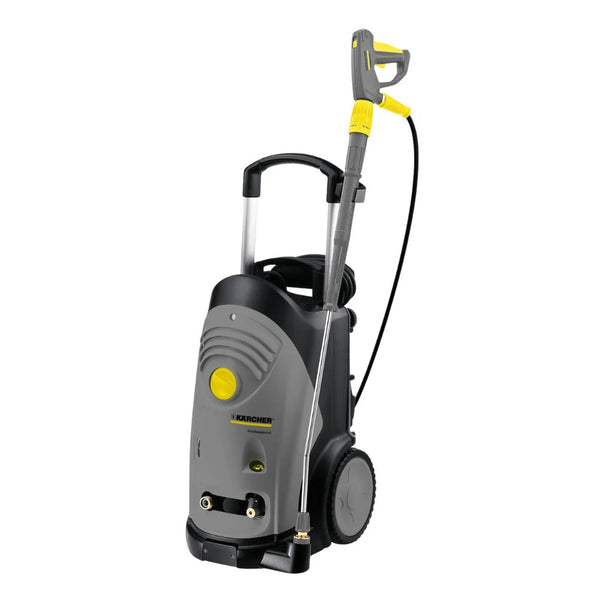
Commercial listings usually give two numbers: pressure in bar and flow in litres per minute. Freshway lists the Kranzle K1152TST-10A as fully adjustable up to 120 bar at 10 L/min on a standard 10 A plug. That top figure is what the pump can make with the supplied nozzle, not what any surface needs.
Multiplying the two numbers gives a rough sense of the machine's class. WorkSafe Victoria's high-pressure water jetting alert explains that AS 4233.1 defines Class A systems as having an output capability of 800 to 5,600 bar litres per minute, and Class B as more than 5,600. At 120 bar × 10 L/min = 1,200 bar·L/min, the K1152TST sits in the Class A range. Class tells you about operator risk and training, though, not paver safety.
The useful habit is to read three things on any listing: the maximum bar, whether that pressure is adjustable, and which nozzles come in the box. The K1152TST, for example, is listed with a Vario-Jet nozzle and a Dirtkiller rotary nozzle, both size 042, on the D12 quick-release system. Freshway's own description calls the Dirtkiller the aggressive option, which is a clue about where not to start.

Symptom 1: joint sand washing out
This is the driveway fault. The paver faces looked fine, but the jet travelled along the joints and the sand went with it. The Australian Paving Centre's paver maintenance and remedies guide says that if you pressure clean paving you must top up the sand in the joints, and that new paving should not be washed with a pressure cleaner until the pavers have settled and the joint sand has set.
The fix is about direction as much as pressure. Work across the joints at an angle, not down them, and never park the jet on an edge or a cut paver. Sand that lands on the kerb or in the gutter is also a stormwater problem; the NSW EPA's "the drain is just for rain" guidance says runoff from washing must not enter stormwater drains and lists sand and dirt among the sediment that pollutes waterways and blocks drains.
Symptom 2: pitting, furring or stripes on the face
This is the sandstone fault. A face that looks rough, pale or striped after drying has lost surface material. The same APC guide warns against using a commercial pressure cleaner on pavers because it may pit the surface, depending on the type of paver. Soft, porous stone is more vulnerable again.
Western Australia's heritage maintenance note on cleaning stone masonry makes the point directly: the force of the water on the surface drives both the cleaning power and the potential for damage, and the pressure should be set according to the type of stone.
Starting figures from Australian guidance
Very few Australian sources publish numbers. The two below are the clearest, and both are upper limits rather than targets. Bar values are converted at 1 bar = 14.5 psi and rounded.
| Surface | Published figure | Approximate bar | Source and context |
|---|---|---|---|
| Concrete pavers (established, sand set) | About 1,500 psi or less | About 103 bar | Australian Paving Centre, domestic pressure cleaner advice |
| Historic stone masonry, general | Ideally below 200 psi | About 14 bar | WA heritage guidance, set by stone type |
| Hard stone such as granite and slate | Up to 1,500 psi under specific controlled conditions | About 103 bar | WA heritage guidance |
| Asbestos cement products | Never | Not applicable | SafeWork NSW prohibited equipment |
Two readings matter for an operator. First, a 120-bar machine is already above the paver figure at full setting, so turn it down. Second, sandstone pavers by a pool are not heritage masonry, but they share the soft, porous character that makes the lower figure a sensible place to start.
Nozzle, distance and angle: why the same bar hits harder
The bar figure is measured at the pump. What the paver feels depends on the nozzle, how far away it is and the angle of attack. Freshway's listing for a quick-connect nozzle set describes the usual colour code: a red 0° blasting jet, yellow 15° chiselling fan, green 25° flushing fan and white 40° wide fan for rinsing delicate surfaces. A narrow jet puts the same pump pressure onto a much smaller spot.
- Pick the widest fan first. On pavers and soft stone, skip the 0° jet and any rotary or turbo nozzle until a test patch says otherwise.
- Add distance before pressure. Moving back is the quickest way to soften the impact.
- Keep moving. Stripes come from dwell, so use steady, overlapping passes.
- Angle away from joints and edges. Do not drive water under a paver.
Surface cleaners: an accessory rating is a ceiling too
A rotary surface cleaner evens out distance and speed, which is why contractors like them on driveways. Freshway lists the Kranzle UFO round surface cleaner at 300 mm diameter with twin 045 rotary nozzles, a maximum of 180 bar, a flow range of 10 to 12 L/min and a D12 inlet that suits the K1152TST. Its housing and rubber skirt contain the spray, so adjacent walls and garden beds stay cleaner.
Read the 180 bar figure the same way as the machine's. It tells you the accessory can safely take the K1152TST's maximum, which is what WorkSafe Victoria's alert asks for when it says parts, fittings and hoses should be rated equal to or more than the equipment's maximum operational pressure. It does not tell you what the pavers can take. The same goes for the Kerrick KSC14/W 355 mm stainless surface cleaner, listed for machines up to 4,000 PSI (about 276 bar).

Running a test patch, step by step
- Pick a hidden paver or stone that represents the whole area, including a joint.
- Photograph it dry.
- Set the machine well below its maximum and fit the widest fan.
- Make one moving pass from a generous distance, across the joint rather than along it.
- Let it dry fully, then look at the face, the colour and the joint level.
- If more cleaning is needed, change one thing at a time: a little closer, or a little more pressure, not both.
- Write down the setting that worked and use it for the whole job.
The WA heritage note recommends testing on small, unobtrusive but representative areas before cleaning. On a commercial job, that test record is also what you show the client when they ask why you did not use full pressure.
Soft wash alternative for porous stone
When the test patch shows damage at any pressure that actually cleans, change the method rather than the bar. Even for dense stones such as granite, bluestone and slate, the WA heritage guidance lists low pressure water sprays followed by light scrubbing, and it describes misting as the gentlest way to use water. In practice, that means a low setting or garden-hose rinse, a cleaner that suits the stone, a brush, and patience. Check the stone supplier's advice before any chemical goes down, and keep runoff out of the pool and the stormwater system.
When not to pressure wash at all
Some surfaces are off limits whatever the setting. SafeWork NSW's prohibited equipment page says high-pressure water spray must never be used on asbestos or asbestos-containing material. Its safety alert on pressure cleaning asbestos roofs describes a 2017 case where a contractor caused widespread contamination and neighbours had to leave their homes. On older properties, check fibro sheeting, eaves and roofs before setting up near them.
New paving is the other stop sign. Wait until the installer confirms the pavers have settled and the joint material has set.
Checklist before you pull the trigger
- Surface identified: concrete paver, clay, sandstone, granite or unknown.
- Machine set well below maximum bar, widest fan fitted.
- Rotary or turbo nozzle off the lance for the first pass.
- Surface cleaner and fittings rated at or above the machine's maximum.
- Test patch done, dried and recorded.
- Runoff directed away from stormwater; joint sand on hand to top up.
- No asbestos-containing materials in the spray zone.
Frequently asked questions
Isn't a higher bar rating just faster on pavers?
No. Above the level the surface can take, extra bar removes joint sand and surface material, not just dirt. Flow and a surface cleaner usually help speed more safely.
My machine goes to 120 bar. Should I use it on pavers?
Only if the pressure is adjustable and turned well down. Australian Paving Centre guidance is about 1,500 psi, roughly 103 bar, or less, and soft stone needs less again.
Doesn't a surface cleaner make any pressure safe?
No. It evens out distance and speed, but its rating shows what it can withstand, not what your pavers can. Test first.
Can I just blast the moss off sandstone?
Not safely. Soft stone can pit or fur. Use low pressure, a stone-safe cleaner and a brush, and test a hidden area.
Next steps with Freshway
If your current machine has no pressure adjustment, that is the first thing to fix. Freshway's commercial pressure washers and Kranzle pressure washers ranges list pressure, flow and included nozzles, and the pressure washer accessories range covers surface cleaners and nozzles. Check each product page for current pricing and compatibility. For the wider method, read how much pressure you need to clean concrete safely and how to clean pavers without removing joint sand.