Pre-Sweep and Debris: Preparing Floors Before Scrubbing
Sweep the loose stuff first, then let the scrubber do what it is built for.
Shop now
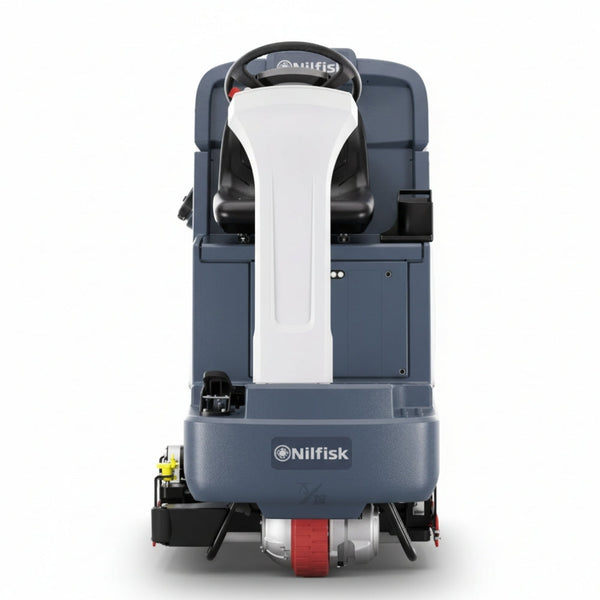
Picture two distribution centres on the same industrial estate in Sydney's west, each running the same mid-size battery scrubber on the night shift. At the first site the operator walks a sweeper down the aisles before scrubbing. At the second, the scrubber goes straight onto the floor, pallet splinters, shrink-wrap scraps, grit and all. By the end of the month the second site is changing squeegee blades early, unblocking the recovery hose on a regular basis and re-scrubbing aisles that came up streaky.
The machines are the same. The difference is one dry sweeping pass before the water goes down. This guide compares the prep options a buyer can choose from, shows where a scrubber can cope on its own, and sets out the order of work that keeps both machines productive.
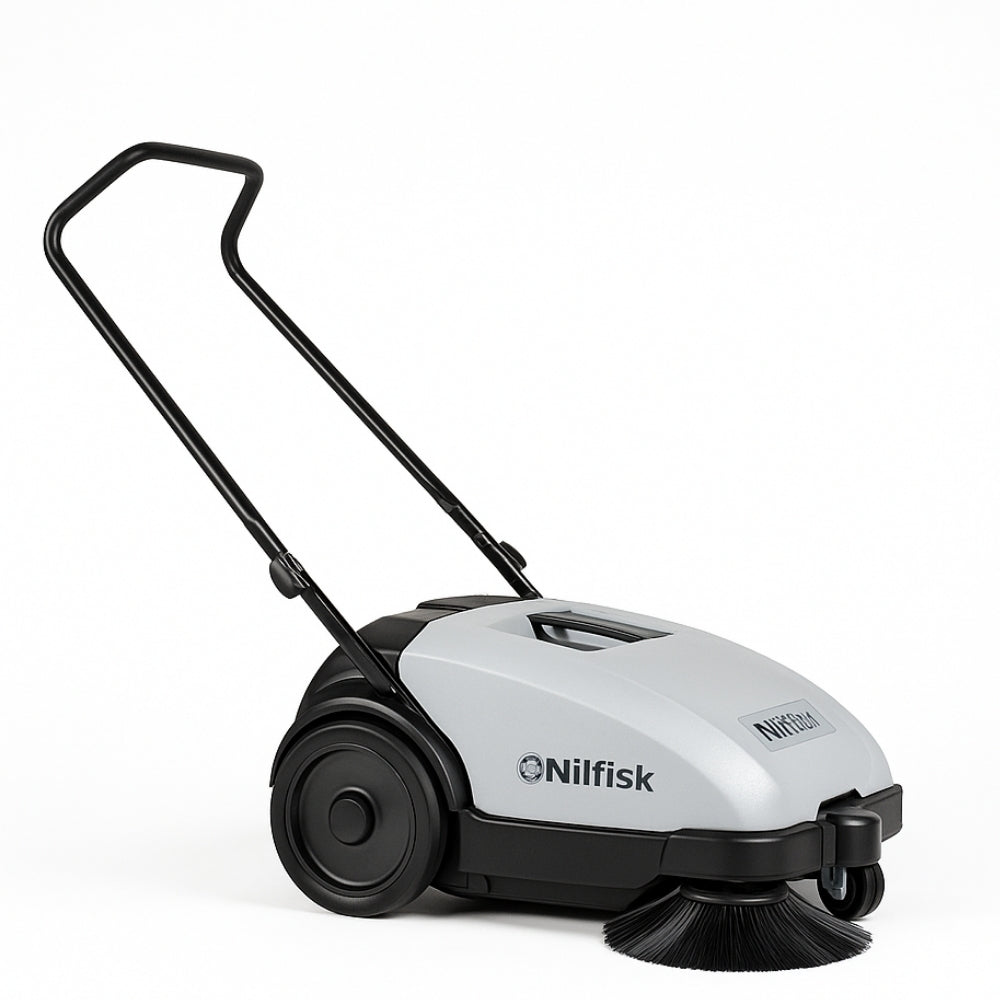
Pre sweep before scrubber: the short answer
Yes, pre sweep before scrubbing whenever loose debris is on the floor. A scrubber is built to lift soil stuck to the surface, not grit, paper or offcuts sitting on it. Sweep or vacuum first, scrape off gum, roll up mats, then scrub. Skipping this costs blades, hoses and repeat passes.
How much prep you need depends on the debris load, the floor area and the scrubber itself. The sections below work through each of those.
Why prep matters for the machine and the floor
Water changes loose dirt. Dry grit can be swept up in a single pass; wet grit becomes slurry. RapidClean's guide to preparing floors for scrubbing notes that scrubbing solution can turn dirt into mud that gets spread around, so the floor has to be scrubbed again, and that small stones can be ground into the floor and damage its finish.
The machine pays as well. Kennards Hire's sweeper or scrubber guide warns that loose dirt left on the floor can scratch polished concrete and tiles, clog squeegees and brushes, or block the recovery system. Sweeper Rentals describes running a scrubber on a debris-covered floor as the classic error: the debris gets packed into the recovery tank and hoses and the squeegee stops sealing.
There is also a safety angle. SafeWork NSW lists contaminants such as water, dust and paper among the common causes of slips, trips and falls on the same level. A streaky, half-dried aisle is exactly that kind of hazard.
Prep options compared: from push sweeper to battery sweeper
For a buyer, the real choice is between a broom, a manual push sweeper and a powered sweeper. Four listings from Freshway's sweepers range cover that spread:
| Freshway listing | Power | Listed sweep path | Hopper | Listed productivity | Dust control and noise | Weight |
|---|---|---|---|---|---|---|
| Nilfisk SW250 manual push sweeper | None (push-driven) | 720 mm with side brush | 38 L | Up to 3,680 m²/h theoretical | No filter listed; no motor | 20 kg |
| Hako Sweepmaster B500 | 24 V battery, on-board charger | 40 cm main broom, 60 cm with side broom | 40 L | Up to 2,400 m²/h | 1.2 m² filter; noise not listed | 51 kg ready for use |
| Nilfisk SW750 | Maintenance-free battery, on-board charger | 500 mm main broom, 720 mm with side broom | 60 L | 2,880 m²/h theoretical, 1,730 m²/h actual | 1 m² filter with shaker; 59 dB(A) | 68 kg incl. battery |
| Nilfisk SW900 | Maintenance-free battery, on-board charger | 825 mm with side broom | 60 L | Up to 3,715 m²/h theoretical | 1.8 m² filter with shaker; 70 dB(A) | 143 kg incl. battery |
Read the productivity column carefully. The SW750 is the only listing here with both a theoretical and an actual figure, and the actual rate is about 60% of the theoretical one (1,730 ÷ 2,880 = 0.60). Theoretical numbers assume a straight run with no turns, emptying or obstacles, so plan real shifts with some margin on the others too.
Worked example: a 1,200 m² run of warehouse aisles at the SW750's listed actual rate takes about 42 minutes (1,200 ÷ 1,730 = 0.69 hours). That is the time a buyer is weighing against blade changes, hose blockages and second scrubbing passes.

Manual or battery sweeper: the trade-off
A manual push sweeper wins on simplicity. Freshway lists the Nilfisk SW250 as having no motor, battery or cord, driven entirely by the operator's forward motion, at 20 kg with an adjustable handle. It is ready the moment someone picks it up, which suits retail aisles, small workshops and courtyards where the debris is light and the area is modest.
A battery sweeper wins once the area grows or the dust gets finer. The SW750 and SW900 both pull air through a filter with a shaker, so fine dust goes into the machine rather than back into the air. The SW750's listed 59 dB(A) also makes it practical in occupied spaces, which matters if the sweep has to happen before the building closes.
Weight cuts both ways. A 68 kg or 143 kg machine is fine on a level warehouse floor, but needs a ramp or goods lift to change levels. The 20 kg SW250 is listed as easy to manoeuvre and transport.

When the scrubber can handle light debris itself
Some compact scrubbers do pick up a little loose material. Freshway's listing for the Nilfisk SC250 says its cylindrical brush system can pick up light, loose debris while scrubbing, reducing the need to thoroughly pre-sweep. Note the wording: reducing, not removing. That suits a café floor with crumbs, not a loading dock with gravel and strapping.
As a rule of thumb for buyers, a cylindrical-brush scrubber can tolerate a light dusting of crumbs on a small floor. Anything that would rattle in a dustpan (stones, screws, broken glass, packaging scraps) should be swept or vacuumed first, whatever the scrubber.
Order of operations on a typical shift
- Clear the path. Move signs, bins and movable displays. Roll up entry mats, as RapidClean recommends, and wash them separately if needed.
- Pick up the large items. Strapping, cardboard and pallet offcuts go in the bin by hand or with a picker.
- Sweep or vacuum. Start at the far end and work towards the exit, covering edges with the side broom.
- Scrape sticky spots. Gum and dried spills come off with a floor scraper before the scrubber reaches them.
- Scrub and dry. One pass at the right overlap, with wet-floor signs out until the floor is dry.
- Empty and rinse. Hopper into the general waste bin; recovery tank to a sewer-connected cleaner's sink. The NSW EPA's "the drain is just for rain" guidance says runoff from washing activities must not enter stormwater drains.
High-debris sites: warehouses, docks and handovers
On some sites, sweeping is half the job. Warehouses and loading docks collect pallet splinters, staples and shrink wrap. Car parks collect leaves, grit and cigarette butts. A builder's handover clean often starts with plaster dust and offcuts, which is a classic place to need a sweeper first.
Two things change on these sites. First, the hopper empties more often, and a full hopper is heavy. SafeWork NSW's hazardous manual tasks guidance lists lifting, lowering and carrying among manual tasks, so plan where the hopper is emptied and how. Second, the scrubber's hoses and squeegee need a check every shift. Capital Equipment's floor scrubber quick fixes give a blocked hose, caused by debris, plastic or sludge drawn into the recovery system, as a common reason for poor suction.
If a floor is being stripped and refinished rather than maintained, prep goes further again. Freshway's commercial floor stripping guide covers that process.
Spec-sheet fields to check on a sweeper
- Sweep path with and without the side broom, against your narrowest aisle.
- Actual versus theoretical productivity, and which one the listing gives.
- Hopper litres, against the debris load and how often someone can empty it.
- Filter area and shaker, if fine dust is part of the load.
- Listed noise, for sweeping in occupied areas.
- Weight and charging, including whether there is an on-board charger and a way between levels.
Checklist for site supervisors
- Pre-sweep written into the scrubbing procedure, not left to the operator's judgement.
- Sweeper or vacuum stored next to the scrubber, charged and ready.
- Scraper and picker on the machine for gum and large items.
- Mats lifted before scrubbing and replaced once the floor is dry.
- Squeegee blades and recovery hose checked at the end of each shift.
- Hopper and recovery tank emptied to the right place every time.
Common mistakes to avoid
- Scrubbing straight over grit and then blaming the squeegee for streaks.
- Choosing a sweeper on theoretical m²/h alone.
- Letting the sweeper hopper fill until it is too heavy to empty comfortably.
- Assuming a scrubber that copes with light debris can replace a sweeper on a dock.
- Leaving mats down and scrubbing up to their edges.
Frequently asked questions
Do I always need to sweep before scrubbing?
Yes, if there is loose debris. A light dusting of crumbs on a small floor may be fine for some compact scrubbers.
Sweeper or vacuum first?
Either works. Sweepers suit large hard floors and coarse debris; vacuums suit smaller areas, edges and fine dust.
What happens if I skip the pre-sweep?
Debris turns to slurry, blocks hoses, wears blades and leaves streaks that need a second pass.
Manual or battery sweeper?
Manual for small areas and light debris. Battery for large areas, fine dust or daytime work.
Next steps with Freshway
Pair the sweeper with the scrubber you already run, or shortlist both together from Freshway's floor scrubbers and sweepers ranges. Check each product page for current pricing and availability. For scrapers, signs and the other small items that make prep quick, see the janitorial supplies range, and browse commercial cleaning machines for the rest of the fleet.