Warehouse cleaning is decided by three things before any machine is compared: what the debris is, how the traffic moves, and how much floor there is. A distribution centre with pallet wrap, cardboard dust and forklift traffic needs a different program from a food warehouse with washdown areas or a cold store with condensation. A warehouse cleaning equipment guide that starts with the machine catalogue ends with the wrong machine for the route.
This guide is for warehouse managers, facility teams and cleaning contractors specifying equipment for Australian warehouses, distribution centres and light industrial sites. It covers debris and traffic, machine choice, racking and route design, dust control and the procurement checks that keep a specification intact.
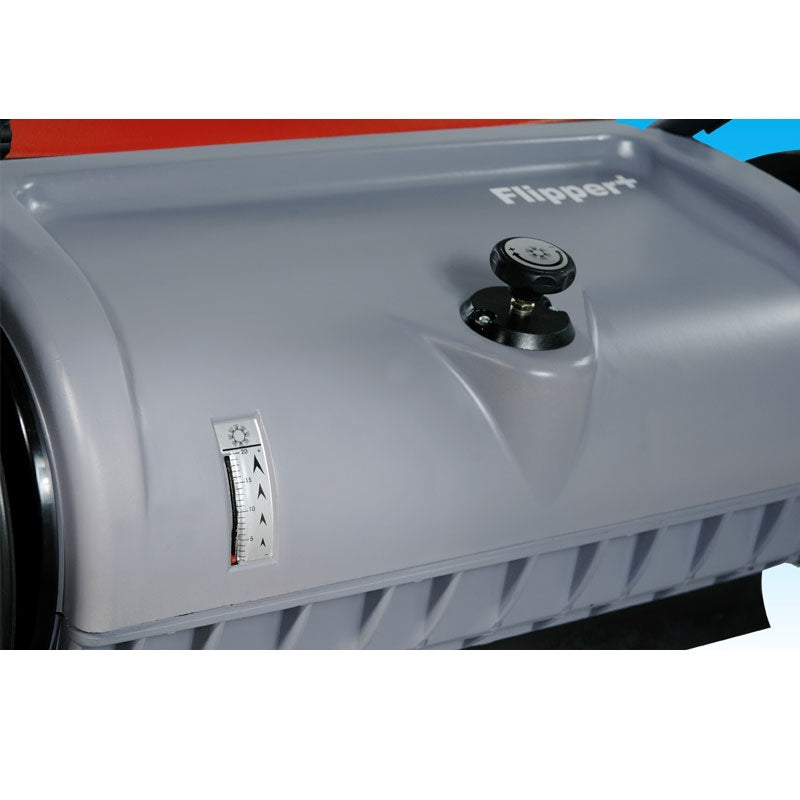
Warehouse Cleaning Equipment Guide: Start With Debris and Traffic
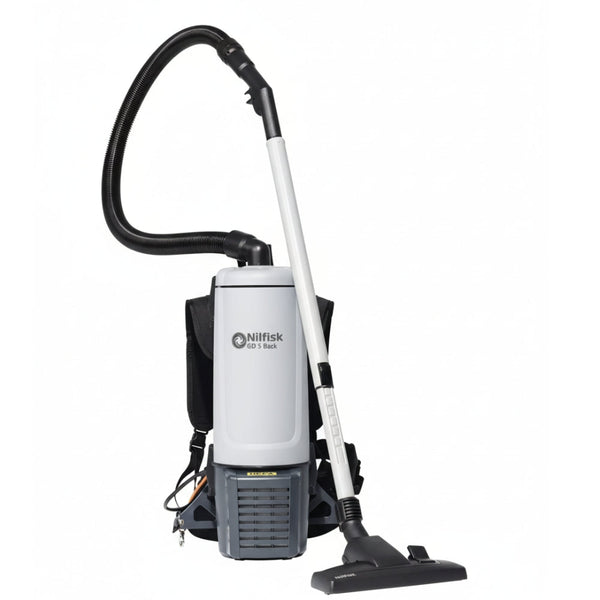
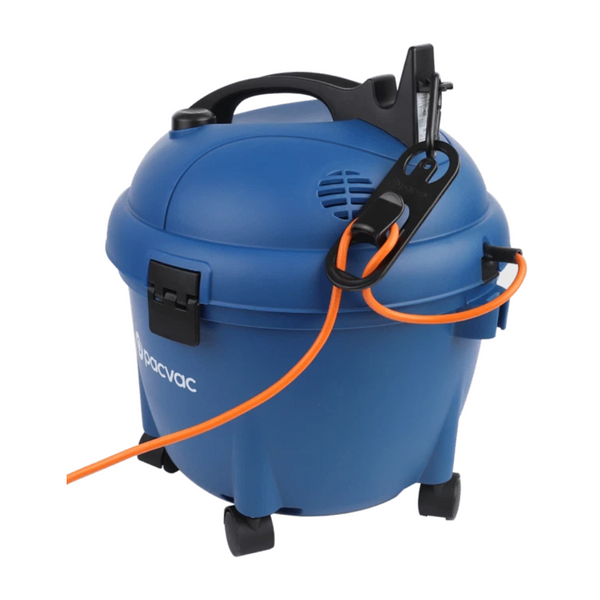
Debris decides the first machine. Cardboard, pallet wrap, strapping and timber need a sweeper or a vacuum with the right tool; fine dust needs a filtered vacuum or extraction; spills and wet areas need a scrubber or a wet-and-dry machine. A site with all three needs more than one machine, or a machine with interchangeable decks and tools.
Traffic decides the size. Forklift lanes, pedestrian walkways, racking aisles, loading docks and open marshalling areas have different widths and obstruction patterns. A ride-on scrubber is productive in a wide open aisle and useless in a narrow one; a walk-behind fits the narrow aisle but takes longer over a large floor.
Floor area then sets the productivity requirement. Measure the usable floor rather than the building footprint, subtract racking, staging and areas the machine cannot reach, and divide by realistic coverage including turns and water stops. That figure is the shift requirement, and it is often smaller than the site expects.
Set the Operating Constraint Before Building a Shortlist
Operating hours usually decide the answer before performance figures do. A 24-hour operation may only have narrow cleaning windows, which changes both the machine and the staffing. Power availability decides whether battery, corded or fuel machines are practical, and a site without a safe charging position has already ruled out some options.
Safety is the next constraint. Forklift traffic, pedestrian routes, loading docks and blind corners mean the cleaning method has to be planned around traffic management rather than added to it. Where the cleaner works while the warehouse operates, the machine needs visibility, lights and a route that does not cross forklift lanes at blind points.
The third constraint is the environment. Cold stores, freezer rooms, washdown areas, dusty bulk handling and food-grade areas all impose requirements on the machine and the chemistry. A machine that suits a dry ambient warehouse may not be rated for washdown, and a standard vacuum may not be acceptable where dust is hazardous.
Which Machine Covers the Floor Area?
Match the machine to the aisle width and the shift, not to the total floor area.
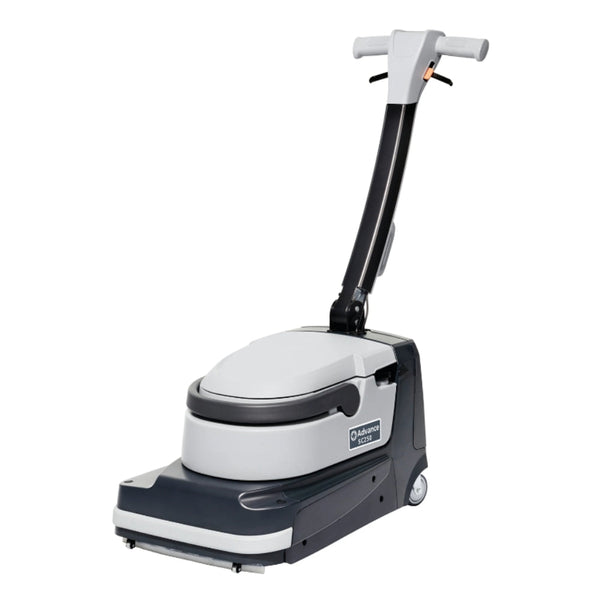
A ride-on scrubber suits long, wide, uninterrupted aisles and a shift that can absorb its turning radius, while a walk-behind scrubber or sweeper suits narrower aisles, mixed traffic and sites where the machine must be stored compactly.
Sweepers and scrubbers do different jobs and are often both needed. A sweeper removes cardboard, wrap, grit and debris before a scrubber wets the floor; a scrubber removes the fine dust and tyre film a sweeper leaves. Where both are used, the sequence matters: sweep first, then scrub, or the scrubber turns debris into a slurry the squeegee spreads.
Productive area per shift is the figure to compare. Take the deck width, the speed the floor allows, the overlap between passes, and the time lost at racking ends, doorways, water points and battery changes. That calculation, done on the real route, tells you whether one machine or two are needed.

Racking, Rows and the Real Route
Racking changes the route in ways a floor plan does not show. Each row end is a turn, each cross-aisle is a decision, and each pallet position is a place where debris collects. The machine has to turn at the row end, pass a pallet truck and reach the floor under the racking without hitting the legs.
The route also determines where the machine is stored and charged. A charging bay at one end and racking at the other costs time on every shift, and a machine that must be driven through a busy pick area to reach its route creates risk twice a day.
Plan the route with the warehouse team rather than around them. The sequence should follow the traffic pattern, avoid peak pick times where possible, and use aisles in an order that keeps the machine out of forklift blind spots. That plan is what the cleaning schedule is built on.
Dust, Airflow and Containment
Warehouse dust is not one problem. Cardboard and paper dust, timber dust, plastic fragments, metal dust from maintenance and food powders behave differently and carry different risks. Where the dust is hazardous, the vacuum has to match the dust class and the disposal routine, and the site risk assessment decides what is acceptable.
Airflow matters more than suction for dust capture. A machine with high suction and low airflow can seal against a surface and still leave fine dust in the air. For general warehouse cleaning a filtered vacuum with a good floor tool is usually enough; for maintenance tasks that generate dust, a class-rated extractor connected to the tool is the control.
Containment finishes the job. Bags and filters have to be changed before they load, emptying has to happen in a controlled place, and waste has to go where the site's arrangements allow. A machine that collects dust well and releases it at the bin has moved the problem rather than solved it.
Loading Docks, Yards and Outside Areas
The loading dock is where warehouse dirt enters. Grit, cardboard, wrap, oil and water all arrive with the vehicles, and the dock area carries traffic, pedestrians and often the only route to the bins. Cleaning it is part of the warehouse program rather than an outside task, and it needs equipment that can handle coarse debris and wet surfaces.
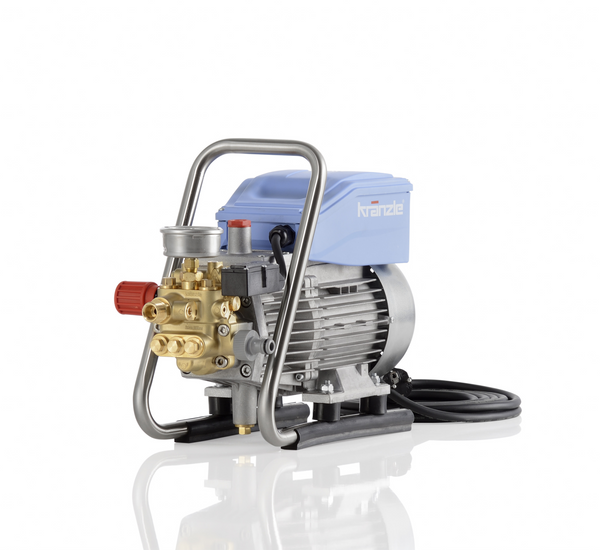
A sweeper or a heavy-duty vacuum handles the debris; a scrubber or a pressure washer handles the oil and the tyre film, depending on the drainage. Where a pressure washer is used, the runoff has to be contained and the surface has to tolerate the pressure, which is a different specification from the internal floor.
Yard areas add weather. Rain brings mud onto the dock, wind brings leaves and litter, and heat can make rubber and sealant soft. The schedule should follow the weather rather than a fixed calendar, and the equipment should be stored where it can be used without crossing the clean internal floor.
Outside areas also carry a safety dimension: vehicle movements, pedestrian routes and uneven surfaces. The cleaning method should be planned with the site's traffic management, and the machine should be visible to drivers rather than relying on the driver to see it.

Storage, Charging and Service Access
Warehouse machines are large, and the storage decision is part of the specification. A machine that blocks a fire exit, sits in a pick aisle or is charged in a shared space will be used less often and creates a new hazard. Confirm the storage position, the charging position and the route from one to the other before purchase.
Service access matters more on a warehouse machine than on a small scrubber, because downtime affects a large area. Confirm the local parts and service arrangements for squeegees, pads, brushes, batteries and drive components, and hold the consumables the machine uses in the quantities a week of shifts requires.
Battery or fuel logistics belong in the same plan. A battery machine needs a charging schedule that fits the shift pattern; a fuel machine needs fuel storage and ventilation; a corded machine needs a safe lead route across a floor with vehicle traffic. None of those is a detail to settle after delivery.
Cold Stores, Freezer Rooms and Washdown Areas
Cold stores and freezer rooms change the equipment and the method. Condensation, ice, slippery surfaces and condensation-related mould are routine, and the cleaning window is usually short because the room has to return to temperature. Machines and chemistry have to be rated for the conditions, and the method has to keep the door open time to a minimum.
Washdown areas are the opposite problem: water, food residue and drainage. They need machines and chemicals that suit wet work, surfaces that can tolerate the chemistry, and a drainage plan that keeps runoff out of areas that should stay dry. Where the site has a trade waste arrangement, the washdown water is part of it.
Both environments make the maintenance routine more important. Cold and damp conditions accelerate corrosion and seal wear, and a machine that is not cleaned and dried after use fails sooner. The service interval should reflect the environment rather than the general warehouse schedule.
Where the site handles food, the cleaning chemistry and the record keeping may be subject to a food safety program. In that case the cleaning schedule, the chemicals and the verification are part of the program, and the equipment specification has to support the records rather than sit outside them.
Training and Documented Procedures
Warehouse cleaning involves machines, traffic and often hazardous dust, so training is a safety control rather than an induction formality. Operators need to know the machine, the route, the traffic rules, the dust class and the disposal routine, and they need to know when to stop.
The documents worth keeping are a site plan with the machine route, a task schedule with frequencies, a dust and disposal procedure where relevant, and the service log. Where the site runs multiple shifts, the documents also need a handover that tells the next shift what was completed and what was missed.
Training should cover the sequence as well as the machine: sweep before scrub, change bags before they load, report a squeegee that leaves water, and never clean across a live forklift lane without the traffic control the site requires.
Procurement Checks That Prevent Substitution Drift
Warehouse equipment specifications drift when a machine, brush or pad is replaced with an equivalent that is not equivalent. A different deck width, a different brush grade or a different battery changes the productivity the schedule was built on.
The controls are administrative. Specify the machine by model, the attachments by part number and the consumables by grade, and record them against the site. Ask suppliers to state whether an item is the specified product or an alternative. Keep a stock of the specified consumables rather than relying on a delivery arriving mid-week, and make the person who signs for them responsible for confirming the match.
Apply the same discipline when the warehouse layout changes. New racking, a new pick face or a change in traffic flow can invalidate the route and the machine size, and the specification should be reviewed before the change goes live rather than after the schedule fails.
Conclusion
Warehouse cleaning equipment follows from debris, traffic and floor area, constrained by hours, safety and environment. Choose the machine for the aisle and the shift, sweep before you scrub, and treat dust containment as a system rather than a filter.
Then plan the route with the warehouse team, secure the storage and charging positions, and lock the consumables to the specification. That is what keeps a large floor clean on a schedule rather than in a series of catch-ups, and it is what makes the machine investment pay back.
Questions we get asked most
- What equipment is needed to clean a warehouse floor?
- Usually a sweeper for debris and a scrubber for fine dust and tyre film, with a filtered vacuum for edges, racking and maintenance dust. The machine size follows the aisle width and the shift, and sites with cold stores or washdown areas need machines rated for those conditions.
- Should a warehouse sweep before scrubbing?
- Yes. Sweeping or vacuuming removes cardboard, wrap and grit before the scrubber wets the floor. Scrubbing first turns debris into a slurry that the squeegee spreads and the floor dries with, so the sequence is part of the method rather than an optional extra.
- How do I choose between a ride-on and a walk-behind scrubber?
- By the aisle width and the route. Ride-on machines suit long, wide, uninterrupted aisles; walk-behind machines suit narrow racking, frequent turns and compact storage. Productive area per shift on the real route, including turns and water stops, is the figure to compare.
- Do warehouse vacuums need a dust class rating?
- Where the dust is hazardous or regulated, yes. The class is set by the risk assessment, and the machine, bags and filters have to match it. For general warehouse cleaning a filtered commercial vacuum may be enough, but maintenance dust and bulk handling often need a class-rated extractor.
Manufacturer information: Nilfisk Australia and Karcher Australia. Work health and safety: Work Health and Safety Regulations 2011, SafeWork NSW and WorkSafe Victoria.
Compare ride-on and walk-behind scrubbers, sweepers and industrial vacuums in the Freshway floor care range.