Lithium vs Lead-Acid Batteries for Floor Scrubbers: TCO Without Hype
Match scrubber battery chemistry to charger bays and shift patterns.
Shop now
The night crew at a Blacktown logistics office finished the last aisle with the scrubber still wet on the pads — then found the charger bay door locked and the spare pack flat. That is the real lithium vs lead-acid decision on Australian sites: not brochure cycle-life charts, but whether your charger, watering routine and opportunity-charge windows match the chemistry you actually run.
What changes with lithium on scrubbers
Lithium vs lead acid floor scrubber battery choice in Australia is a runtime and maintenance trade-off, not a slogan. Lithium packs take opportunity charges between short bays; flooded lead-acid needs water checks and fuller charge cycles. Match charger, bay ventilation and replacement planning to the chemistry listed on the Freshway machine page.
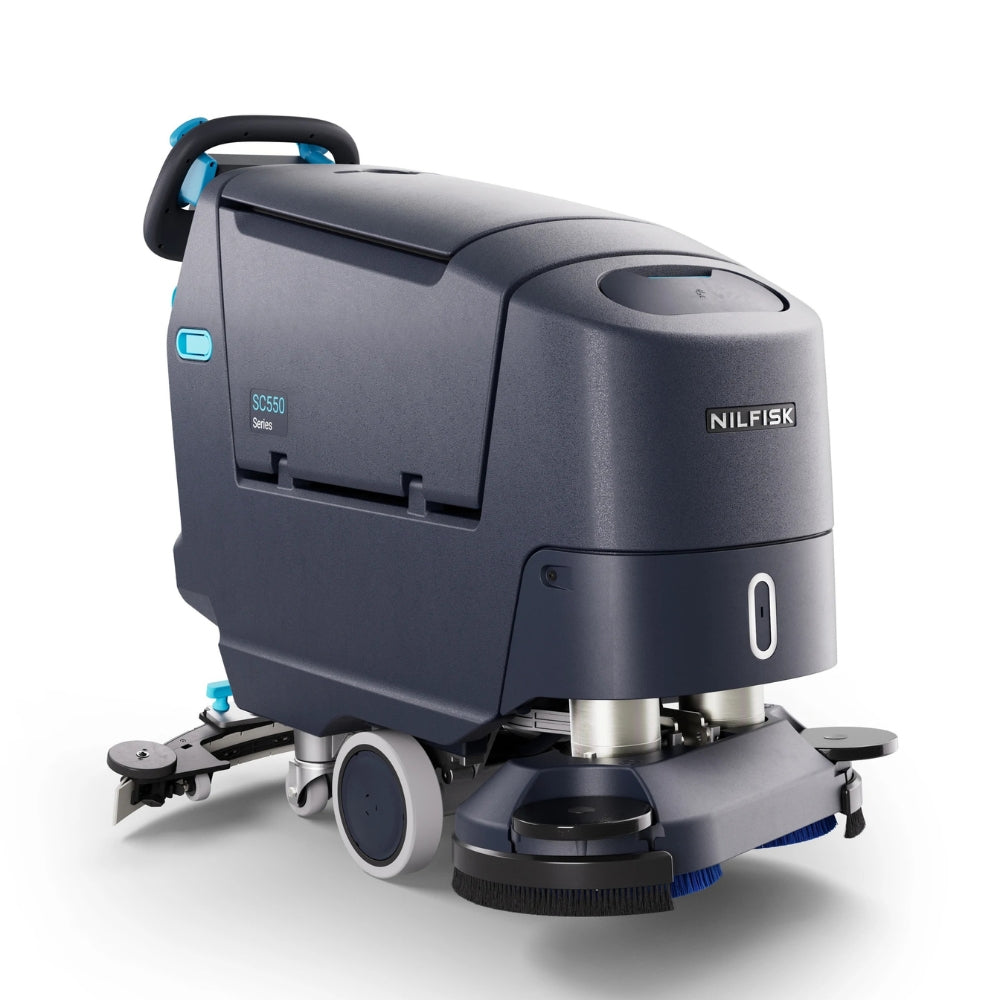
Freshway's Nilfisk SC550 listing is explicit: both CYL 51 and D 61 packages ship with lithium-ion batteries and onboard chargers. The Cleanstar MIRA 40 listing goes further — twin 36 V lithium-ion packs at 13 Ah each, so a second pack can charge while the first works. Compare that with the Karcher BR 75/75 W Classic Bp Pack, which lists a 24 V / 170 Ah battery pack and onboard charger aimed at long uninterrupted runs rather than swap-and-go lithium packs.
Runtime and opportunity charging
Opportunity charging means parking the scrubber on its charger during tea breaks and changeovers without waiting for a full discharge. Lithium chemistries on listings such as the SC550 and MIRA 40 are sold for that pattern. Large amp-hour wet or sealed packs on bigger walk-behinds still prefer deeper, scheduled charges — treat the 170 Ah BR 75/75 pack as a shift-end asset, not a five-minute top-up toy.
Measure real floor time: tank dump cycles on a 50 L / 50 L SC550 or a 75 L / 75 L BR 75/75 often end a bay before the pack does. Runtime claims only matter after you map dump points and aisle length. For cordless versus corded format decisions outside battery chemistry, see Freshway's existing guide on battery vs corded floor scrubbers for commercial sites.

Lead-acid maintenance burden
Flooded lead-acid packs need periodic watering with distilled or approved water, clean terminals and a cool, ventilated charge bay. Skip watering and you sulphate plates; overfill and you corrode trays. Sealed AGM or gel packs reduce watering but still dislike deep opportunity-charge abuse. Labour hours for weekly battery checks belong in TCO even when you never write a dollar figure on a slide.
SafeWork NSW's guidance on hazardous chemicals and WorkSafe Victoria's hazardous substances pages both expect SDS awareness for battery electrolyte and spill kits in charge areas. Put eye wash and neutraliser where the charger actually lives, not in a locked chemical cupboard two floors away.
Charger and bay requirements
Match the charger to the pack chemistry named on the product page. The SC550 and MIRA 40 listings include onboard chargers for their lithium packages; the BR 75/75 listing includes an onboard charger for its 170 Ah pack. Do not share one random workshop charger across mixed fleets. SafeWork NSW's electrical and power hazard pages and WorkSafe Victoria's electrical safety advice both push intact leads, correct outlets and trained users — charger bays are electrical plant, not cupboard clutter.
Lithium charge areas still need clear egress, dry floors and no mixed storage with flammable solvents. SafeWork NSW's lithium-ion battery guidance covers thermal-risk awareness for damaged or swollen packs. Isolate a suspect pack; do not leave it on a timber shelf above the mop sink.
Replacement cycle thinking without invented prices
TCO without hype means counting pack replacements, charger life, watering labour, downtime when a spare is flat, and scrap handling — then comparing those against purchase price on the product page rather than inventing spreadsheet dollars. Lithium often wins where multi-shift opportunity charging cuts spare-pack inventory. High-Ah lead-acid or AGM packs can still win on simple single-shift sites that already have watering discipline and a cool charge room.
When packs reach end of life, treat them as regulated waste. NSW EPA's waste guidance is the starting point for lawful disposal pathways — never tip electrolyte or dump packs in general rubbish.
Safety and handling differences
Lead-acid risks centre on acid burns, hydrogen during charge and heavy lift injuries when swapping trays. Lithium risks centre on mechanical damage, incorrect chargers and thermal events if cells are crushed or shorted. Both chemistries need PPE, training and a written emergency step for the charge bay. Energy Safe Victoria's public electrical safety hub is a useful reminder that chargers and extension leads sit inside the same electrical safety culture as any other plant.

When lead-acid still fits
Keep a high-Ah non-lithium pack when the site runs one long night shift, already owns a compliant charge room, and operators are trained to water and equalise on schedule. The BR 75/75 listing's 75 L tanks and 750 mm roller deck target medium-to-large floors where dump frequency, not five-minute top-ups, sets the pace. Compact lithium machines such as the MIRA 40 (410 mm path, small 3 L / 5 L tanks) shine on amenities and short daytime calls where swapping a second 36 V pack beats dragging a charger cart.
Spec checklist for battery systems
| Check | Lithium-leaning example | High-Ah pack example |
|---|---|---|
| Chemistry named on listing | SC550 lithium-ion package; MIRA 40 dual 36 V Li-ion 13 Ah | BR 75/75 24 V / 170 Ah pack |
| Charger | Onboard charger included on SC550 / MIRA 40 listings | Onboard charger included on BR 75/75 listing |
| Tank pairing | SC550 50 L / 50 L; MIRA 40 3 L / 5 L | BR 75/75 75 L / 75 L |
| Opportunity charge habit | Tea-break top-ups planned | Full end-of-shift charge preferred |
| Bay controls | Damaged-pack isolation; dry, clear egress | Watering kit, spill kit, ventilation |
Frequently asked questions
Does lithium always beat lead-acid on scrubber TCO?
No. Lithium usually helps multi-shift opportunity charging; high-Ah packs can still fit single long shifts with good watering discipline.
Can I opportunity-charge every scrubber battery?
Only when the listing and charger support that chemistry. Do not force short top-ups on packs designed for full charge cycles.
What does the Nilfisk SC550 ship with?
The Freshway listing states both SC550 variants include lithium-ion batteries and onboard chargers as full packages.
Where should we store spare lithium packs?
In a dry, supervised area with clear egress, away from solvents, following SafeWork NSW lithium-ion battery guidance.
Next steps with Freshway
Shortlist machines inside floor scrubbers, then confirm pack chemistry and chargers on each product page. Browse batteries and chargers for spare packs that match your fleet, or narrow by brand in Nilfisk. Book service and repairs when commissioning a new charge bay. Check current packs and inclusions on the product page before the tender locks.