Three-Phase vs Single-Phase Commercial Pressure Washers in Australia
Audit the outlet before you shortlist bar and flow rates.
Shop now
A contractor rolled a 15 A single-phase washer onto a Strathfield warehouse dock, found only 10 A outlets, and spent the morning on a borrowed petrol unit. Power is the first constraint for commercial pressure washers in Australia — three-phase vs single-phase is not a prestige choice, it is whether the site electrician already wired the bay you intend to use.
Power as the first constraint
Three phase vs single phase pressure washer Australia decisions start at the outlet, not the brochure bar rating. Single-phase 240 V machines fit 10 A or 15 A plugs; three-phase 415 V units need fixed industrial supply. Audit the bay with an electrician before you shortlist flow and pressure on Freshway listings.
SafeWork NSW's electrical and power pages and WorkSafe Victoria's electrical safety guidance both treat damaged leads, incorrect plugs and overloaded circuits as foreseeable risks. A pressure washer that trips the dock board every wash is not "powerful" — it is mis-specified.
Single-phase limits on LPM and bar
On a standard 10 A 240 V circuit, commercial electrics such as the Kranzle K2160TST list 1740 PSI (120 bar) at 11 L/min from a 10 A plug — useful when every site is a different house or shopfront. Step to a dedicated 15 A single-phase outlet and machines such as the Powershot PS1310TS list 1885 PSI (130 bar) at 10 L/min, with a wider earth pin that will not fit a 10 A domestic socket.
That is the practical ceiling for many mobile crews: more amp headroom can lift pressure or duty, but it does not unlock the simultaneous high bar and high L/min that fixed three-phase bays deliver. For electric versus petrol format choices outside supply type, use Freshway's guide on electric vs petrol pressure washers for commercial cleaning in Australia.

Three-phase for fixed bays
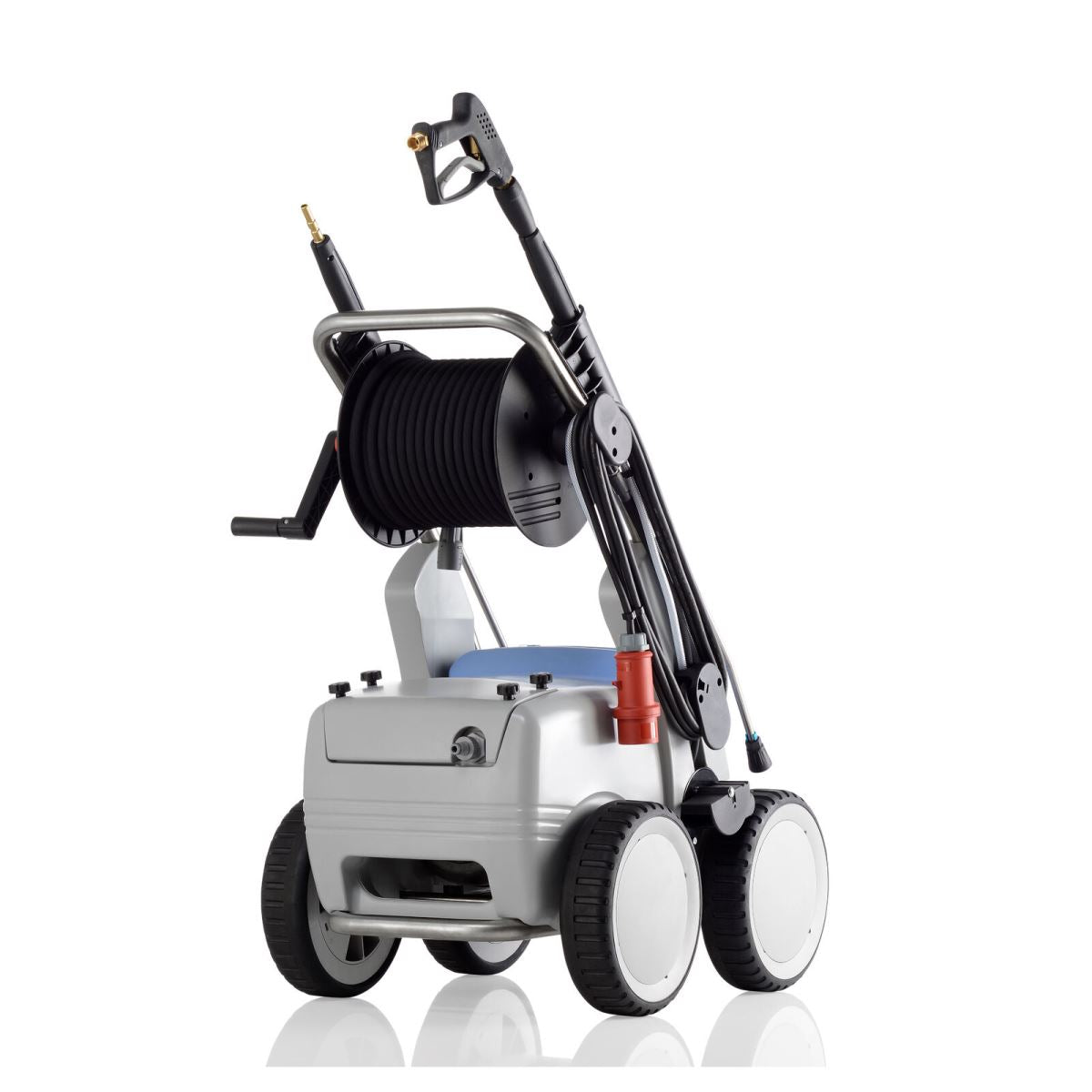
When the wash bay already has 415 V three-phase, industrial electrics change the maths. The Kranzle Quadro 1000TST listing shows 415 V 20 A three-phase supply, 3190 PSI (220 bar) and 16 L/min on a four-wheel trolley with a 20 m hose reel. The Powershot HW-2021 listing pairs 415 V 20 A three-phase with hot water up to 140°C, 3000 PSI (200 bar) and 21 L/min for grease-heavy plant rooms.
Those flow rates cut rinse time on trucks and production floors. They also lock you to a wired bay — useless on a residential driveway with only 10 A outlets. Energy Safe Victoria's electrical safety resources and the Energy Safe Victoria portal at esv.vic.gov.au reinforce that industrial connections belong with licensed electrical work, not DIY adapters.
Mobile contractor realities
Mobile cleaners live on whatever the client site offers. Carry a verified 10 A machine for domestic and small retail calls, and know in advance which commercial clients have 15 A or three-phase bays. Do not plan a full day of 15 A-only work across suburbs where every outdoor GPO is 10 A. Keep petrol or diesel options for remote yards with no safe electrical point — then manage fumes, bunding and noise separately.
Plug types and lead discipline
10 A plugs fit standard Australian wall sockets. 15 A plugs use a larger earth pin and need matching outlets. Three-phase plugs and isolators are site-specific — photograph the outlet before quoting. Use industrial-rated leads at sensible lengths; coiled leads overheat. Standards Australia's public catalogue at standards.org.au is the reference spine for electrical product standards your electrician will cite when specifying outlets and RCDs for a new wash bay.

Spec sheets vs site audits
Spec sheets sell bar and L/min. Site audits sell outlets, RCD protection, water inlet flow, drainage and noise limits. Walk the bay with the FM: confirm phase, amp rating, isolator location, hose-reel reach and whether wastewater hits trade waste or a bund. NSW EPA's reminder that the drain is just for rain still applies when you blast grease toward a stormwater grate.
When petrol still wins
Petrol or diesel units win when there is no safe electrical supply, when you need simultaneous high pressure and flow far from a switchboard, or when the temporary worksite forbids new electrical installs. They lose indoors without fume controls and on sites with strict noise or emission rules. Choose them for the power gap, not as a default when a correctly wired single-phase electric would do.
Decision checklist
| Site power | Typical Freshway path | Watch-outs |
|---|---|---|
| 10 A 240 V only | K2160TST-class 10 A electric (1740 PSI / 11 L/min listed) | Do not force 15 A plugs with adapters |
| Dedicated 15 A 240 V | PS1310TS-class 15 A electric (1885 PSI / 10 L/min listed) | Confirm outdoor GPO is truly 15 A |
| 415 V three-phase bay | Quadro 1000TST or HW-2021-class industrials | Licensed install; fixed location |
| No reliable power | Petrol/diesel from industrial ranges | Fumes, fuel storage, noise |
Frequently asked questions
Is three-phase always stronger than single-phase?
No. Three-phase enables higher simultaneous pressure and flow on fixed bays, but a correctly matched 10 A or 15 A machine can be the right tool on mobile jobs.
Can I run a 15 A washer from a 10 A outlet with an adapter?
No. The PS1310TS listing states its 15 A plug will not fit a standard 10 A socket — that is a safety limit, not a suggestion.
What supply does the Kranzle Quadro 1000TST need?
The Freshway listing specifies 415 V three-phase with a 20 A plug, delivering 3190 PSI at 16 L/min.
Do I need an electrician before buying a three-phase washer?
Yes. Confirm isolators, RCD protection and cable capacity with a licensed electrician before you order.
Next steps with Freshway
Compare electrics in electric pressure washers and heavier plant in industrial pressure washers. Narrow German single-phase and three-phase options via Kranzle pressure washers or browse the wider commercial pressure washers collection. Confirm plug type, bar and L/min on each product page with your site electrician before the purchase order issues.