L-class vacuum Australia requirements are widely misunderstood: the class is often treated as a quality badge, or as a number to match on a specification sheet, when it really describes the dust a machine is designed to handle and how well it retains it. Buying an L-class machine for a task that requires M-class or H-class control leaves the site with equipment that looks correct and does not control the exposure; buying an L-class machine when the task is general cleaning means paying for filtration that the job will not use properly.
This guide explains what L-class means in practice, how it differs from M-class and H-class, where L-class machines fit on Australian sites, and what to settle before ordering so the specification matches the dust rather than the shelf label.
L-Class Vacuum Australia: What the Class Actually Means
Dust class describes the design and performance of a machine for collecting dust of a particular hazard level. L-class sits at the entry point of that scale: it is intended for dusts with lower exposure risk, and it specifies filtration and containment requirements for that level rather than the highest available. M-class and H-class machines sit above it, with progressively stricter filtration, bagging and emptying requirements, and H-class is the class used for hazardous dusts such as asbestos-related material.
The class is a system requirement, not a filter specification. The machine's filter, seal, bag arrangement, container and emptying method are all part of how it meets the class, which is why parts are not interchangeable between classes and why a machine can lose its compliance by being fitted with the wrong bag or by being emptied in a way that releases dust.
In Australia the reference behind class claims for commercial wet and dry vacuum cleaners is published by Standards Australia, listed as AS/NZS 60335.2.69. The class that a task requires is a risk assessment decision rather than a preference; the regulators publish the duty and the practical guidance, including WorkSafe Victoria's material on crystalline silica and its hazardous substances guidance, with the framework set by the Work Health and Safety Regulations 2011. SafeWork NSW publishes equivalent guidance for New South Wales sites, and where older buildings are involved, the asbestos material published by WorkSafe Victoria sets out the additional controls.
Define the Site Condition That Changes the Answer
The same box of tools can require different machines on two sites, because the answer depends on the dust, the task and who is exposed. Start with what is being collected. Fine mineral dust from grinding and cutting behaves and travels differently from coarse demolition debris, and both behave differently from wood dust, food powder or general cleaning soil.
Then consider how the machine will be used. Tool-attached extraction, in which the machine is connected to a saw, grinder, sander or drill, is a dust control measure and has to keep the dust out of the air at the source. Standalone cleaning, where the operator works a floor or surface directly, is a cleaning task where pick-up and capacity matter more. The same machine rarely does both well, and where both tasks exist, the specification usually needs to cover both rather than compromise on one.
Finally, consider the site itself. Occupied buildings impose noise and access constraints, healthcare and education environments bring infection control and occupant protection considerations, and sites with existing hazardous material registers bring their own requirements. Where the dust is unknown - an older building, an unfamiliar process, an unidentified powder - the correct step is to identify it before choosing a machine.
Identify the Dust Before Choosing the Class
Dust identification is what makes the class decision defensible. The useful questions are: what is the material, how was it generated, what proportion of the dust is fine enough to stay airborne, does it contain a substance with a workplace exposure limit, and is there any possibility of asbestos-containing material or another hazardous component?
For many commercial sites, mineral dust is the practical starting point. Concrete cutting, grinding, chasing and demolition generate fine dust that can contain crystalline silica, and silica exposure is regulated through the general duty to manage risk. Wood dust from cutting and sanding varies by timber and by process. Metal dust, coatings, sealants and mixed demolition dust add variables that a supplier cannot resolve for you, because the answer depends on the material on site.
Once the material is known, the class requirement usually follows, and it is worth confirming it against the site's risk assessment and any client or principal contractor specification rather than deciding it informally. On projects where the principal contractor has specified a class, that specification governs. Where the dust is potentially hazardous, this is also the point to involve the site's health and safety arrangements, because the machine is one control among several.
Which Dust Class Does the Task Require?
Match the class to the dust's hazard level.
L-class suits lower-risk dusts, M-class suits dusts that warrant greater filtration and more controlled disposal, and H-class is used for hazardous dusts such as asbestos-related material, so the correct starting point is always the material being collected.
The pattern on commercial sites is usually straightforward. General trade clean-up, general debris and non-hazardous dust often sit within the L-class range. Where dust is finer, where exposure limits are lower, or where the client or principal contractor requires a higher class, M-class becomes the specification. Where the dust is known to be hazardous - asbestos-related material being the most common example on Australian sites - H-class is required, together with the disposal and decontamination arrangements that go with it.
Where a site has multiple dust streams, the practical answer is often a mixed fleet: an L-class or M-class machine for general trade work and a dedicated H-class machine for hazardous material. Trying to cover both with one machine means either under-specifying the hazardous work or wearing out an expensive machine on general cleaning.

Airflow, Suction and Tool Performance
Class tells you what the machine retains; airflow tells you how much dust it captures. The two work together, and a site can have a compliant machine that still leaves dust in the air because the air movement at the tool is inadequate. That is why the tool connection matters as much as the class rating.
Airflow depends on the machine and on everything downstream of it: hose diameter and length, the adapter or shroud that connects to the tool, the tool's own extraction port, and the state of the bag and filter. A hose that is one size too small, an adapter with a restricted bore or a full bag all reduce capture. On site this often presents as a machine that "isn't strong enough" when the real issue is the air path.
The manageable part is the routine. Change bags before they are full, clean or replace filters on the manufacturer's interval, keep hoses and couplings to the machine's specification, and confirm the tool is the one the machine was specified with. Where several tools are in use, standardising on one hose and coupling system makes those checks quick enough to be repeated.
Bags, Filters and Sealed Handling
Bags and filters are class-specific consumables, and the wrong part is one of the most common ways a site loses the control it paid for. The practical rules are to use the correct part number for the model, to change bags before they are full, to follow the manufacturer's guidance where filter cleaning is permitted, and to treat a damaged seal, gasket or latch as a defect to be fixed before the machine goes back to work.
Sealed handling is the operator behaviour that makes the design work. Removing and closing a bag without releasing dust, emptying the container in a controlled location, wearing the protection the risk assessment requires, and cleaning the machine's housing in a way that does not aerosolise collected dust are all part of the class requirement in practice. Where the machine is moved between areas or buildings, changing the bag before it is transported keeps the dust contained.
Stocking matters too. Consumables that run out at inconvenient times get substituted, and the substitution is rarely the same class as the original part. Keeping the correct bags and filters on site, with a reorder point that reflects actual usage, is a compliance measure as much as a convenience. Freshway Supplies stocks class-rated machines, filters and bags, and the guide to matching vacuum bags and filters to the right machine shows how to confirm the correct parts.

Inspection, Testing and Filter Replacement
Inspection is the discipline that keeps a class-rated machine performing like one. During use, watch for the signs that airflow is falling - reduced pick-up at the tool, a machine that sounds strained, dust escaping around a housing. After use, empty and close the bag properly, clean the machine housing without aerosolising dust, and store the machine so the filter is not damaged.
Where a site's procedure requires testing or documentation, record it with the machine's service history so a degrading filter shows up as a trend rather than as a surprise. Replacement intervals should follow the manufacturer's guidance for the filter type and the duty, shortened where the machine collects fine dust or is used heavily.
The parts that fail are predictable: bags, filters, seals, hoses and couplings. Keeping a spare set of each, matched to the class and the model, converts a stopped job into a short change and removes the temptation to fit whatever is on the shelf. Where repairs are needed, confirm that the workshop will refit the correct class parts, because a repaired machine that comes back with a generic filter no longer meets the specification it was bought for.
Noise, Ergonomics and Route Design
On occupied sites the class requirement does not disappear when the machine is quiet, but the schedule does change. Noise limits in healthcare, aged care, education and office environments often push extraction work into defined windows, and a machine selected without regard to noise may end up being used when the building is empty, with a smaller crew and tighter time.
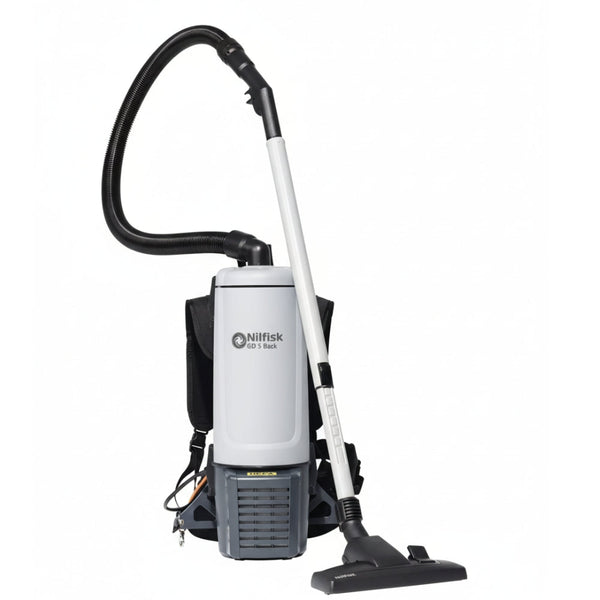
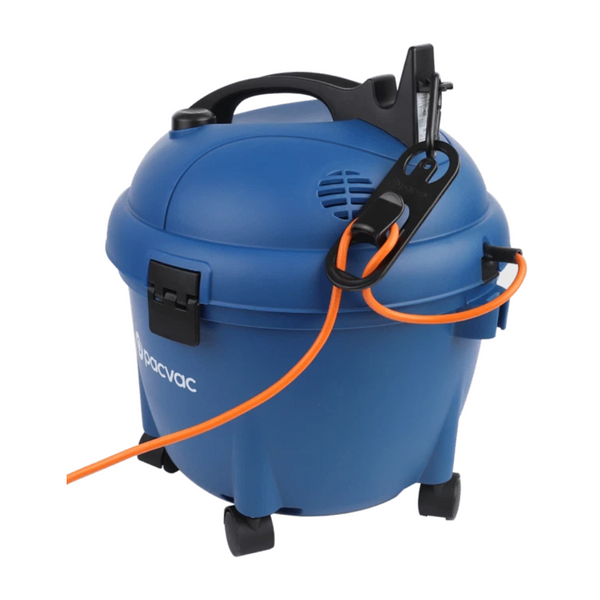
Ergonomics affects how the machine is actually used, which affects whether the control works. Extraction at a tool means holding a hose in position while operating the tool; cleaning means moving through an area with a hose that snags on corners and doorways. Machine format - canister, backpack, or a larger machine with wheels - should be chosen against the route, not against the specification sheet.
Route design finishes the job. Planning where the machine sits, how the hose reaches the work without crossing occupied areas, where bags are changed and where the machine is stored keeps dust from being spread between zones. A class-rated machine positioned badly will still track dust through a finished space.
What to Settle Before Ordering
Before an L-class machine - or a higher class - is ordered, confirm the following points in writing so the specification survives a change of staff or contractor.
- Substance: what the dust is, and whether it is hazardous.
- Required class: set by the risk assessment, the client specification or the principal contractor, and recorded against the machine.
- Task: tool-attached capture, standalone cleaning, or both, with the machine configuration that supports each.
- Tool connection: which tools the machine will be connected to, and the hose, adapters and shrouds that preserve airflow.
- Consumables: the exact bag and filter part numbers, held on site, with a reorder point.
- Disposal: where bags are emptied, how they are closed and stored, and where the waste goes.
- Service and training: who repairs the machine, who supplies parts, and how operators are trained on class differences.
That list is what separates a compliant purchase from a compliant program. The machine is the easy part; keeping the right bags, filters and habits with the right machine is what holds the control in place week after week.
Questions we get asked most
- What does L-class mean on a vacuum cleaner in Australia?
- L-class describes a machine designed for lower-risk dusts, with filtration and containment requirements set for that level. It is one point on a scale that also includes M-class and H-class, which are used where the dust warrants greater filtration and stricter emptying and disposal controls. The class applies to the whole machine, not only to its filter.
- Is an L-class vacuum suitable for silica dust?
- Crystalline silica is a regulated hazard, so the class has to come from the site's risk assessment and any client or principal contractor specification rather than from a default. Some tasks will require M-class or H-class machines, and tool-attached capture with correct airflow is as important as the class rating. Confirm the requirement for the specific task and material before buying.
- Can I use L-class bags or filters on an M-class machine?
- No. Bags, filters and often the fittings are class-specific, and fitting a part from a lower class means the machine no longer meets the specification it was bought for. Keep parts allocated to the correct machine, label them, and hold enough stock that a shortage never becomes a reason to substitute. The same applies to repairs.
- Why does my class-rated vacuum lose suction during a job?
- Usually because airflow through the machine has fallen: the bag is full, the filter is loaded, the hose or tool is blocked, or a seal or coupling is leaking. Capture at the tool depends on airflow rather than on suction alone, so performance drops before the motor sounds any different. Change bags before they are full and follow the filter interval.
Conclusion
L-class is the entry point of the dust class scale, suited to lower-risk dusts where tool-attached capture and safe disposal are still required. It is a system specification covering filter, seals, bag, container and emptying, and it is not a substitute for M-class or H-class where the dust requires it.
Decide the class from the material and the risk assessment, match the airflow to the tool, stock the correct consumables and keep the classes separate in the store. That is what makes the class on the label mean something on site.
Compare L-class, M-class and H-class dust extractors with the filters and bags to match in the Freshway range, or ask the team which class suits your dust and your task.