Paint splatter on tiles is a race. Fresh paint wipes off with a solvent rag in seconds; cured paint has to be softened, and the tool you use to lift it matters more than the bottle you bought. Ceramic is forgiving, glazed porcelain less so, and a metal blade can scratch both.
Updated 20 October 2026.
Soften first, then lift
Water-based paint softens with warm water and a mild alkaline cleaner; oil and enamel paint need a solvent spotter applied with dwell time. Lift with a plastic scraper held at a shallow angle, and keep the solvent off the grout, where it stains and stays sticky.
Prices are Freshway catalogue prices as at 16 September 2026 and are subject to change. Confirm the current price, and whether GST applies, before quoting.

Identify the paint before you choose a remover
Before using a stripper or solvent, read its label and safety data sheet, ventilate the area and test a hidden spot. SafeWork NSW’s chemical safety guidance explains why exposure controls and product information matter. Residue and unwanted chemical must not simply be washed into a drain; follow the product directions and relevant NSW EPA chemical guidance.
- Water-based (acrylic, low-sheen wall paint). Softens with warm water and an alkaline cleaner. Often the only tool needed is patience and a plastic scraper.
- Oil-based enamel. Needs a solvent spotter; white spirit or a citrus solvent works, with dwell time.
- Two-pack and epoxy coatings. The hard case. Solvent softens the surface, but expect to work in small sections and to accept some residue on the grout.
- Overspray from a spray gun. Usually a fine film, and a fine film lifts with a solvent-soaked cloth rather than a scraper.
The removers we stock, and what each does
| Product | Best on | Price |
|---|---|---|
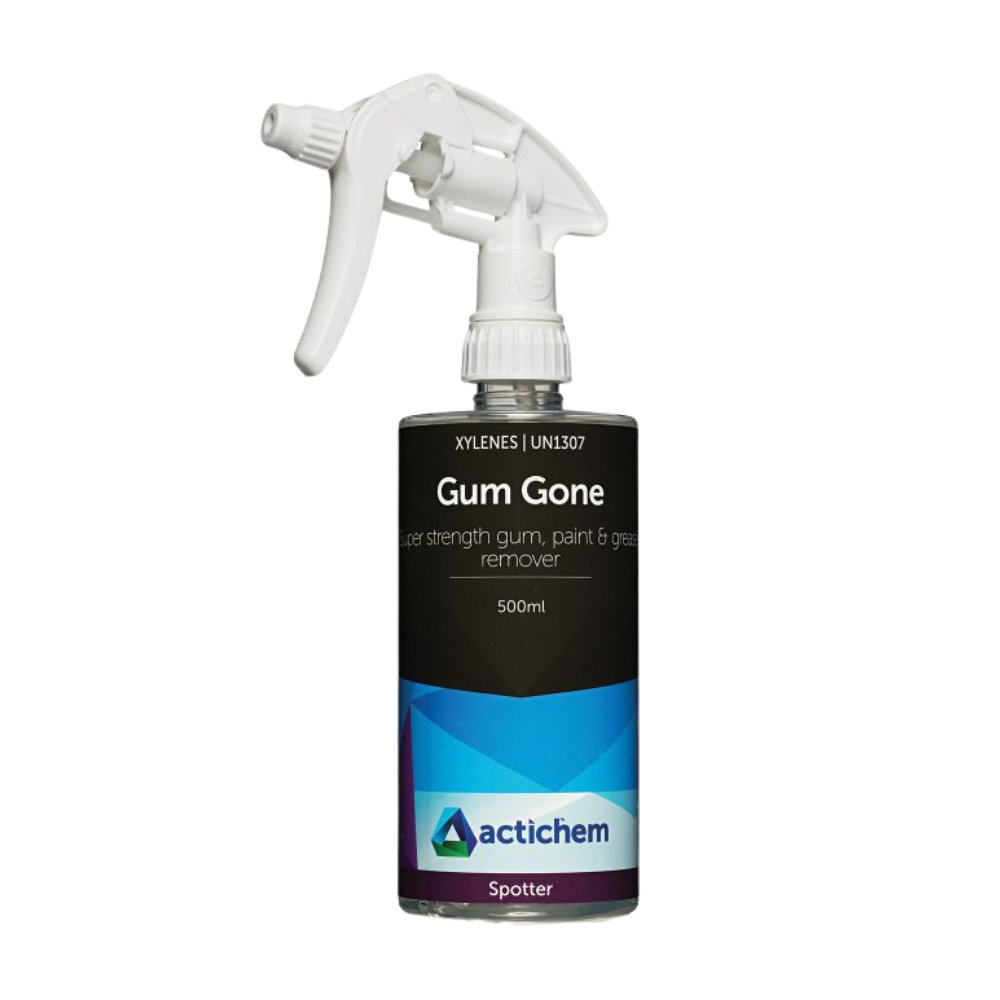
| Actichem Gum Gone | Gum, paint and grease on hard surfaces | A$39.20 |
| Actichem POG spotter | Paint, oil and grease spots; gel stays where you put it | A$41.54 |
| Actichem Stone Gel Pro | Acid-free cream for stone and delicate hard surfaces | A$25.00 |
| Research Products Grease Release | Ink, paint and heavy residue removal | A$101.38 |
| Actichem Tile & Grout Restore | Restoration compound for grout lines and post-build clean | A$110.00 |
The tools, and the one that scratches
Plastic scrapers, a nylon scrub pad and a stiff brush are the working tools. A metal blade will remove paint faster and will also leave a scratch that looks like a hairline crack in the glaze under a light. On polished porcelain, even a scouring pad can dull the surface, so test on a spare tile or a corner that is hidden by a fixture.
The grout problem
Paint that has cured in a grout line is a different job: the joint is porous and absorbs the pigment, so solvent from the tile face pushes the paint deeper into the grout. Work the joint separately with a stiff grout brush and an alkaline cleaner, then treat any remaining pigment with an acid-based grout cleaner.
Where the paint has been there for years, the realistic outcome is that the tile comes clean and the grout stays shadowed. That is a grout colouring or re-grouting decision, not a cleaning one.

Solvents in a workplace
Paint removers are among the more aggressive products in a cleaning cupboard. Use gloves, ventilate, never decant into an unlabelled bottle, and keep the safety data sheet where the bottles are stored. SafeWork NSW covers the requirements in chemicals and other substances, and the NSW Environment Protection Authority covers disposal in its chemicals guidance — solvent-soaked rags should not go into general waste.
Stop if the tile or grout starts to react
Stop the test immediately if the glaze dulls, colour transfers to the cloth, grout softens, a stone surface etches or a coating becomes tacky. Rinse only as the product label directs, allow the test area to dry and reassess. Natural stone, unknown coatings and large areas are safer to refer to a tile-restoration professional than to escalate through stronger chemicals.
Frequently asked questions
How do you get dried paint off tile?
Start with warm water and a plastic scraper on a test area. If the paint does not lift, identify the paint and tile type before moving to a compatible remover. Work in small sections and avoid metal blades on glazed or polished surfaces.
What is the best paint remover for tiles?
There is no universal remover. The correct choice depends on whether the paint is water-based or solvent-based and whether the tile is glazed ceramic, porcelain, natural stone or vinyl. Confirm compatibility on the label and test first.
What product removes paint from tiles?
A purpose-labelled paint or adhesive remover may be needed after gentle methods fail. Match the product to the paint and substrate, use the stated PPE and ventilation, and protect grout and adjacent sealants.
Does vinegar remove paint from tiles?
Vinegar may soften some fresh water-based residue, but it is unreliable on cured coatings and its acidity can damage acid-sensitive stone or grout. Do not use it as a default method without checking the surface.
Paint that has been there for years?
Send a photo of the tile and the paint and tell us how old it is, and we will tell you honestly whether it is a removal job or a replacement decision. Browse cleaning chemicals or ask our team.