How to Clean Shower Screen Glass Properly
Shower screens fail on soap scum and hard water. Use a cleaner that rinses clean.
Shop now
Cloudy shower glass is usually one of two things: soap scum, which is a greasy film, or mineral scale left behind when hard water dries. They need different treatment, and the wrong product can do more damage than the film itself, especially on glass with an applied coating. This guide uses Australian glass industry and manufacturer care advice to set out a safe routine for homes and commercial bathrooms.
How do you clean shower screen glass?
Wash the glass with warm water and a mild, pH-neutral detergent, rinse thoroughly and dry it with a squeegee or lint-free cloth, working from the top down. Remove hard-water spots with a weak vinegar solution only if your glass or coating maker allows it. Never use abrasives, and squeegee after every shower.
That routine follows the Australian Glass and Window Association (AGWA) shower screen care fact sheet and the care guides from glass and coating manufacturers linked below. Check the care card for your own screen before using anything stronger.
Soap scum or hard-water scale?
| Sign | Soap scum | Hard-water scale |
|---|---|---|
| Look and feel | Greasy or waxy film, often heaviest at hand and body height | White spots or chalky haze, often in drip lines and near the base |
| Mild detergent and a microfibre cloth | Usually removes it | Little change |
| Weak vinegar solution | Not the main fix | Often softens fresh spots |
| Prevention | Rinse and squeegee after use | Dry the glass so water cannot evaporate on it |
Water hardness varies widely. The Australian Drinking Water Guidelines say hardness is caused mainly by calcium and magnesium, that total hardness in major Australian reticulated supplies ranges from about 5 mg/L to about 380 mg/L, and that hard water needs more soap to lather. Sites on harder water will see scale form faster. For heavier mineral deposits, see how to remove hard water stains from glass.
Check whether the glass is coated
AGWA notes that special hydrophobic coatings can be applied by the manufacturer at purchase or installation to reduce cleaning. Coated glass needs gentler care. EnduroShield's care instructions warn against rough, gritty, abrasive, highly acidic or highly alkaline cleaners, which may damage the coating, and say any cleaner used should be followed immediately by a thorough rinse with clean water. If you are not sure whether a screen is coated, ask the installer or check the paperwork, and treat it as coated until you know.
A weekly clean that is safe for most glass
- Rinse the glass with water to lift loose grit, so it is not dragged across the surface.
- Wash with warm water and a mild, pH-neutral detergent on a damp microfibre cloth. EnduroShield suggests a mild detergent such as washing-up liquid for weekly shower glass cleaning.
- Work from the top down, as AGWA recommends, including hardware and frames.
- Rinse all surfaces thoroughly. AGWA warns that cleaning solution left on any surface may cause permanent marking.
- Dry straight away with a clean squeegee or lint-free cloth.
Remove rings and watches first; AGWA notes jewellery can easily scratch glass. While you are there, check the shower head for scale too. How to clean a shower head covers the fittings.
Removing hard-water spots safely
For mineral spots, Viridian's glass cleaning guide gives a simple solution of 1 part vinegar to 10 parts water for uncoated glass, applied generously, wiped with a clean lint-free cloth and dried. EnduroShield recommends cleaning with vinegar about weekly in hard-water areas, so build-up does not accumulate over a long period. Little and often is easier on the glass than one aggressive clean.
Keep any solution off hot glass and out of direct sun, which Viridian says can dry it prematurely and leave streaks. Rinse afterwards and dry. If spots remain after a few weekly cleans, stop and assess the glass rather than reaching for a stronger acid.
What not to use on shower glass
- Abrasives: AGWA says never to use an abrasive cleanser of any kind on the glass, hardware or frame. Viridian also excludes scouring pads, steel wool and powder cleaners.
- Blades and metal tools: Viridian advises against razor blades and metal scrapers on glass, and does not warrant damage they cause.
- Certain acids: Viridian warns that cleaning agents containing hydrofluoric or phosphoric acid can permanently damage the glass surface. Read the ingredients on any descaler.
- Strong acid or alkaline products on coated glass: EnduroShield lists these as a risk to its coating.
Bathroom cleaners made for tiles may not suit glass. Agar Shower Star, for example, is listed for soap scum and scale on tiles, porcelain, grout and stainless steel, and glass is not on that list, so check the label or ask the supplier before using it on a screen.
The squeegee routine
AGWA's simplest advice is to squeegee all parts of the screen, glass, hardware and frame, after every use, to keep it free of water spots and mineral deposits. Water that is wiped off cannot dry into spots. AGWA also warns not to let metal squeegee holders touch the glass. Pull in overlapping strokes from top to bottom and wipe the blade between passes. Using a squeegee without streaks covers technique.

Commercial bathrooms: hotels, gyms and aged care
In shared showers, the screen is dried at every service and deep cleaned on a set schedule, not when it starts to look bad. Build the shower glass task into the commercial washroom cleaning schedule, with the product, dilution and frequency written down so each cleaner uses the same method.
- Record which screens are coated and which products are approved for them.
- Keep the safety data sheet for each bathroom chemical on site. WorkSafe Victoria explains that an SDS sets out safe use, storage and personal protection, and SafeWork NSW notes cleaners are among the hazardous chemicals used at work.
- AGWA advises checking hardware periodically for looseness, which can misalign panels and lead to breakage or leaks. Report loose hinges rather than tightening them during a clean.
- Where new silicone has been applied, AGWA advises not wetting the screen during curing, roughly 1 mm per 24 hours as a rule of thumb.
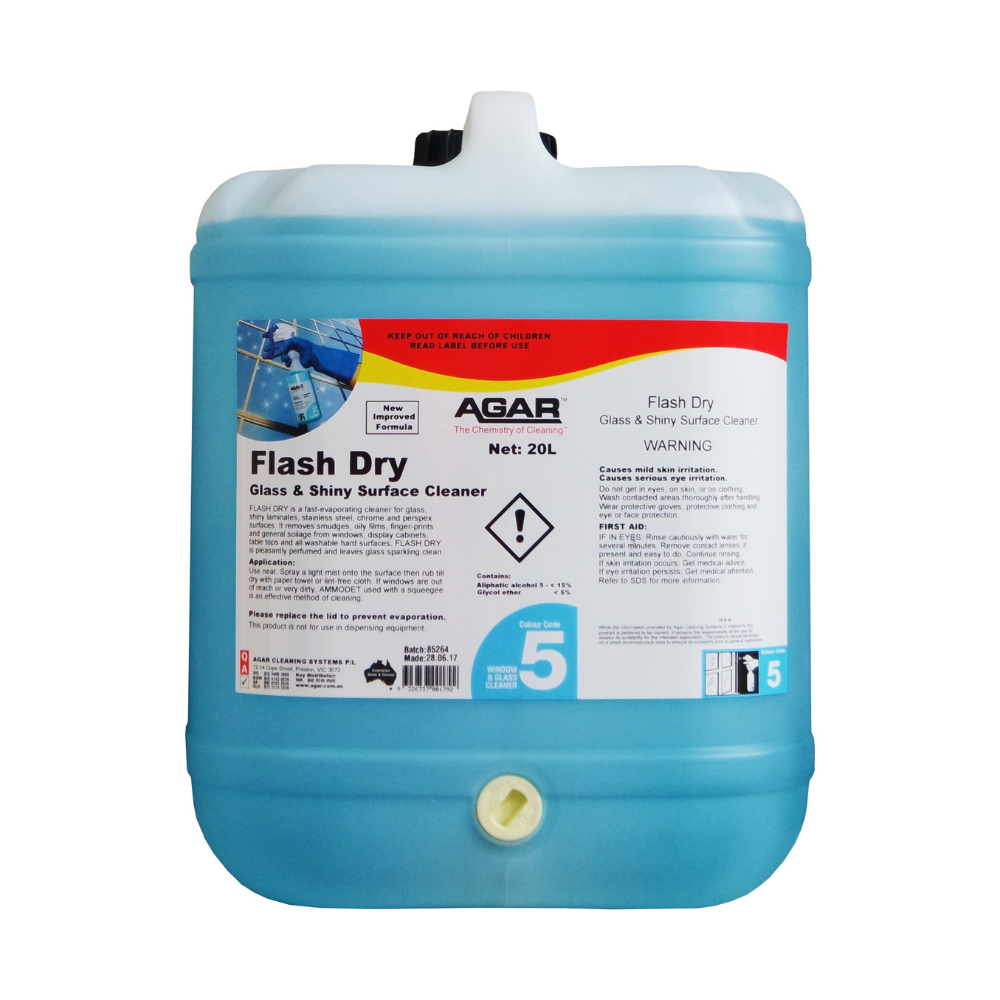
For a streak-free finish on uncoated glass and mirrors, a dedicated glass cleaner can follow the wash. Products for the wider bathroom are in the bathroom and shower cleaner range.

When the glass stays cloudy
If haze remains after a correct wash and a few weekly vinegar cleans, it may not be dirt. AGWA notes that continuous wetting and drying can, in some cases, raise the alkalinity of the glass surface and start glass corrosion, which can look cloudy. Damage from abrasives or unsuitable acids is also permanent. At that point, contact the screen installer or glass supplier rather than trying stronger chemicals. More methods by surface are in the cleaning methods guide.
Frequently asked questions
What is a safe cleaner for shower glass?
Warm water with a mild, pH-neutral detergent, as AGWA recommends, then a thorough rinse and dry. Coated glass makers such as EnduroShield warn against abrasive, highly acidic and highly alkaline cleaners.
Can I use vinegar on a glass shower screen?
Viridian gives a 1 part vinegar to 10 parts water solution for uncoated glass, and EnduroShield suggests vinegar for hard-water build-up. Rinse and dry afterwards, and check your own screen's care advice.
How do I stop shower glass going cloudy?
Squeegee the glass, hardware and frame after every shower, as AGWA advises, and clean weekly with a mild detergent. In hard-water areas, treat spots little and often.
Why is my shower glass still cloudy after cleaning?
The haze may be etching, coating damage or glass corrosion rather than residue. AGWA notes repeated wetting and drying can cause glass corrosion. Ask the installer or glass supplier.
Delivery and Click & Collect
Freshway delivers glass cleaners, squeegees and bathroom chemicals Australia-wide. Click & collect from our warehouse at 208 Princes Highway, Arncliffe NSW 2205 is available by prior arrangement only. We will notify you when the order is ready for collection, or contact us on 1300 567 002 for a delivered quote to your site.