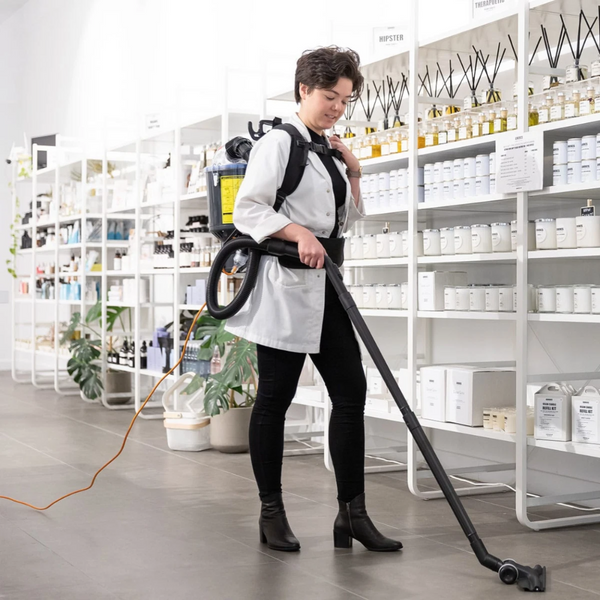
Car seats are upholstery in the hardest working position: foam underneath, thin fabric on top, and a foam core that holds water for days. That is why the sequence matters more than the product, and why a wet seat becomes a mould problem in a week.
Vacuum, pre-treat, extract, dry
Fabric car seats need the same sequence as upholstery: vacuum, pre-treat with a fabric-safe cleaner, agitate with a soft brush, then extract with minimal water. Wet seats are how mould starts, so dry with airflow rather than heat. Leather is a different process: clean, then condition.
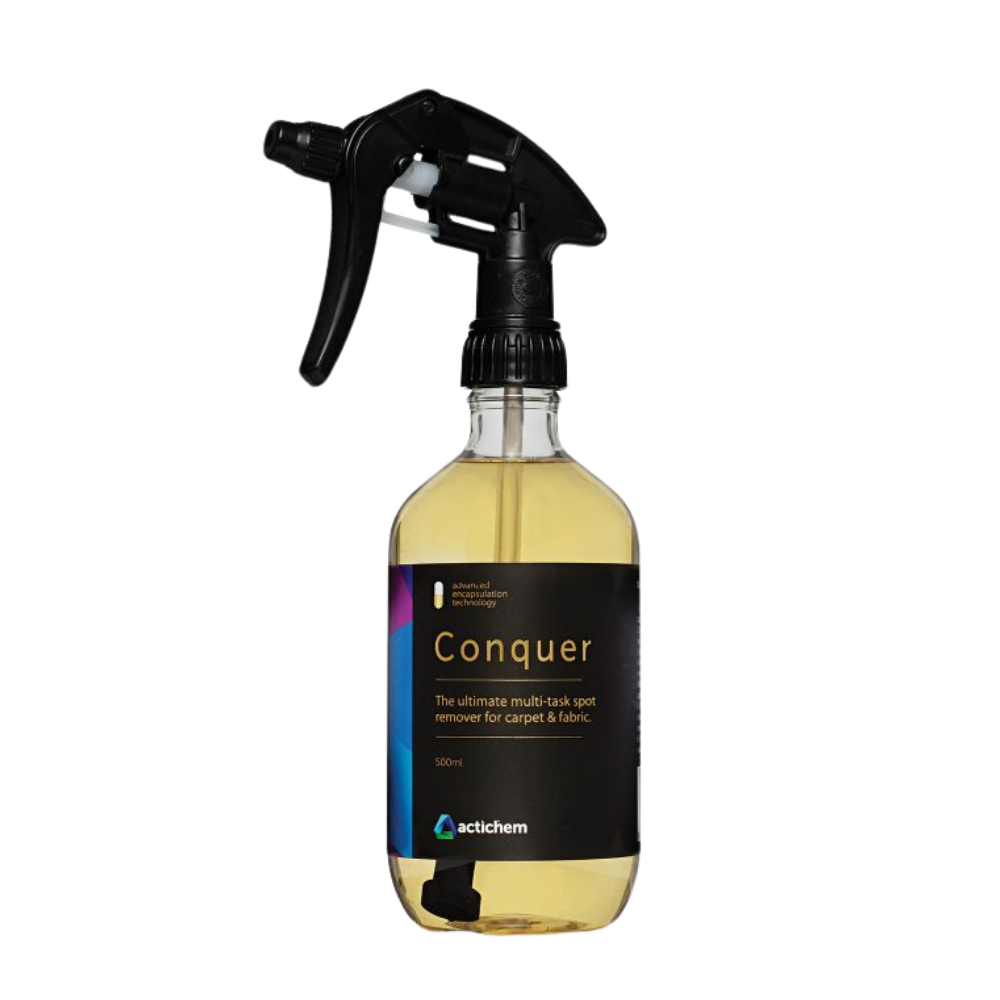
Prices are Freshway catalogue prices as at 16 September 2026 and are subject to change. Confirm the current price, and whether GST applies, before quoting.

The sequence, and why each step matters
- Vacuum thoroughly with a crevice tool, including the seat rails and the gap between the cushion and the backrest. Loose soil is most of the dirt.
- Pre-treat with a fabric-safe cleaner at label dilution, worked in with a soft upholstery brush. Let it dwell; the chemistry needs contact time, not more agitation.
- Extract with a hand tool, short passes, then dry strokes. This is the step that removes both the soil and the water. A wet vacuum without extraction leaves the seat damp.
- Dry with airflow — doors open, a fan or an air mover aimed at the seat, and the windows down if it is sunny. Never seal the car with wet seats.
Equipment that makes this practical
| Item | Use | Price |
|---|---|---|
| Numatic George GVE370 | Extraction and wet/dry vacuum, mobile | A$1,199.00 |
| Numatic CT570 4-in-1 | Higher-volume extraction for detailing shops | A$2,490.00 |
| Detail tool, 4 inch stainless | Seat bolsters, seams and edges | A$245.00 |
| Karcher DN35 upholstery brush | Agitation on fabric before extraction | A$29.90 |
| Upholstery brush with pickers | Lifting pet hair and lint | A$17.95 |
Stains, odours and pet hair
For protein and urine stains, use an enzyme product and give it dwell time; for oil and grease, an alkaline degreaser at label dilution. Pet hair comes out before the wet work, not after: brush the seat, then vacuum, then extract. Where the smell has reached the seat foam, no surface treatment fixes it — the foam has to be saturated with an enzyme and extracted properly, or in bad cases replaced.
Our carpet and upholstery cleaners range covers the spotter and enzyme chemistry, with odour treatment in the same aisle.

Leather seats are a different job
Leather is cleaned with a dedicated leather cleaner and a soft cloth, then conditioned, because the finish on automotive leather is a coating that dries out. Do not use all-purpose spray and wipe on it, and do not use solvent spotters — both strip the coating and leave a patchy finish that shows in daylight.
Doing this for a living
Mobile detailing and fleet cleaning live or die on drying time, which is why an air mover earns its place in the van. Our air movers and carpet dryers range covers the sizes that fit a boot or a van shelf.
Pet hair, kid mess and the boot
Pet hair is a mechanical job before it is a chemical one. A rubber brush or a pumice-style pet hair tool pulls hair out of the weave, then the vacuum lifts it; going straight to wet extraction pushes the hair deeper into the fabric and mats it there.
For milk, juice and food spills, blot immediately and treat with an enzyme product rather than a detergent, because the problem is the protein and sugar left in the fibres. The boot area is usually the worst surface in the car: grit, mud and water together, so vacuum first, agitate with a brush, extract, and put a rubber mat back in when it is dry.
Questions we get asked most
- What’s the best way to clean fabric car seats?
- Vacuum thoroughly, pre-treat with a fabric-safe cleaner, agitate gently, extract with a hand tool, and dry with airflow. The extraction step is what separates a clean seat from a damp one.
- What is the best way to clean car seats?
- Match the method to the material: fabric gets the wet extraction sequence, leather gets cleaner and conditioner. Using a fabric method on leather, or a leather product on fabric, is how seats get marked.
- How do I clean fabric car seats?
- Pre-spray at label dilution, work it in with a soft brush, and extract. Do not saturate: the foam under the fabric holds water and stays damp for days.
- What can I use at home to clean car seats?
- A mild upholstery or fabric cleaner, a soft brush and a wet vacuum with a hand tool. Household detergent leaves residue that attracts soil, and a soaked seat is a mould risk.
- How long before I can use the car?
- When the seat is dry to the touch and the foam does not feel damp through a press with your palm. With airflow that is a few hours; without it, overnight at least.
References
- SafeWork NSW — chemicals and other substances.
- NSW Environment Protection Authority — chemical handling and disposal.
Detailing cars or a fleet?
Tell us how many vehicles a week and whether you work from a van, and we will spec the extraction tool, the detail tools and the drying setup. Browse carpet extractors or ask our team.