A fridge that smells is rarely a cleaning failure on the shelves; it is usually the drain tube, a door seal or something spilled behind the crisper. The visible surfaces are the easy part, and they are the ones most people clean.
Food-safe sanitiser, not strong chemicals
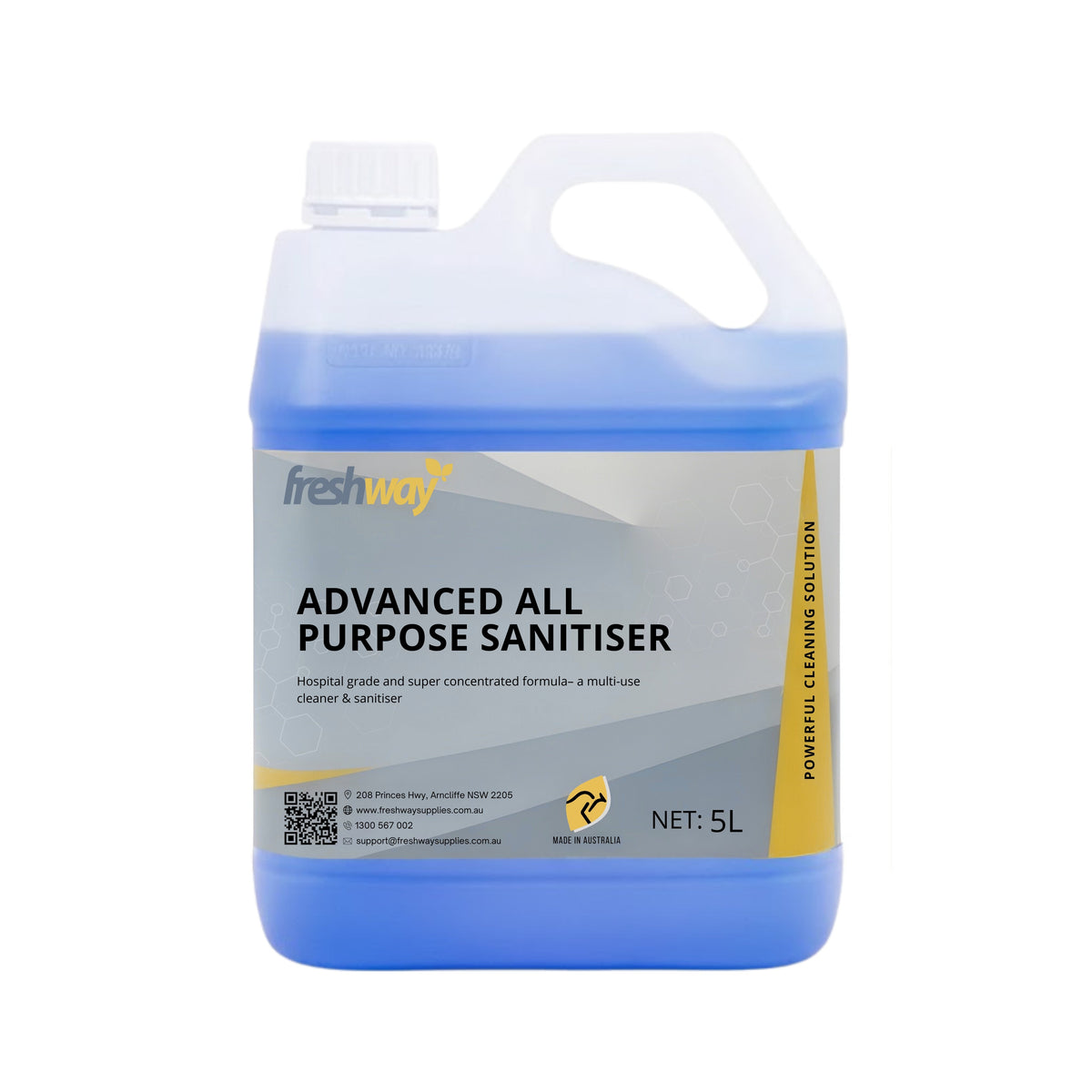
Empty the fridge, remove the shelves and wash them in warm soapy water, then wipe the interior with a food-safe sanitiser at label dilution. Avoid bleach on seals and stainless, dry everything before restocking, and clean the door seals where the smell usually lives. A fridge that keeps smelling has a blocked drain tube.
Prices are Freshway catalogue prices as at 16 September 2026 and are subject to change. Confirm the current price, and whether GST applies, before quoting.

The method, in the order that works
- Empty and unplug if you are doing a full clean. Keep the contents in an esky; a commercial fridge in a kitchen means working shelf by shelf instead.
- Remove the shelves, drawers and door bins. Wash them in warm water with a neutral or food-safe detergent, rinse, and let them come to room temperature before refitting — glass shelves crack when a warm shelf meets a cold fridge.
- Wipe the interior from the top down with a sanitiser at label dilution. Work fast: the door is open and the fridge is warming up.
- Do the seals. Pull the door gasket open and wipe inside the fold. This is where the smell and the black spots live.
- Clean the drain tube. At the back, inside, there is a small hole that takes condensate to the tray. If it is blocked, water sits in the base and smells. A bottle brush or a thin tube works; flush it with warm water.
- Dry everything before restocking, and leave the door open for ten minutes.
The products we stock for fridges and food areas
| Product | Use | Price |
|---|---|---|
| All Purpose Sanitiser Concentrate 718 | Food-safe sanitiser, dilutable | A$39.00 |
| Actichem Biosan II ready to use | Hospital-grade disinfectant where a kill claim is needed | A$35.00 |
| Freshway Bleach 6% sanitiser 301 | Drain tubes and waste areas, not seals or stainless | A$19.00 |
| Paper towels and wipes | Single-use wiping in food areas | from A$40.00 |
What not to use inside a fridge
- Bleach on door seals. It hardens and perishes rubber, and the seal then leaks warm air, which makes the fridge work harder and grow more mould.
- Bleach on stainless steel. Chloride attack causes pitting, which is corrosion rather than staining and cannot be polished out.
- Perfumed cleaners. The fragrance transfers to food, particularly to butter and anything uncovered.
- Bicarbonate as a cleaner. It deodorises, and it does not disinfect or remove soil. As a box left in the fridge it absorbs some odour; as a cleaning method it is a myth.

Mould in the seals and the drip tray
Black spots in a gasket are mould, and they come back because the seal stays damp. Wipe it out, then treat with a sanitiser rather than bleach, and dry it every time the door is closed for the night. On a commercial fridge the drip tray at the back is the other place mould establishes itself, and it is usually ignored until someone notices the smell.
Doing it in a commercial kitchen
A domestic fridge is a twenty-minute job; a commercial kitchen has several fridges, a cool room and a cleaning schedule to document. Food Standards Australia New Zealand sets the sanitation expectations for food premises, and SafeWork NSW covers the chemical handling in chemicals and other substances. Practically, that means a sanitiser that is rated for food contact, a dedicated cloth colour for food areas, and a record of when the fridge was done.
Cleaning a fridge that is in use
Most commercial fridges cannot be emptied, so the work is done shelf by shelf during service downtime. The practical method: take one shelf out, wipe the space it came from and the shelf itself, dry both, and put it back. The fridge loses far less temperature than a full empty-and-clean, and the food never leaves the cold chain.
Two pieces of equipment make it faster: a spray bottle of sanitiser at working dilution rather than a bucket, and a dedicated cloth colour for food areas. Both are cheap, and both stop the cross-contamination that comes from using the same cloth on the floor and the shelves.
Questions we get asked most
- What is the best thing to clean the inside of a refrigerator with?
- A food-safe sanitiser or a mild detergent solution at label dilution, with a clean cloth, followed by drying. The sanitiser is what makes it safe; the detergent is what removes the soil.
- What should you not clean a fridge with?
- Bleach on gaskets and stainless, perfumed cleaners, abrasive powders, and undiluted disinfectant. All four either damage the fridge or taint food.
- Can I use bicarbonate of soda to clean my fridge?
- It deodorises and provides mild abrasion, and it does not disinfect. Used dry as a deodoriser it is fine; as a cleaning method it leaves the surfaces that matter untreated.
- What are the most common mistakes when cleaning a refrigerator?
- Skipping the door seal fold, refitting glass shelves while they are still warm, not cleaning the drain tube, and restocking before the interior is dry.
- How often should a fridge be cleaned?
- Domestically, a wipe-over weekly and a full clean monthly. In a commercial kitchen, food storage areas are usually cleaned daily with a documented deeper clean scheduled weekly or monthly.
References
- Food Standards Australia New Zealand — cleaning and sanitation in food premises.
- SafeWork NSW — chemicals and other substances.
Commercial kitchen or cool room?
Tell us how many fridges and whether your food safety plan needs a documented sanitiser, and we will match the product and the dilution. Browse cleaning chemicals or ask our team.