Hospitality Spotting: Red Wine Coffee and Food on Commercial Carpet
Match wine and coffee to tannin chemistry, and food soils to a protein spotter.
Shop now
A Friday dinner service in a Sydney hotel dining room left three marks before the last table turned: red wine down a chair back, coffee along the runner, and gravy beside table 12. The floor runner used soda water and a napkin. By the time housekeeping arrived the tannin had set and the protein ring was darker than the spill.
Soil classes behind hospitality carpet spotting
Commercial carpet spotter wine coffee work starts by naming the soil class. Tannin stains from red wine, coffee and tea need a low-pH tannin treatment such as Actichem CTR. Protein soils from food, gravy or milk need an undiluted protein spotter, then extraction. Blot first and never rub the pile.
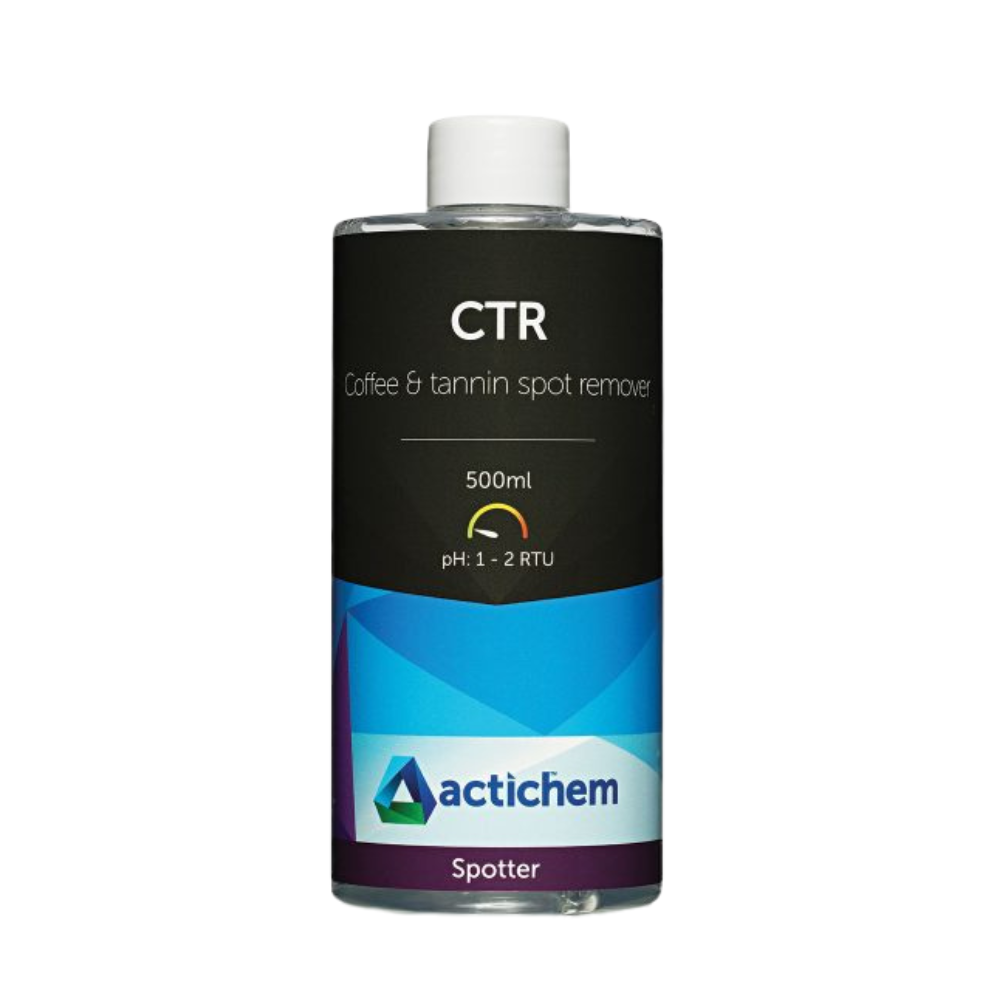
Hospitality carpets collect plant dyes and food proteins on the same shift, often on the same runner. Treating both with one alkaline spray is how a coffee ring turns brown and a gravy mark sets. Freshway lists Actichem CTR (AP490) as a ready-to-use, low pH coffee and tannin treatment that can also be diluted 1:1 for lighter staining. The page names coffee, tea, red wine and fruit juices as the tannin soils it is written for, and it also lists cellulosic browning on wool after over-wetting or high alkalinity. That is the bottle for wine and coffee, not for gravy.
Freshway lists Actichem Protein Spotter as a 500 ml ready-to-use alkaline protein and blood spotter for food, gravy, beverages, egg, milk, vomit and blood. Directions on that page are specific: apply undiluted, agitate with a carpet rake or upholstery brush, allow 10 to 20 minutes, then rinse extract. Those two chemistries belong on the same trolley because the dining room produces both soil classes every service.

Spotter selection for wine, coffee and food
Buy the kit as a decision path, not as a crate of lookalike sprays. Start with the soil you can name. If the spill is red wine, coffee or tea, reach for CTR neat on an old or heavy mark, or at the listed 1:1 dilution on a lighter, fresh tannin stain. If the spill is gravy, egg, milk or blood, reach for Protein Spotter and plan the extraction step the label already requires. If the spill is fresh, mixed or still unidentified, a general ready-to-use spotter buys you time without pretending to be a tannin acid or a protein alkaline.
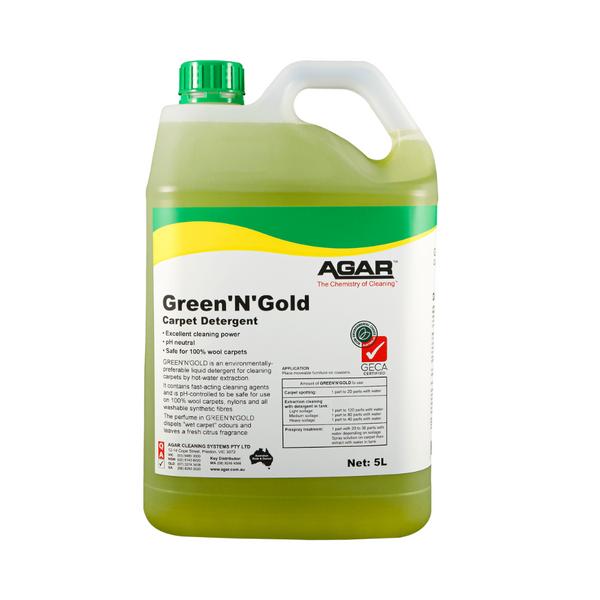
Freshway lists Agar Spot Whiz as a 750 ml ready-to-use trigger, with a listed pH of 9.0 ± 0.5, citrus-based solvents and biodegradable surfactants, written for food, drink and grease on carpets and soft furnishings. Agar's Australian Spot Wiz page likewise presents it as a ready-to-use citrus general-purpose carpet spotter meant for immediate use. That is the housekeeper trolley bottle for a just-dropped plate, not a substitute for CTR on set wine or for Protein Spotter on albuminous food.
Browse Actichem and Agar carpet and upholstery cleaners when you print the kit list so the bottle on the trolley matches the soil card. Handle every concentrate and ready-to-use spotter under SafeWork NSW chemicals guidance: labelled, separated, and never mixed in one sprayer.

Blot discipline before chemistry
Almost every ruined hospitality spot begins with rubbing. Rubbing drives dye and fat down the yarn and spreads the ring. Blot with a clean white cloth or white towel, working from the outside of the mark toward the centre so you do not grow a halo. Lift what is still liquid before any spotter touches the pile. On upholstery, support the fabric from behind if you can reach it, and do not soak through to the foam.
Front-of-house staff can do this much during service without opening a chemical bottle: contain the spill, blot, and call housekeeping with the soil name (wine, coffee, gravy, unknown). Once the liquid is lifted, apply only the spotter that matches the soil, and apply it to the cloth or directly as the current label directs — not as a flood.
When extraction follows spotting
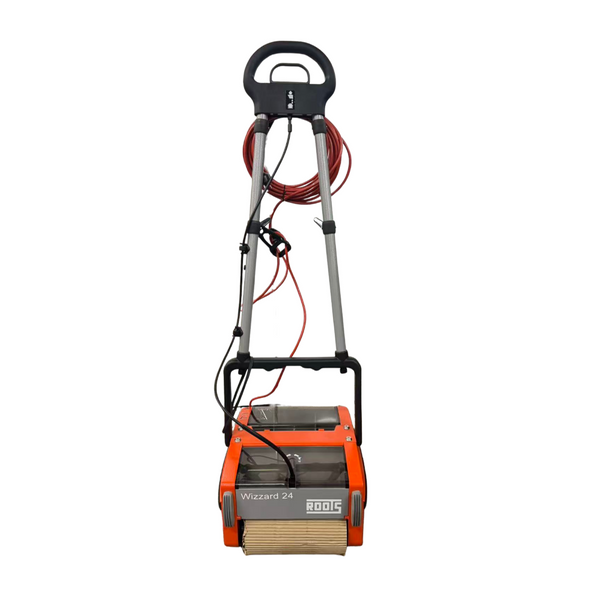
Spotting is not always the last step. Protein Spotter's own directions end with rinse extraction. Large wine runs, wicking from the backing, and marks that remain after the listed dwell also need mechanical recovery rather than another wet pass with a cloth. Freshway lists the Karcher Puzzi 8/1 as a spray-extraction cleaner with a 1380 W motor, 236 mbar vacuum pressure, a 9.8 kg body, an 8-litre fresh tank and a 7-litre recovery tank, a 2.5-metre spray and suction hose, and an upholstery hand tool. That combination suits dining chairs, banquet runners and isolated carpet bays where a truck-mount would be theatre.
After any wet extraction, do not leave the pile damp overnight in a closed function room. NSW Health's mould fact sheet is the reason you dry the area and restore airflow instead of hoping a wet runner will be fine by breakfast. A wet walkway is also a slip path under SafeWork NSW guidance on slips, trips and falls on the same level and WorkSafe Victoria's slips, trips and falls pages. Extraction wastewater belongs with other liquid waste under EPA NSW waste guidance; empty recovery only where the site allows it.
When the job grows beyond a chair and a runner, move from the spot machine to the wider carpet extractors and shampooers or Karcher carpet cleaners collections rather than forcing the Puzzi 8/1 to flood-extract a ballroom.
Protecting colour and fibre
CTR is listed as suitable for most synthetic carpets, natural wool and washable upholstery when used as directed. Spot Whiz is listed at a mildly alkaline pH of 9.0 ± 0.5 and the Freshway page states that, used correctly, it will not bleach or burn wool or synthetic nylon upholstery. Protein Spotter's page does not name wool. On a specified wool hospitality carpet, use the chemistry whose current label names that fibre, and test an inconspicuous edge before you treat a visible field.
Do not stack products on one mark. An alkaline protein spotter followed immediately by a low-pH tannin treatment, or the reverse, can leave a pH shock and a brown ring that looks worse than the original spill. Rinse or extract as the first product directs, let the pile settle, then decide whether a second, different chemistry is still needed. Over-wetting wool is the path to the cellulosic browning CTR is also written to correct — which means the cheaper way is not to over-wet it in the first place.
Spec a hospitality spot kit
| Soil class | Typical dining-room source | Listed chemistry | What follows |
|---|---|---|---|
| Tannin and plant dye | Red wine, coffee, tea, fruit juice | Actichem CTR, neat or 1:1 | Blot, treat, then extract only if the mark remains or the area was wet widely |
| Protein and food | Gravy, egg, milk, blood, vomit | Actichem Protein Spotter, undiluted, 10–20 minute dwell | Rinse extract as directed |
| Fresh mixed or unknown spill | Room-service plate, unidentified drink | Agar Spot Whiz 750 ml, ready to use | Identify the soil; switch to CTR or Protein Spotter if the residue tells you to |
| Set stain or wicking after spotting | Chair back, runner edge, previous shift | The matching spotter, then the Puzzi 8/1 | Recover moisture and dry before the room reopens |
Write those four rows on the housekeeping card. Stock CTR in the 500 ml and 5 L packs Freshway lists if the venue sees daily wine service, keep Protein Spotter in the 500 ml ready-to-use pack for food soils, and keep Spot Whiz on every floor trolley. Check each product page before you reprint dilutions, because the label in the store room is the instruction that applies that day. Broader options sit in the carpet and upholstery cleaners collection if the site also needs a urine, paint or browning specialist — do not add them to the FOH trolley without training.
Training front-of-house staff limits
Front-of-house can blot, contain and name the soil. They should not decant chemistry, invent dilutions or “just try the other bottle”. Housekeeping applies the matching spotter and decides whether extraction is due. A night porter who treats wine with a protein alkaline, or gravy with a tannin acid, is not being helpful; they are changing the stain. Put the limit in induction: white cloth, blot, call, wait.
Show staff a dry test on a spare sample or an unseen edge so they see how little product is enough. Remind them that a wet chair is still a guest seat: isolate it, and do not return it to service until it is dry to the touch. SafeWork NSW hazardous manual tasks guidance still applies when someone carries the 9.8 kg Puzzi 8/1, solution and a bundle of chairs down a service stair — use the goods lift and split the load.
Log recurring spots
A stain that returns in the same chair bay or along the same waiter path is not a mystery. It is a drip from a drinks station, a cracked saucer run, a trolley wheel tracking kitchen fat, or a fibre that wicks overnight. Log the date, soil class, chemistry used, whether extraction followed, and whether the mark reappeared. After three repeats in one location, inspect the operation above the carpet instead of ordering another bottle.
The log also stops chemistry stacking. If last night's porter already applied CTR, tonight's housekeeper should not add Protein Spotter on top without knowing that history. Recurring tannin on a wool specified runner is a reason to review glass wash and waiter routes; recurring protein beside the pass is a reason to review plate handling, not to increase dwell time past the 10 to 20 minutes the label already sets.
Frequently asked questions
Can we keep one universal spotter on the trolley for both wine and gravy?
No. Wine, coffee and tea are tannin soils and belong with a low-pH tannin treatment such as Actichem CTR. Gravy, egg, milk and blood need a protein spotter, then extraction. A general ready-to-use spray is only a first response while you identify the soil.
Does blotting replace later extraction?
No. Blotting lifts liquid so the spotter can work on a smaller mark. Protein Spotter directions still end with rinse extraction, and large or wicked stains need mechanical recovery after spotting.
Can we use Protein Spotter on a wool hospitality carpet?
The Protein Spotter page does not name wool. Use a product whose current label names that fibre, test an inconspicuous edge, and do not assume an alkaline protein spotter is interchangeable with CTR, which is listed for wool when used as directed.
Should front-of-house staff apply spotter during service?
They should blot with a clean white cloth, name the soil and call housekeeping. Untrained staff should not choose or mix chemistry. The wrong bottle can set the stain you were trying to lift.
Why log a spot we already cleaned?
A repeating mark in the same chair or runner usually points to a drip, a tracked soil or wicking, not to a weak first clean. The log stops chemistry stacking and shows where the operation above the carpet needs to change.
Next steps with Freshway
Name the soil classes your dining room actually produces, then stock a tannin treatment, a protein spotter, a ready-to-use general spray and a compact extractor you can carry to a chair. Use the Actichem, Agar carpet and Karcher extractor collections already linked above when you rebuild the kit. Check each product page for current pack sizes and directions before you print the housekeeping card.