Choosing a Commercial Sweeper for Car Parks and Hardstands
Sweep grit and litter first; scrubbers are for the soil that sticks.
Shop now
A facilities supervisor walked a multi-deck car park in Perth after a windy weekend and found leaf litter, grit and takeaway lids packed against the kerb lines. The scrubber never should have been first on that floor. Choosing a commercial sweeper for car parks and hardstands is about matching debris type, dust control and traffic — then deciding whether a blower or scrubber still belongs in the same shift plan.
Sweeper vs blower vs scrubber roles
A commercial sweeper car park Australia choice starts with debris type, dust control and mixed traffic. Sweepers capture litter into a hopper; blowers only move it; scrubbers wash stuck soil after the dry pass. Match path width, hopper litres and filter dust control to each deck.
Indoor vs outdoor hardstands
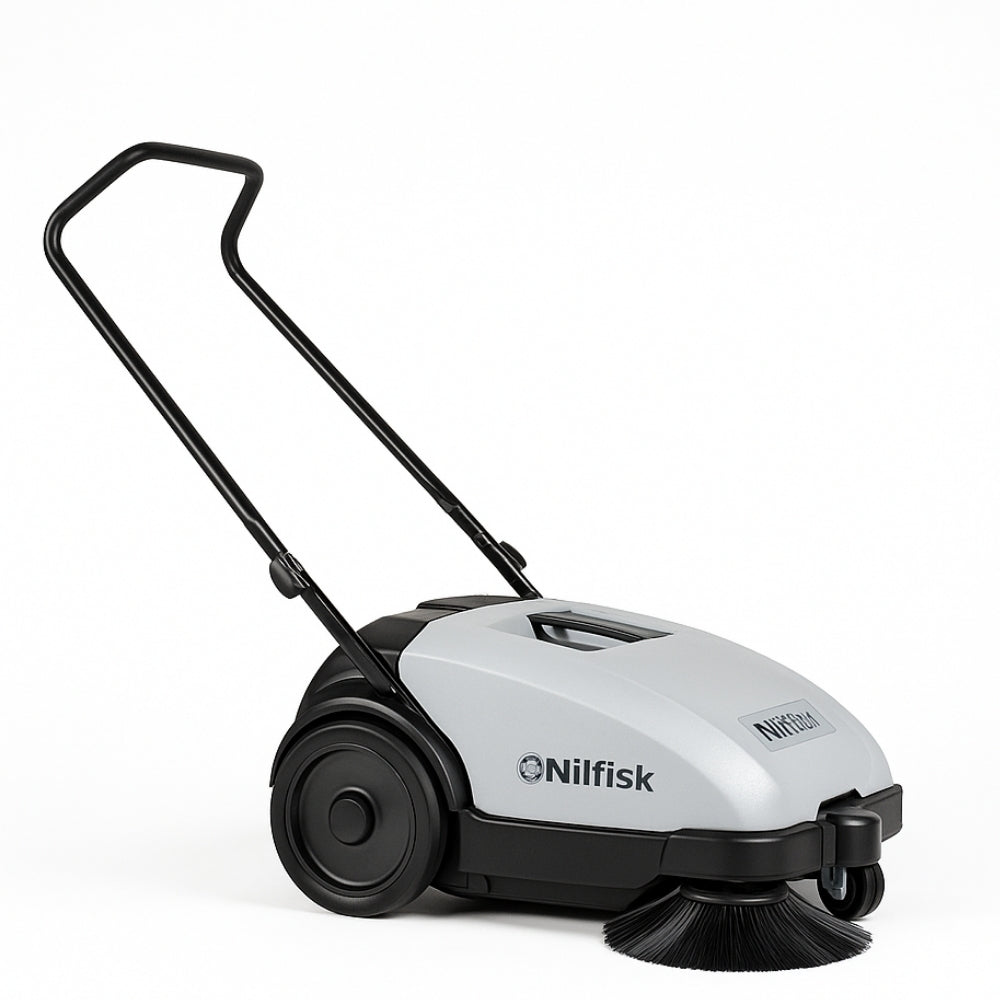
Covered car parks need dust control so exhaust from sweeping does not cloud lift lobbies. Outdoor hardstands face wind, which can strip a hopper brush of light litter if you work upwind. Battery walk-behind sweepers avoid exhaust indoors. Freshway lists the Nilfisk SW750 with a 720 mm path using the side broom, 60 L hopper, theoretical productivity 2,880 m²/h (actual 1,730 m²/h on the listing) and 59 dB(A). The larger Nilfisk SW900 lists an 825 mm path, 60 L hopper, up to 3,715 m²/h theoretical and 70 dB(A). For light courtyards, the Nilfisk SW250 manual push sweeper lists a 720 mm path, 38 L hopper and 20 kg weight with no motor.

Filter dust control
Fine concrete dust and brake dust need a filtered sweeper, not only a broom. Check filter area and whether a shaker is listed. Empty hoppers where dust will not blow back into the car park — NSW EPA waste guidance and site rules decide disposal. Water Corporation Waterwise pages are not sweeper manuals, but they reinforce not wasting wash-downs when a dry sweep would do.
Pedestrian and vehicle safety
Car parks mix pedestrians, reversing cars and service vehicles. WorkSafe Victoria's traffic management advice applies to any powered plant sharing that space. Sweep with hi-vis, work with traffic flow where possible, and cone a bay if the hopper empty point sits near a ramp. Wet floors after a later scrub pass create slip risk — SafeWork NSW covers slips and trips when grit becomes slurry.
Hopper lifts are manual tasks. SafeWork NSW's hazardous manual tasks pages expect you to plan empty height and bag weight, especially on the SW900-class machines.
Spec width and hopper
| Listing | Path | Hopper | Noise | Power |
|---|---|---|---|---|
| SW250 | 720 mm with side brush | 38 L | No motor | Manual |
| SW750 | 720 mm with side broom | 60 L | 59 dB(A) | Battery |
| SW900 | 825 mm | 60 L | 70 dB(A) | Battery |
Use actual productivity when the listing gives it. On the SW750, 1,730 m²/h actual versus 2,880 m²/h theoretical is about 60% — plan shifts with that margin.
Maintenance
- Shake or clean filters on the schedule the maker publishes.
- Check side brooms for flattened bristles that throw grit past the hopper.
- Inspect skirts and seals that control dust.
- Charge batteries on a ventilated bench, not stacked on the ramp.
- Book service and repairs when suction or brush drive drops.
When to pair with scrubbers
After sweeping, a scrubber removes tyre film and sticky spills. RapidClean's floor prep tips apply equally on hardstands: grit left behind becomes grinding paste under a scrub deck. Pair sweepers with machines from Freshway's floor scrubbers range when the SLA includes both litter and wash.

Coastal car parks add salt grit that cakes on skirts and brooms. Rinse the machine on a wash bay that drains to trade waste, not to the stormwater gully at the ramp — NSW EPA's drain is just for rain message applies to machine washdown as much as to floor washing. Capital Equipment's scrubber quick fixes are written for scrubbers, yet the same blocked-hose lesson applies if you later scrub a car park that was never swept: debris packs the recovery path.
For Nilfisk-heavy fleets, keep broom and filter SKUs on the same store account so night supervisors can reorder without hunting part numbers. A spare side broom on the shelf is cheaper than a weekend of poor path width when the working broom flattens.
Buyer checklist
- Debris type: leaves, grit, lids, fine dust.
- Indoor dust control versus outdoor wind.
- Path width versus aisle and bay lines.
- Hopper litres versus empty points.
- Noise limits near apartments over the car park.
- Whether Nilfisk sweepers in the Nilfisk sweepers collection cover the site, or a manual SW250 is enough for a courtyard.
Night shifts in mixed-use towers should also agree a noise window with building management before choosing between the SW750 at 59 dB(A) and the SW900 at 70 dB(A). Apartments over a podium car park will hear the louder machine on early morning runs. If the SLA demands both litter pickup and a scrubbed finish before peak arrival, write the sweeper-first sequence into the roster so scrubber operators are not waiting on a late dry pass.
Photograph full hoppers before emptying on the first week of a new contract so supervisors can calibrate how often decks need a dump cycle. That evidence also helps justify a larger hopper when the next machine is purchased.
Frequently asked questions
Can a blower replace a sweeper in a car park?
Only for light leaves moving to a collection point. Blowers do not capture grit and can push dust into drains and lobbies.
What path width does the Nilfisk SW750 list?
720 mm with the side broom, with a 60 L hopper and 59 dB(A).
Should I scrub before sweeping?
No. Sweep loose debris first, then scrub stuck soil.
Is a manual sweeper enough for a multi-deck car park?
Usually no. Manual units suit small courtyards; decks need battery sweepers with filters.
Next steps with Freshway
Shortlist from sweeper machines and Nilfisk sweepers, add blowers if leaves dominate, and plan scrubber pairing from the floor scrubbers range. Confirm hopper and filter details on each product page before the hardstand tender.