Colour-Coding Chemical Bottles Across Multi-Site Cleaning Contracts
Colour shows the area, the label names the chemical, on every site.
Shop now
Consider two cleaning contractors, each with twenty sites. Contractor A colours bottles by product: a blue bottle is always glass cleaner, a red one always toilet cleaner. Contractor B colours by area: red triggers stay in washrooms, green in kitchens, blue everywhere else. Both systems work on paper. The trouble starts when a casual moves between sites and finds red means something different at each one.
How should chemical bottles be colour-coded across multiple sites?
Use one rule on every site: colour shows the area where the bottle is used, matching the cloth and mop colours, while the label identifies the chemical. Fit coloured triggers or bottles by area, apply durable labels with product name and hazard information, and audit both on a fixed cycle.
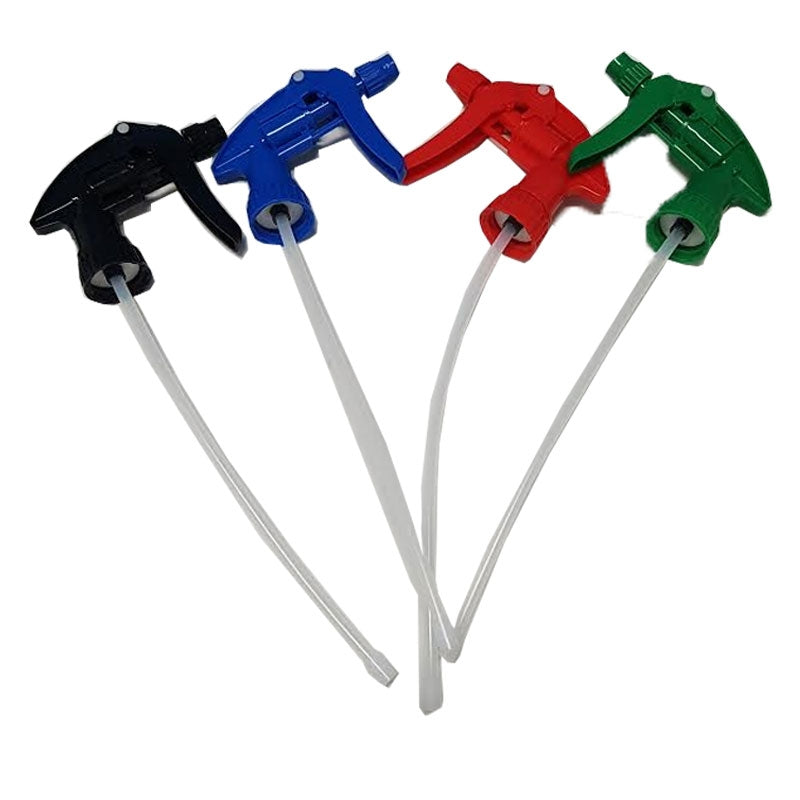
Colour alone never identifies a chemical. WorkSafe WA's code of practice for labelling workplace hazardous chemicals says a decanted hazardous chemical that will not be used immediately must at least carry, in English, the product identifier and a hazard pictogram or hazard statement. This checklist is for operations managers standardising bottles across a contract portfolio. Freshway's guide to decanting cleaning chemicals and labels covers the label detail.
Why area colours beat product colours
- One system for staff. Area colours match the cloth, mop and bucket colours staff already know.
- Healthcare alignment. NSW Health's PD2023_018 sets red for toilets and bathrooms, green for food areas, blue for general and yellow for isolation.
- Product changes are easy. Switching supplier or product changes a label, not the whole colour scheme.
- Fewer clashes. Product colours vary by brand; area colours do not.
The standard to write down
| Colour | Area | Typical bottles |
|---|---|---|
| Red | Toilets and bathrooms | Washroom cleaner, toilet and bathroom spray |
| Green | Kitchens and food areas | Food-safe sanitiser, benchtop cleaner |
| Blue | General areas and offices | All-purpose cleaner, glass cleaner |
| Yellow | Isolation or infectious areas | Disinfectant as specified by the client |
Supplier wall charts, such as Taren's colour coding chart, follow the same pattern. Print one chart for every cleaner's room.
Bottles and triggers
Coloured triggers are a simple, low-cost way to show area colour on a clear bottle. Freshway's chemical-resistant sprayer trigger comes in red, blue, green, white and black, adjusts from mist to jet and fits standard commercial 500 ml and 1 litre bottles. Agar's 750 ml toilet and bathroom spray bottle carries a screen-printed dilution guide and safety warnings, and is sold without a trigger so a coloured one can be fitted. Freshway's chemical-resistant spray bottle guide covers seal and nozzle choice.

Labels that survive
Labels peel, smudge and fade. Use pre-printed bottles where possible, or waterproof labels, and keep them on bottles that only ever hold one product. The WA code says containers repeatedly used for decanting should carry a permanent label and must not hold any other substance than the one on the label. SafeWork NSW's page on chemicals and the GHS explains the classification and labelling system behind hazard pictograms.

Decanting stations
Most mix-ups happen at the sink. Set one decanting point per site with the concentrates, the SDS folder, measured dosing and a stock of labelled bottles. Agar's hand pump for 5 litre bottles dispenses 30 ml per stroke, which turns dilution into a stroke count staff can follow. Dispensing options are in Freshway's dispensers range.
Caddies by area
Give each area its own caddy so a red-trigger bottle never rides in a kitchen caddy. Label the caddy with its colour and keep a fixed set of bottles in it. A caddy check at the start of each shift catches strays before they travel.
Rolling out across sites
- Write the standard: colours, areas and product list.
- Audit current bottles on every site and remove unlabelled ones.
- Order triggers, bottles and labels for the whole portfolio at once.
- Change one site at a time, starting with the largest.
- Train staff on site with the chart and caddies in front of them.
- Swap out remaining old bottles within a set date.
Common failure points
Most colour systems fail in the same few places, and each has a simple fix:
- Trigger swapping. A broken red trigger gets replaced with whatever is in the cupboard. Keep spare triggers in every colour at every site.
- Refilling the wrong bottle. A blue all-purpose bottle is topped up with washroom cleaner because it was empty. Permanent labels and a one-product-per-bottle rule stop this.
- Handwritten labels. Marker on a wet bottle fades within weeks. Use printed bottles or waterproof labels.
- New sites joining late. A site won mid-contract arrives with its own bottles. Make the colour standard part of the site start-up checklist.
- Relief staff. Casuals and relief cleaners miss inductions. Put the colour chart on the caddy lid as well as the wall.
Audits and SDS
Check a sample of bottles each month for the right trigger colour, a legible label and a matching product. Keep an SDS for every product on each site; WorkSafe Victoria's safety data sheet guidance says employers must obtain current SDS and make them readily accessible to workers.
Frequently asked questions
Should bottle colour show the chemical or the area?
The area. Labels identify the chemical, while colours match the area system used for cloths and mops.
Is a coloured trigger enough without a label?
No. A decanted chemical that is not used immediately needs a label with the product identifier and hazard information.
How often should bottle labels be checked?
Monthly on a sample of bottles, and any time a label is damaged or a product changes.
What about sites with their own colour charts?
Follow the client's chart on that site and record the difference in the site manual and induction.
Next steps with Freshway
Agree a single area-colour standard, then order triggers, printed bottles and caddies together. Freshway's Agar and cleaning chemicals ranges cover the products; contact the team to plan a portfolio-wide rollout.