Antimicrobial Carpet Treatment Claims: What Buyers Should Verify
Ask for the label, the SDS and the dilution before anyone sprays your carpet.
Shop now
The complaint arrives a fortnight after the carpet clean: the meeting room smells again, and the tenant points to the quote, which promised an "antimicrobial treatment that keeps carpet hygienic for months". Nobody can say which product was used, at what dilution, or what "hygienic" was supposed to mean. The facility manager is left defending a claim no one on site can prove.
How should buyers verify antimicrobial carpet treatment claims?
Ask for the exact product name, its label and current safety data sheet, and the dilution and dwell time used. Check that the claim on the quote matches what the label actually says, look up any listing number yourself, and keep records. Treat vacuuming and extraction as the cleaning; any antimicrobial step is an extra.
This guide is written for facility managers and procurement staff who sign off commercial carpet work. It does not repeat how to read hospital-grade disinfectant labels on hard surfaces, which Freshway covers in reading hospital-grade disinfectant labels for Australian sites. Here the focus is narrower: what to ask before a contractor sprays something on your carpet and calls it antimicrobial.
Marketing claims vs verified claims
The ACCC's guidance on false or misleading claims says claims should be true, accurate and based on reasonable grounds, and that a business must be able to prove any claim it advertises. It also warns against vague claims and asks businesses to note important limitations. Apply the same test to a carpet quote.
A verifiable claim names the product and points to a document: a label, a data sheet, a listing number. An unverifiable claim describes an outcome ("germ-free", "protected for six months") without saying what was applied or how the outcome was measured. Product pages show the difference. Freshway's listing for Actichem Biosan II Concentrate states a TGA listing number, AUST L 332364, and gives separate dilutions of 1:16 for viruses and mould, 1:32 for bacteria and 1:64 for general cleaning and odour control. A buyer can check that number on the TGA's public register and hold the contractor to the stated dilution. "Long-lasting protection" offers nothing to check.
| Claim you are given | What to ask for | Where to check it |
|---|---|---|
| "Antimicrobial" or "antibacterial" | Product name and the exact label wording | Product label and data sheet |
| "Hospital grade" | Listing number and the dilution used on your job | TGA public register and the label directions |
| "Kills odour bacteria" | Which product, dilution and dwell time | Label directions and the job record |
| "Lasts for months" | The test or document behind the time period | Supplier evidence, if any exists |
| "Safe for occupants" | Current SDS and re-entry advice | SDS sections on handling, exposure and first aid |
Reading the label and SDS
WorkSafe Victoria's page on safety data sheets explains that an SDS tells you the product's name, ingredients and properties, who made or imported it, how it can affect health and how to use and store it safely. Employers using hazardous products must hold an up-to-date SDS and make it available to employees, contractors and emergency services. Ask the contractor for the SDS before the job, not after a complaint.
Read three things together: the label claim, the directions for use and the SDS. If the label says the product is an odour neutraliser and the quote calls it a disinfectant, the quote has gone further than the label. If the label gives a dilution range, the job record should show which end was used and why.
Labels for hazardous chemicals follow the Globally Harmonised System. SafeWork NSW's summary of chemicals and the GHS explains that the system covers both classification and labelling, so hazard pictograms and statements on the label are worth reading alongside the marketing copy.
Vacuuming and extraction still come first
An antimicrobial step does not remove soil. The Carpet Institute of Australia's carpet maintenance guidance, which draws on AS/NZS 3733:2018, describes regular vacuuming as the single most important maintenance step, removing the majority of dry soil. It suggests daily vacuuming in commercial high-traffic areas and two to four times weekly elsewhere, with traffic and the carpet maker's instructions setting the final frequency.
So when an odour returns, check the basics before blaming the chemistry. Was the area vacuumed properly before treatment? Was the source, such as a spill soaked into the backing, actually extracted? A product sprayed over embedded soil may mask a smell for a while, but the soil is still there. Freshway's carpet and upholstery cleaners range holds the prespray, extraction and spotting chemistry that does the cleaning; any antimicrobial product is a targeted extra on top.
Occupied spaces and ventilation
Treatments in offices, aged care and schools happen near people who did not choose the product. WorkSafe Victoria's guidance on hazardous substances lists controls such as using a less hazardous form of a substance, installing ventilation and extraction to reduce exposure, training workers and providing protective equipment.
- Ask whether the product is applied by trigger, pump sprayer or fogger, because the method changes exposure.
- Agree a re-entry time based on the SDS and drying, not on guesswork.
- Schedule treatments out of hours where the space is occupied by vulnerable people.
- Keep air handling running and doors open where the building allows.
Specifying products cautiously
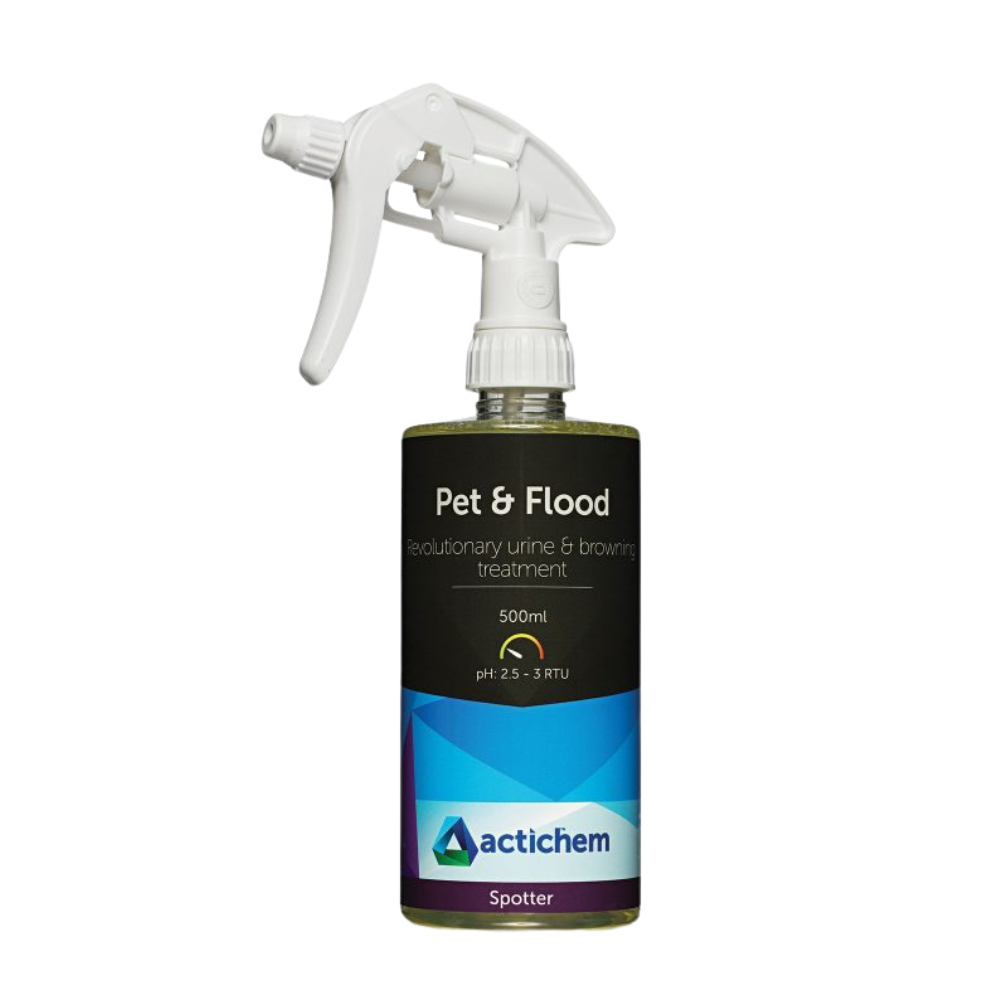
Match the product to the problem the label actually addresses. Freshway's listing for Actichem Pet & Flood describes an acidic urine and flood treatment, approximately pH 1.0 to 2.5 ready to use, which can be used undiluted on severe spots or diluted up to 1:4 for larger flood areas, and which the page says also targets odour-causing bacteria. That is a specific job: urine salts and flood-affected carpet, not routine office maintenance.

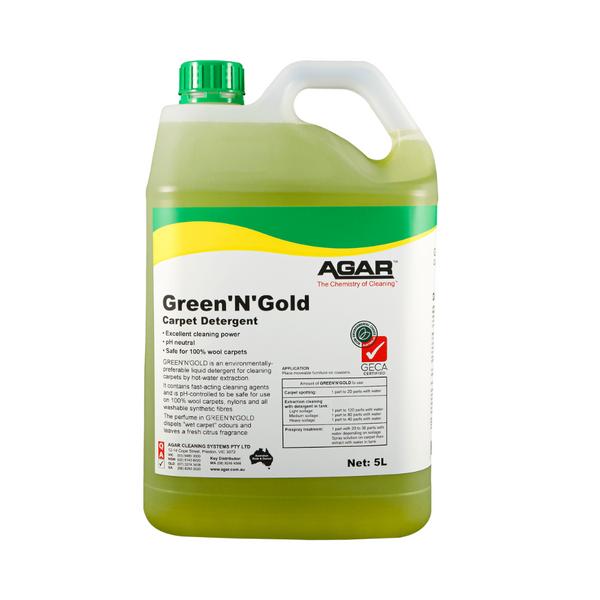
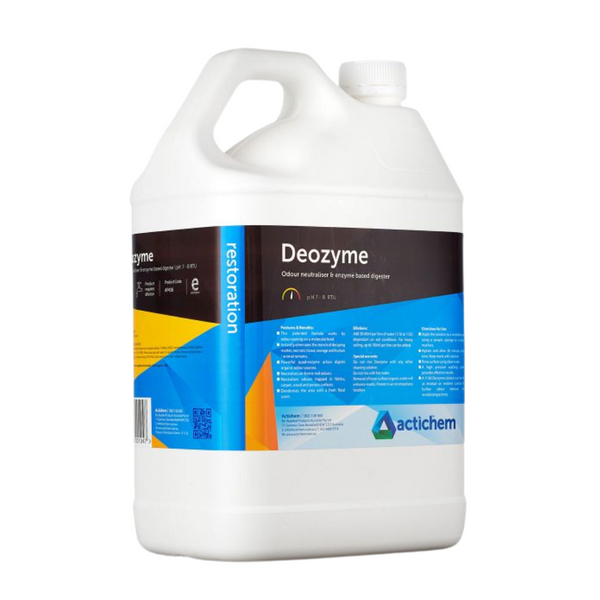
Actichem Deosan is listed as an anti-microbial odour eliminator with a dilution of 1:10 to 1:20 and pump-sprayer or fogging application; the stronger the application method, the more important the occupancy controls above become. For hard floors around carpeted areas, Freshway's Agar floor and surface disinfectants are labelled for surfaces where a disinfectant is genuinely needed. Compare the Agar carpet and upholstery cleaners and the Actichem range label by label rather than by headline.

Documentation that stands up
The Carpet Institute notes that many carpet warranties depend on correct maintenance and that some carpet makers ask for proof of professional cleaning. It also says soil- and stain-resistant treatments can help but should be checked against the warranty. A one-page job record protects everyone:
- Date, area and carpet type.
- Cleaning method used before any treatment.
- Product name, batch if available, dilution and dwell time.
- Application method and re-entry time given.
- Copy of the SDS held on file.
Red flags in a quote or brochure
- A treatment is quoted but no product is named.
- The claim is a time period ("protects for months") with no test or document behind it.
- "Disinfectant" appears on the quote but not on the product label.
- The contractor cannot supply a current SDS.
- The treatment is offered instead of vacuuming or extraction rather than after it.
- One product is said to suit every fibre, odour and contamination type.
Buyer checklist
- Ask what problem the treatment is meant to solve: odour source, flood, urine or routine care.
- Request the product name, label and SDS before approving the work.
- Compare the quote wording with the label wording; strike out anything stronger.
- Check any listing number yourself on the public register.
- Confirm the cleaning steps that come first, especially vacuuming and extraction.
- Agree the application method, ventilation and re-entry time for occupied areas.
- Check the carpet warranty before allowing any treatment.
- File the job record and SDS with the contract.
Frequently asked questions
Is an antimicrobial carpet treatment the same as cleaning?
No. Vacuuming and extraction remove soil. An antimicrobial product is an added step and only does what its label says it does.
What should a contractor give me before treating carpet?
The product name, the label wording, a current safety data sheet, and the dilution, dwell time and application method planned for your site.
Can a treatment void a carpet warranty?
It can. The Carpet Institute advises checking that any added treatment does not affect the carpet warranty, so read the warranty first.
How do I check a hospital-grade claim?
Ask for the listing number shown on the label and look it up on the public TGA register, then confirm the dilution used matches the label.
Next steps with Freshway
Start with the odour source and the cleaning method, then decide whether a labelled antimicrobial step adds anything. Freshway can supply product data sheets for the carpet chemicals it lists; contact the team with the problem you are solving and the carpet type before specifying a treatment.