Childcare Sleep-Room Vacuuming Without Waking Children
Vacuum before rest or after pickup, let the air settle, and write it into the plan.
Shop now
Three numbers frame this job. Freshway lists the Nilfisk GD5 HEPA backpack at 62 dB(A). ASCIA's allergen guidance suggests waiting 20 minutes before re-entering a room after vacuuming. And under the National Regulations, a childcare service must conduct a sleep and rest risk assessment at least once every 12 months. For centres across Sydney, those figures turn "vacuum the sleep room" from a chore into a scheduling and equipment decision.
Can you vacuum a childcare sleep room without waking children?
Yes, but not while children are asleep in it. Vacuum the sleep room before rest time or after children leave, allow the air to settle, and keep any in-session work to short cordless spot cleans well away from cots. Choose a machine by published dB(A), filtration and weight, and record the routine.
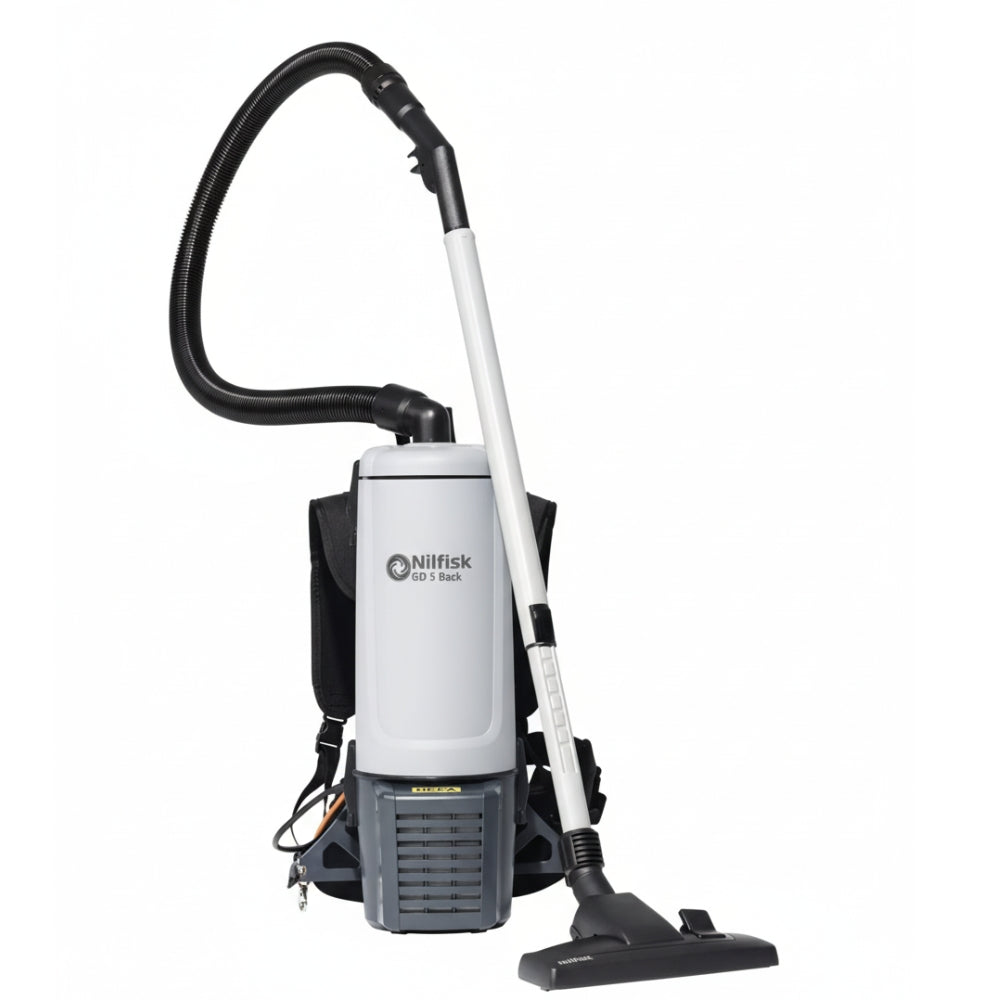
This guide follows a decision path: constraints first, then machine, then timing and training. For a broader look at the backpack versus canister question in education settings, see Freshway's guide to backpack vs canister vacuums for schools and childcare.
Sleep-room constraints
The regulations set the frame. The NSW Department of Education's page on safe sleep and rest explains that requirements sit in regulations 84A to 84D, and that regulation 84A requires providers to take reasonable steps to ensure children's needs for sleep and rest are met. ACECQA's sleep and rest risk assessment template says the assessment must be conducted at least once every 12 months, and lists the physical environment, including noise and distractions, among the things to consider.
In practice that gives a cleaner four constraints:
- No machine noise in the room while children are resting.
- No airborne dust raised just before children lie down.
- No cords, hoses or machines left where children or educators move between cots.
- No change to the routine without the risk assessment being updated.
Reading dB(A) claims carefully
Decibel figures are useful for comparing machines, but only like with like. Freshway's listings give the GD5 dry model at 59 dB(A), the GD5 HEPA at 62 dB(A), and the Pacvac Velo Go cordless backpack at under 69 dB. The listings do not state test distance or method, so treat a few dB as an indication, not a guarantee of how the machine will sound in your room.
| Machine (Freshway listing) | Listed noise | Power | Filtration | Weight |
|---|---|---|---|---|
| Nilfisk GD5 HEPA backpack | 62 dB(A) | 1300 W corded, 15 m detachable cord | HEPA H13 | 4.4 kg |
| Nilfisk GD5 backpack | 59 dB(A) | 1300 W corded, 15 m cord | Standard | 4.2 kg |
| Pacvac Velo Go cordless backpack | Under 69 dB | 250 W / 400 W boost, 2 x 18V Li-ion | Hypercone 4-stage | 4.5 kg with batteries |
A quieter figure on paper still produces noise through a wall. The practical test is simple: run the machine in the next room during a non-rest period and have an educator stand in the sleep room.

Cordless for quick edge work
Corded machines are fine for the full clean, but a cord across a room where children are moving creates a trip hazard. A cordless backpack suits short jobs: crumbs at the doorway after lunch, a spill near the nappy change area, or a quick pass along the edges before rest time. Freshway lists the Pacvac Velo Go with up to 50 minutes of runtime from two 18V lithium-ion batteries and a 1 hour 45 minute charge cycle. Browse more options in the cordless vacuums collection.
Batteries need their own rules. SafeWork NSW's page on lithium-ion batteries warns they can catch fire or explode if not handled, stored or charged correctly. Charge them in a staff area, never in a sleep or play room, and use the supplied charger.

Scheduling around sleep cycles
Build the clean into the timetable rather than fitting it in:
- Full vacuum of the sleep room after children leave for the day, or before they arrive.
- If a pre-rest touch-up is needed, do it at least 20 minutes before children enter, in line with ASCIA's re-entry guidance below.
- No vacuuming in the sleep room or adjoining rooms during rest periods.
- Spot spills during rest with a damp cloth, then vacuum later.
- Record the schedule in the room's cleaning log.
Soft furnishings and cot areas
Mats, cushions, rugs and soft furnishings collect dust. Vacuum around and under cots with a crevice tool while the room is empty, and avoid pushing hoses or wands into bedding. ACECQA's sleep and rest policy guidelines ask services to consider safety requirements for cots, mattresses, bedding and evacuation cots, and the removal of potential hazards from the sleeping environment. A vacuum, its cord or its hose left in the room counts as one.
HEPA for younger cohorts
HEPA filtration helps, within limits. ASCIA's allergen minimisation FAQ says HEPA filter vacuum cleaners may remove more allergens than other vacuum cleaners, but that all vacuuming increases the amount of dust mite allergen in the air, and suggests waiting 20 minutes before re-entering the room. That is the reason to schedule vacuuming away from rest time even with a HEPA machine. Compare options in the HEPA backpack vacuums collection.
Training educators vs contract cleaners
Educators usually handle the quick in-session cleans; contract cleaners handle the full clean after hours. Both need the same short brief: which machine is used where, when each room is off limits, where batteries are charged, and how the machine is stored. WorkSafe Victoria's safer way to clean: vacuuming sheet recommends lightweight machines suited to the area, light backpack vacuums with adequate lumbar support for some tasks, and information, instruction and training on how to use them.
For very small rooms, a stick vacuum from the upright and stick vacuums range may be simpler for educators than a backpack harness.
Checklist for quiet compliance
- Record the vacuuming schedule in the sleep and rest risk assessment.
- Check published dB(A) and filtration before buying, then test in your own building.
- Keep in-session work cordless and short, away from cots.
- Leave 20 minutes between vacuuming and children entering.
- Charge batteries in a staff area only.
- Store machines, cords and hoses outside rooms children use.
- Brief educators and cleaners on the same rules, and review them when the assessment is reviewed.
Frequently asked questions
Can we vacuum during rest time?
Not in the sleep room. Vacuum before rest, after children leave, or in rooms well away from it.
Is a HEPA vacuum enough?
It helps, but ASCIA says all vacuuming raises dust mite allergen. Allow 20 minutes before re-entry.
Are dB(A) figures reliable?
Use them to compare machines, then test the machine in your own building.
Where should batteries charge?
In a staff area, away from sleep and play rooms, using the supplied charger.
Backpack vacuums delivered across Sydney
Pick the machine, then write the routine down. Freshway delivers across Sydney, including the Sutherland Shire and Bankstown, and same-day delivery may be available; call 1300 567 002 before ordering to confirm the delivery window. Click and collect is available from our Arncliffe warehouse by prior arrangement. Browse the full backpack vacuums collection.