Backpack vs Canister: Total Cost of Ownership for Cleaning Firms
Cost the minutes and the bags, not just the machine, before you pick a format. [78 chars]
Shop now
A bigger bag does not make a vacuum cheaper to own, and a lighter machine does not make the route faster. Both feel true when you stand in front of two machines. Neither is reliable until your own floors and your own crew have been timed.
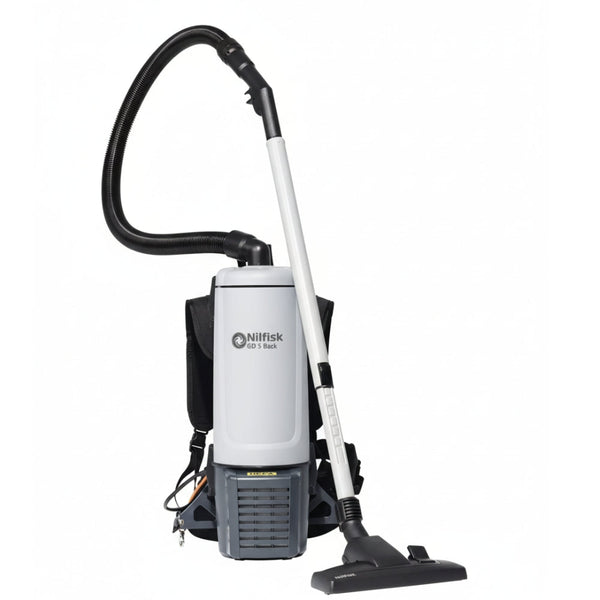
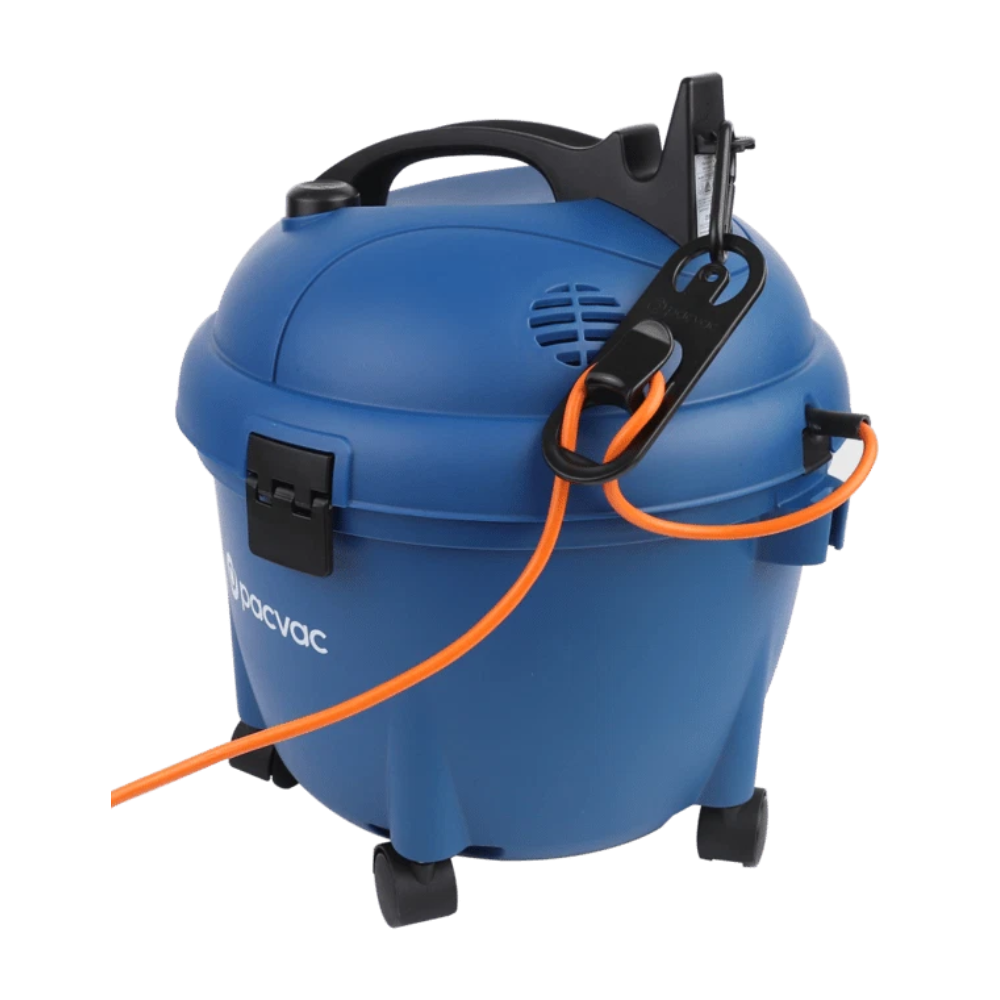
Take two machines in the same brand. Freshway lists the Pacvac Superpro 700 backpack and the Pacvac Glide 300 canister at the same 38 litres per second of airflow. One collects 5 litres, the other 15. If you clean the same floor with each, the backpack fills its bag three times as often. Whether that makes the canister the cheaper machine depends on something neither spec sheet shows: the minutes your operators spend on each route.
This guide builds the ownership cost line by line, from the operator's side of the job, so you can fill in your own numbers. It deliberately quotes no prices. Pull current pricing from each product page as you go.
Vacuum total cost of ownership (commercial): the short answer
Commercial vacuum total cost of ownership is the purchase price spread over the machine's service life, plus bags, filters, batteries, repairs, testing and downtime, plus labour minutes on every route. Labour minutes often decide it. Time both formats on your own floors, then let bag and filter counts settle close calls.
If you have not chosen between the formats yet, start with Freshway's backpack vs canister comparison. This article assumes you have two candidates and want to cost them.
Capex vs consumables
Write the purchase price as a yearly figure: price divided by the years you expect the machine to stay in service. Then list everything that keeps it running. On a vacuum that list is longer than the invoice suggests, and most of it repeats every year.
Two things are easy to miss here. What comes in the box reduces your first-year spend: Freshway lists the Superpro 700 with one reusable SMS bag and five paper bags, and the Glide 300 with one reusable SMS cloth bag and five DUB031 disposable bags. And warranty terms change the repair line. Nilfisk Australia lists a one-year commercial warranty for its GD5 backpack, and Freshway's Trade Account Policy says manufacturer warranties apply. Note the warranty period for every model you compare, because repairs inside it cost you downtime rather than parts.
Bags, filters and belts
Bag cost follows capacity, not price per pack. With the same debris load, a 5 L bag fills three times as often as a 15 L bag. Over 150 litres of collected debris, that is 30 backpack bags, three 10-packs of Pacvac DUB028, against 10 canister bags, one 10-pack of DUB031.
Filters follow the machine. The Superpro takes the FIL001 pre-motor cone filter, sold singly or in a 5-pack. The Glide and Hush canisters take the SEK002 service kit, which Freshway lists with five disposable dust bags, a synthetic filter cover and a 33 mm pre-motor cartridge filter. Change intervals belong to the manual, so put the manual interval into the worksheet rather than a guess.
Belts only enter the sum if the fleet includes power heads or uprights with brush rolls. Neither Pacvac listing includes a powered brush head, so there is no belt line for these two. Freshway's vacuum parts and accessories range lists bags, filters, hoses and harness parts by model.

Labour minutes per square metre
This is the line that often decides the result, and it cannot be copied from a brochure. Time it.
- Pick a representative route and measure its area.
- Run it with each candidate machine, on a normal night, with your usual operator.
- Record vacuuming minutes, plus the minutes spent on bag changes and moving plugs.
- Convert to minutes per 100 m², so different sites compare.
A worked example, with made-up timings to show the arithmetic: on a 1,200 m² floor, the backpack takes 40 minutes and the canister 48. That is 3.3 and 4.0 minutes per 100 m². Eight minutes a night over 250 nights is 2,000 minutes, about 33 hours a year, which you multiply by your hourly labour cost. On a long, open, single-level floor the result can easily run the other way, which is why you time your own.
Bag changes belong here too. If a change takes three minutes on your site, 30 changes cost 90 minutes and 10 changes cost 30.
Downtime and repairs
When a machine is away for repair, you pay twice: the repair and the lost or slower shifts. Cost it as repairs per year times the repair cost, plus repair days times the cost of covering the work.
Freshway's Service and Repairs page covers backpack vacuums, including Pacvac, Numatic, Nilfisk and Karcher, for suction, motor, cord and switch faults, as well as commercial vacuums. It quotes before work starts, gives a 30-day warranty on the repaired issue, and offers pick-up and delivery for eligible commercial jobs in Sydney. Turnaround depends on parts availability, so ask how quickly parts for your model can be supplied. If the honest answer is "a while", one spare machine per crew belongs in the worksheet.
Battery pack cycles
A cordless backpack swaps a cable for a battery that wears out. Freshway lists the Nilfisk GD5 Battery with a 36V lithium-ion battery, up to 60 minutes per charge and a fast charger in the box.
Cost it in two parts. First, the round: if your vacuuming round runs past the runtime you can rely on, you need a second battery or a charging window. Second, wear: replacement battery price × (charges per year ÷ rated charge cycles). One charge a night over 250 nights is 250 charges a year. Ask the supplier for the rated cycle figure and the replacement battery price, and use those, not a guess.
Chargers are plug-in equipment, which brings them into the testing line below. Freshway's battery backpack range shows which models list runtime and inclusions.

Example TCO worksheet
The quantities come from Freshway's listings for the two Pacvac machines. Prices are left for you to fill in from each product page, because they change.
| Cost line | Superpro 700 (backpack) | Glide 300 (canister) | How to cost it |
|---|---|---|---|
| Machine | Corded, 5 L, 38 L/s | Corded, 15 L, 38 L/s | Price ÷ years in service |
| Bags per 150 L of debris | 30 (three DUB028 10-packs) | 10 (one DUB031 10-pack) | Packs per year × pack price |
| Bags in the box | 1 reusable SMS + 5 paper | 1 reusable SMS cloth + 5 DUB031 | Deduct from year one |
| Filters | FIL001 cone filter | SEK002 service kit | Manual interval × part price |
| Bag-change minutes | 30 changes | 10 changes | Changes × timed minutes × labour rate |
| Route minutes | Timed on your floor | Timed on your floor | Minutes per 100 m² × area × nights × rate |
| Testing and repairs | Per machine | Per machine | Test fee + expected repairs + spare cover |
Add the rows for each machine and compare the yearly totals, not the invoices. If the totals land within a few per cent of each other, choose the machine your operators prefer after a trial, because that preference shows up in the route minutes anyway.
Hidden costs
- Test and tag. SafeWork NSW requires plug-in equipment used in damaging conditions, such as dust or moisture, to be inspected and tested by a competent person under AS/NZS 3760, with a record of who tested it, when, the outcome and the next test date. Every vacuum and charger is a line.
- Injury risk. WorkSafe Victoria's manual handling data puts 35 per cent of injuries at the back and 20 per cent at the shoulder. SafeWork NSW treats movements repeated more than twice a minute, and postures held for more than 30 seconds, as risk factors. Vacuuming involves both, so harness fit and machine weight are cost items, not comfort items.
- The wrong dust class. WorkSafe Queensland notes that an L-class machine cannot be upgraded to M or H-class by fitting a better filter. Buy for the dust the contract will meet, or budget a second machine later.
- Wear parts outside the motor. Hoses, wands, cuffs and harness parts fail before motors do. Price them for each model.
When the cheaper machine costs more
From the operator's side, the cheaper machine loses when:
- it adds minutes to every route, even a few;
- its bags are small enough that changes interrupt the round;
- its parts are slow to arrive, so a breakdown costs shifts;
- it is uncomfortable enough that operators slow down by the end of the night;
- it is the wrong tool for the floor. Tennant Australia notes that a backpack with only a floor nozzle may not lift dirt from carpet as well as an upright's revolving brushes, and that canisters are usually quieter than uprights, which matters for daytime work.
Buy via trade account notes
Consumables are a recurring order, so they suit an account. Freshway's Trade Account Policy sets out 30-day payment from the invoice date for approved accounts, a first order supplied cash on delivery, defects to be reported within 7 days and a 20% restocking fee on approved returns. Order bags and filters to the worksheet, not by the carton, and keep part numbers on the account so reorders repeat the right item. For the wider buying process for backpacks, see Freshway's commercial backpack vacuum buyer's guide.
Frequently asked questions
Is the machine with the lower purchase price cheaper to own?
Not necessarily. Bags, filters, repairs and labour minutes run for every year of service, so a machine that slows the route or needs more consumables can overtake a dearer one.
Does a canister always cost less in bags because it holds more?
Per litre of debris, often yes: one 15 L bag replaces three 5 L bags. But if the canister adds minutes to the route, labour can outweigh that saving.
Are reusable cloth bags free to run?
No. They remove bag spend but add emptying time, cleaning and dust handling, so cost them in minutes like any other task.
Is a cordless backpack too expensive to run?
Not if the battery is costed honestly. Add the replacement battery spread over its rated charge cycles and compare it with cord damage, trip risk and the minutes spent moving plugs.
Next steps with Freshway
Time one route with each candidate, fill in the worksheet with prices from the product pages, and send the totals to Freshway with your site list. Ask for the machines, a first-year supply of bags and filters, and any spare batteries to be quoted together, so the comparison is like for like.