Wall-Mounted vs Portable Pressure Washers: Spec and Site Fit
Fix the machine where the dirt comes to you; move it where you go to the dirt.
Shop now
Does the dirt come to you, or do you go to the dirt? That single question settles most wall-mounted versus portable debates before anyone opens a spec sheet. A truck depot, food plant or council works yard brings the soil to one place every day. A contract cleaning crew chases it across car parks, shopping centres and strata blocks.
Our earlier guide to wall-mounted vs portable pressure washers compares the two at a high level. This article is an implementation plan for engineers designing a wash bay or speccing a mobile fleet.
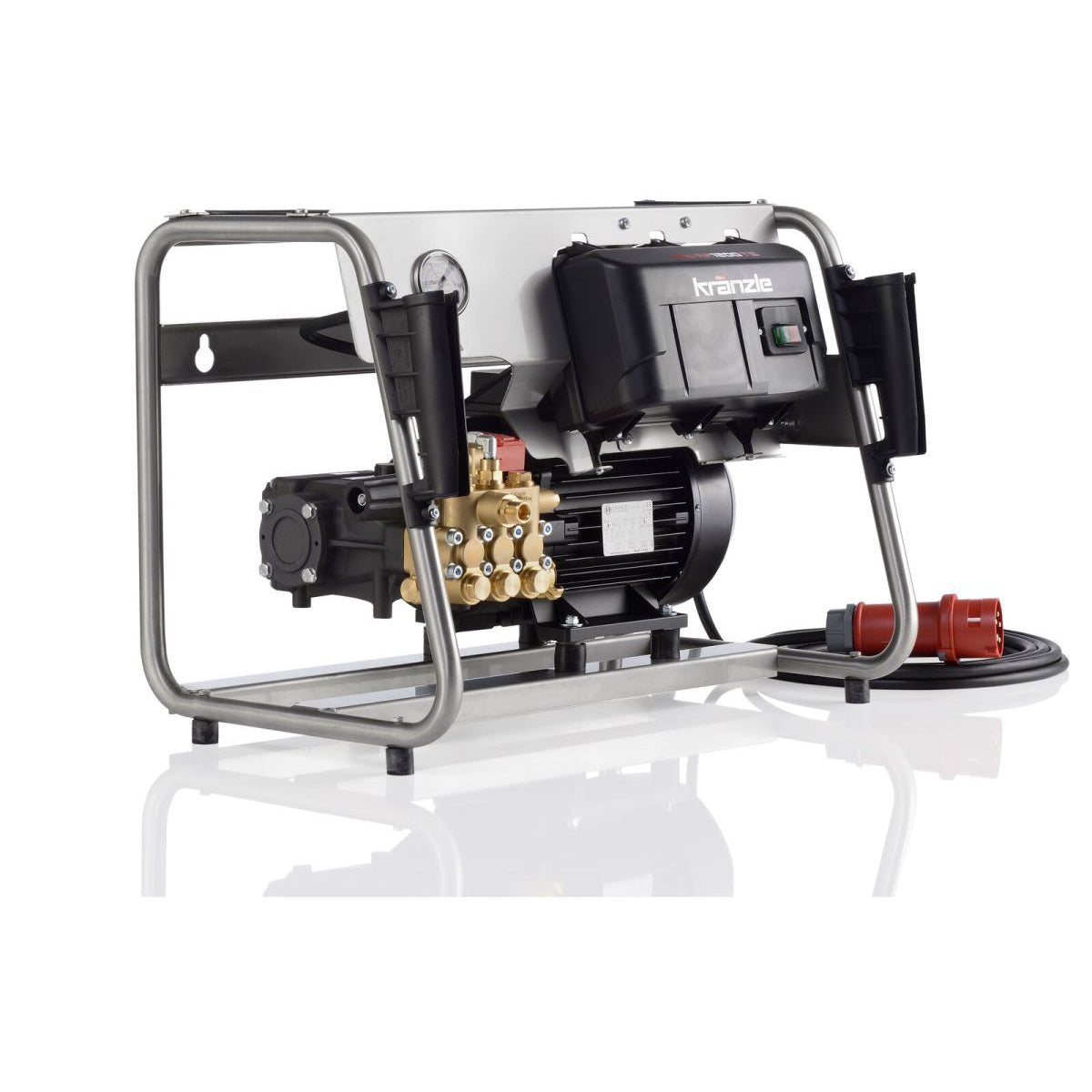
Wall-mounted vs portable pressure washer: the short answer
Choose a wall-mounted pressure washer when washing happens in one fixed place every day, three-phase power and plumbing are available, and you want hose reels, trade waste capture and less handling. Choose a portable unit when crews move between sites. Compare flow, power supply, hose runs and wastewater controls for your layout.
Bay design comes first
A fixed unit is part of the building, so design the bay before choosing the machine:
- Where vehicles or equipment will park, and how far the furthest point is from the wall.
- Where wash water drains, and whether a separator or pit is needed.
- Where power and water will be brought to the machine.
- Where hose reels and lances will be stored off the floor.
Water Corporation's guidance on vehicle and machinery wash-down areas is a useful AU reference on bay layout and pre-treatment, and Sydney Water's industrial trade wastewater page explains when approval is needed to discharge to sewer.
Parameter needs in a fixed bay
Fixed bays usually justify higher flow, because the machine runs for long periods and the operator rinses large areas.

Freshway's listing for the Kranzle WS-RP1000TS describes a 415 V wall unit with a large inline crankshaft pump delivering 16 litres per minute, a 4-pole 1400 rpm motor, a Total Stop system using a flow switch, a D12 quick release plug-in system and a stainless steel frame that can be wall-mounted or floor-standing.
Hose runs and reels
A wall unit's reach is set by its hose. Long runs lose pressure at the gun and add weight for the operator; our guide to pressure washer hose length explains the trade-off. Mount reels so hoses retract off the floor; hoses lying across a wet bay are a trip hazard, and SafeWork NSW lists poor housekeeping among causes of slips, trips and falls.
The portability tax
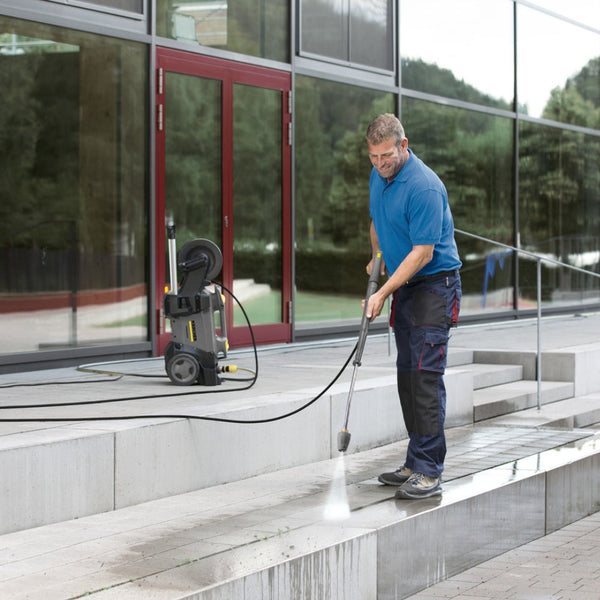
Portable machines pay for mobility in other ways:
- Lifting on and off vehicles, and moving over kerbs.
- Hoses and leads run out across every site.
- Water supply varies by site, so inlet filters and break tanks matter.
- Power varies too; 10 A, 15 A and three-phase outlets are not all available.

Freshway lists the portable Karcher HD 6/15-4 Classic with a 3.4 kW single-phase motor, 150 bar working pressure and 600 litres per hour (10 L/min). The listed flow of the wall unit, 16 L/min, is 60 per cent higher (16 ÷ 10 = 1.6), which is the kind of gain a fixed three-phase supply makes possible.
Power and plumbing checks
Fixed units need a licensed electrician to install the supply and isolation. SafeWork NSW's electrical risks at the workplace fact sheet covers wet areas and equipment. On the water side, a direct connection to mains may need backflow protection; Sydney Water explains backflow prevention requirements for businesses.
Spec comparison
| Factor | Wall-mounted (fixed bay) | Portable (mobile crew) |
|---|---|---|
| Typical power | Three-phase, hard-wired or fixed outlet | Single-phase or petrol |
| Flow | Higher flow practical | Limited by site power |
| Hose | Reels, fixed runs | Carried, varies by job |
| Wastewater | Designed drainage and treatment | Capture equipment per site |
| Handling | Minimal | Lifting, loading, moving |
| Typical sites | Depots, food plants, workshops | Contract cleaning, strata, retail |
Safety in both setups
Both machines produce high-pressure jets. WorkSafe Victoria's high pressure water jetting alert lists the injury risks and controls. In a fixed bay, add signage, a clear exclusion zone for pedestrians and a shut-off within reach of the operator.
Mixed fleets: using both
Many organisations end up with both types: a wall unit in the depot for daily vehicle and bin washing, and one or two portables for off-site jobs. Standardise lances, nozzles and quick-connect couplings across both so operators can swap accessories without adapters. Keep a register of which nozzles suit which machine, because a nozzle sized for a 16 L/min wall unit will not suit a 10 L/min portable. Service both on the same schedule, and record operating hours so pump servicing is based on use rather than calendar dates.
Mistakes we see
- Installing a wall unit before planning the drainage.
- Running one long hose from the wall instead of adding a reel point.
- Buying a portable unit for a site where it never leaves the bay.
- Ignoring backflow and trade waste approvals.
- Expecting a single-phase portable to match a three-phase fixed unit's flow.
Implementation checklist
- Map the bay and the furthest wash point.
- Confirm power supply and get an electrician's quote.
- Confirm water supply flow and backflow needs.
- Design drainage and trade waste capture.
- Choose machine flow and pressure for the main soil.
- Plan hose reels, lance storage and signage.
- Train operators and record settings.
Frequently asked questions
Can a wall-mounted pressure washer be moved later?
Some units, such as the WS-RP1000TS, can be wall-mounted or floor-standing according to the listing, but they still need fixed power and water. Treat them as plant, not portable tools.
Is a wall unit always more powerful?
Not always, but fixed three-phase supply makes higher flow practical. Compare the listed figures for each machine.
Do I need approval for a wash bay?
Discharging to sewer usually needs a trade wastewater approval from your water authority. Check before construction.
Can a portable unit serve as a backup for a fixed bay?
Yes, many sites keep one, provided it uses compatible lances and couplings.
Next steps with Freshway
Sketch the bay or list your mobile sites, then compare machines in industrial pressure washers and electric pressure washers. Check each product page for current pricing and full specifications.