
Wall-Mounted vs Portable Pressure Washers for Commercial Cleaning
A wall-mounted pressure washer suits frequent cleaning from one fixed bay where water, power, drainage and hose reach can be engineered. A portable washer suits changing work zones, mobile contractors and sites where one installation cannot cover the tasks. The right choice comes from mapping cleaning locations and setup time, not assuming the mounted option is more powerful.

What changes when the machine is fixed to a wall?
The unit gains a permanent home and can be paired with organised hose storage, but installation becomes part of the system. Wall structure, ventilation, weather protection, service access, electrical supply, inlet flow, backflow requirements and wastewater route need confirmation. The hose route determines actual coverage.
The practical benefits of a mounted unit are a ready-to-use setup, less floor clutter and better hose management — most pronounced in a fixed bay where the machine stays in one place. Those workflow benefits do not establish suitability for an industrial installation; follow the chosen manufacturer and relevant trades.
Map every cleaning point and hose route
Mark the farthest bay, vehicle side, equipment pad and wash-down edge. Measure a safe routed distance around walls and obstacles rather than a straight diagonal. Account for doors, traffic, hot surfaces and places where a high-pressure hose could be crushed or create a trip hazard.
A portable unit can move closer and shorten the high-pressure run, but the machine then needs a safe position at each task. It cannot obstruct an exit, operate in an unventilated area or expose electrical connections to spray.
Compare the operating model
| Factor | Wall-mounted | Portable |
|---|---|---|
| Best use pattern | Repeated work from one serviced bay | Multiple zones or customer sites |
| Setup | Fast after a proper installation | Water, power and hose setup each move |
| Reach | Limited by designed hose network | Machine can move closer |
| Security | Can be fixed and controlled | Needs transport and storage controls |
| Service access | Must be designed around mounting | Can be moved to workshop more easily |
Which utilities does the site provide?
Confirm continuous inlet flow, water quality, permitted temperature, power phase and circuit, ventilation for combustion engines, and drainage. A wall location with a convenient outlet is not sufficient if the circuit, tap or wastewater path cannot support the duty.
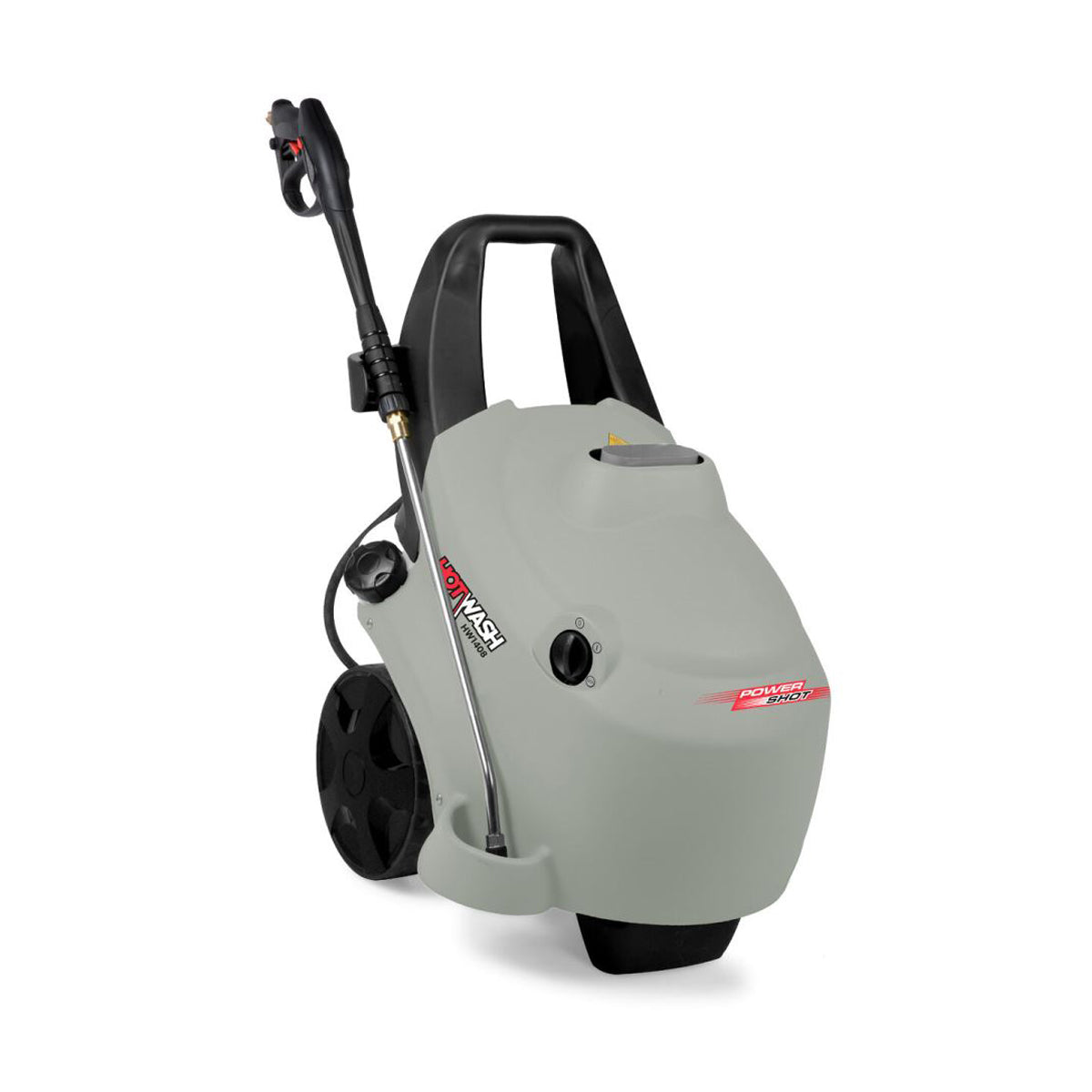
Review Freshway’s commercial pressure-washer range here, while comparing power source, flow, duty cycle and dimensions against the mapped bay. Product specifications should be verified before an installer designs around them.
Plan installation and maintenance access
Allow technicians to reach filters, oil points, fasteners and controls without removing unsafe obstructions. Protect the unit from impact, weather and corrosive spray while maintaining ventilation. Mounting height must suit operation and inspection, and the wall and fixings need competent assessment.
Safe Work Australia says pump units and high-pressure systems should be maintained to manufacturer recommendations, with checks on filters, guards, controls, leads, hoses and fittings. A neat installation must still allow those checks.
How should hose management affect the decision?
A reel can make either format easier to use, but its pressure, temperature, flow and hose-length ratings must match the system. Plan where the operator pulls and retracts it, how it crosses aisles and how damaged sections are inspected. Do not conceal most of the hose where wear cannot be seen.
Compatible reels, hoses and connectors can be considered within Freshway’s pressure-washer accessories after the route and washer interface are known. Avoid selecting the reel first and forcing the machine to fit it.
Model the full ownership cost
For a mounted unit include design, trades, wall support, backflow or drainage work, reel, hose, commissioning and site downtime. For a portable include repeated setup labour, transport, security, loading, storage and possible duplication across sites. Apply the same service horizon to both.
Run a simple trial: record setup and pack-down time for a representative month, number of work zones and hose-related delays. Use verified site data rather than a claimed universal payback period.
Position installation below the buying decision
Build a one-page location schedule before approving either format. For every task, list frequency, operator, water point, power or fuel, required hose reach, drainage route and setup minutes. A fixed system earns its place when the same engineered bay repeatedly serves most work; a portable remains stronger when travel between locations is part of the job rather than an exception.
The upstream Australian pressure-washer buying guide helps define output, duty and power source before the fixed-versus-mobile layout is chosen. This page begins only after those operating needs exist.
Once a layout is selected, use the hose and fitting compatibility workflow to document each connection and rating. Installation reach never makes an unidentified or under-rated fitting acceptable.
Frequently asked questions
Is a wall-mounted pressure washer suitable outdoors?
Only when its environmental rating, enclosure, installation and freeze or heat protection suit the location.
Can one wall-mounted washer serve several bays?
Possibly, if hose reach, pressure loss, routing and simultaneous-use expectations are engineered for them.
Which type is easier to service?
A portable is easier to transport, while a mounted system can offer organised access if the installation was designed for maintenance.