
Electric vs Petrol Pressure Washers for Commercial Cleaning in Australia
Choose an electric commercial pressure washer when reliable power, lower noise and operation without engine exhaust suit the site. Choose petrol when outdoor mobility and independence from electrical outlets matter more. The power source alone does not determine cleaning speed: compare pressure, flow, duty rating, accessories and the complete work route.
The worksite usually decides before the specification sheet
Map where the machine will operate, how it reaches each cleaning point and which utilities are available. An electric unit needs a suitable supply and a cable route that can be controlled. A petrol unit needs fuel handling, engine servicing and an outdoor operating location that prevents harmful exhaust exposure. Neither option should be selected only because it has a higher headline PSI.
| Site condition | Likely starting point | What still needs checking |
|---|---|---|
| Indoor wash bay with suitable power and drainage | Electric | Supply rating, water flow, cable routing and wet-area controls |
| Mobile exterior cleaning across changing sites | Petrol | Noise, fuel, transport, exhaust separation and service access |
| Noise-sensitive facility | Electric | Actual sound data and permitted operating hours |
| Remote outdoor area without dependable electricity | Petrol | Water supply, fuel plan and safe refuelling location |
| Fixed daily production task | Compare commercial electric and engine-driven systems | Duty cycle, total hours, maintenance and downtime support |
Electric does not mean light-duty
Electric machines range from compact domestic units to commercial single-phase and three-phase systems. Check the plug and circuit requirements, motor protection, pump speed, rated operating pressure, flow rate and intended duty. A model that needs a 15 A or three-phase supply cannot simply be moved to any available outlet.
Extension leads introduce voltage-drop and wet-area risks and may be prohibited or restricted by the equipment instructions and site procedure. Plan the machine position and hose reach around an approved power arrangement. Do not solve insufficient reach by adding an arbitrary lead.
Petrol improves mobility but adds operating controls
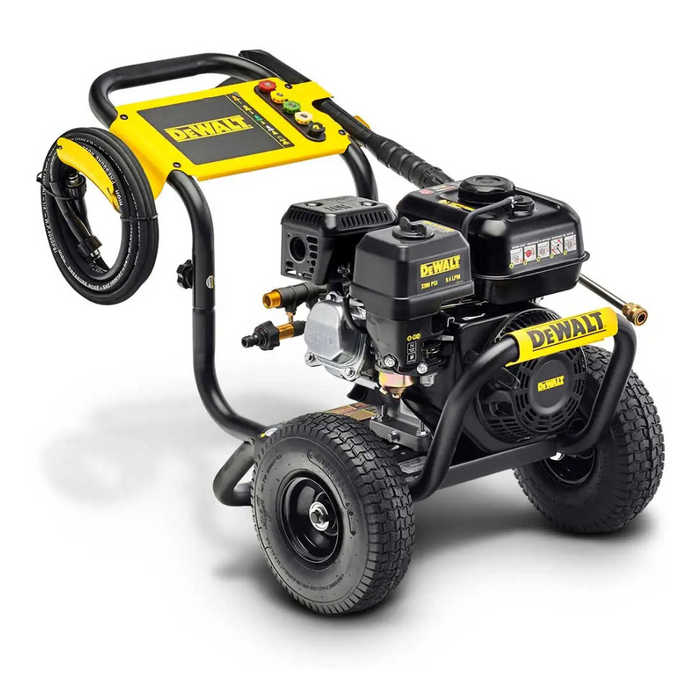
A petrol machine can move between outdoor locations without depending on an electrical outlet and may provide a useful combination of flow and pressure for mobile work. That independence comes with engine oil, air-filter, spark-plug and fuel-system maintenance. Storage and transport also need controls for fuel and a hot engine.
Never operate a combustion engine in an enclosed or poorly ventilated area. Moving the exhaust a few metres away or opening a door does not automatically make the arrangement safe. Follow the manufacturer’s instructions and the site risk assessment.
Compare pressure and flow as a pair
PSI describes pressure; litres per minute describes water flow. Pressure helps break the bond between contamination and a surface, while flow helps move loosened material and rinse an area. Two machines with similar PSI can feel very different when their flow rates differ. Nozzle choice, distance and technique also change the force delivered to the surface.
Use the same representative task when comparing machines. Record the cleaned area, number of passes, water availability and time from setup through pack-down. A mobile petrol unit can lose its apparent advantage if refuelling and transport dominate a small job. An electric unit can lose time if every area requires a new cable arrangement.
Maintenance and downtime belong in the cost comparison
- Electric: inspect cables, plugs, switches, hoses, pump and protection devices under the applicable maintenance program.
- Petrol: add engine servicing, fuel management, starting-system checks and ventilation controls.
- Both: protect the pump from poor inlet flow, inspect high-pressure components, use the correct nozzle and obtain compatible parts.
Estimate annual ownership from purchase price, labour, energy or fuel, planned service, consumables and the cost of downtime. Do not claim that one power source is always cheaper. Usage hours and site logistics can reverse the result.
A six-step selection trial
- Define the surface, soil and acceptable result.
- Confirm power, water, drainage, ventilation and permitted noise.
- Shortlist machines with suitable pressure, flow and commercial duty.
- Verify hose, nozzle, injector and surface-cleaner compatibility.
- Trial a representative route and record total task time.
- Compare maintenance, storage, transport and service support.
Keep the chosen power arrangement in the purchasing record. For an electric model, note the required outlet and circuit, permitted lead arrangement and tested hose reach. For petrol, record approved fuel, transport and storage controls, service intervals and the locations where the engine may operate. This prevents a machine that passed one demonstration from being assigned later to an unsuitable site.
Use Freshway’s commercial pressure washer range to compare complete model specifications after the site requirements have been documented.
Frequently asked questions
Are petrol pressure washers always more powerful?
No. Petrol models often occupy higher-output mobile categories, but power source does not establish pressure, flow or duty. Compare the exact models.
Can an electric pressure washer be used outdoors?
Only under the equipment instructions and a suitable electrical setup. Weather, wet areas, outlets, leads and protective devices must be addressed by the site procedure.
Which is better for a cleaning contractor?
The route decides. Outdoor mobile work may favour petrol; fixed or noise-sensitive sites with suitable power may favour electric. Some contractors need both.