Commercial Scenarios: Matching PW Specs to Driveways and Car Parks
Pick flow first, pair the surface cleaner, then sort the wash water.
Shop now
Two jobs land on the same Monday. The first is a strata driveway: about 40 metres of broom-finished concrete, a few oil drips under the visitor bays and a single garden tap. The second is one basement level of a suburban shopping centre car park, with tyre marks on every ramp, gum near the lifts and a centre manager who wants it open by 7 am. Same crew, same van. The pressure washer that suits the first job will struggle on the second, and the reasons are all on the spec sheet.
This guide is written from the operator's side of the trigger. Each section answers a question a contractor or site supervisor asks on site, using figures from Freshway product pages and Australian safety and environmental guidance.
Pressure washer for driveway and car park (commercial) work: the short answer
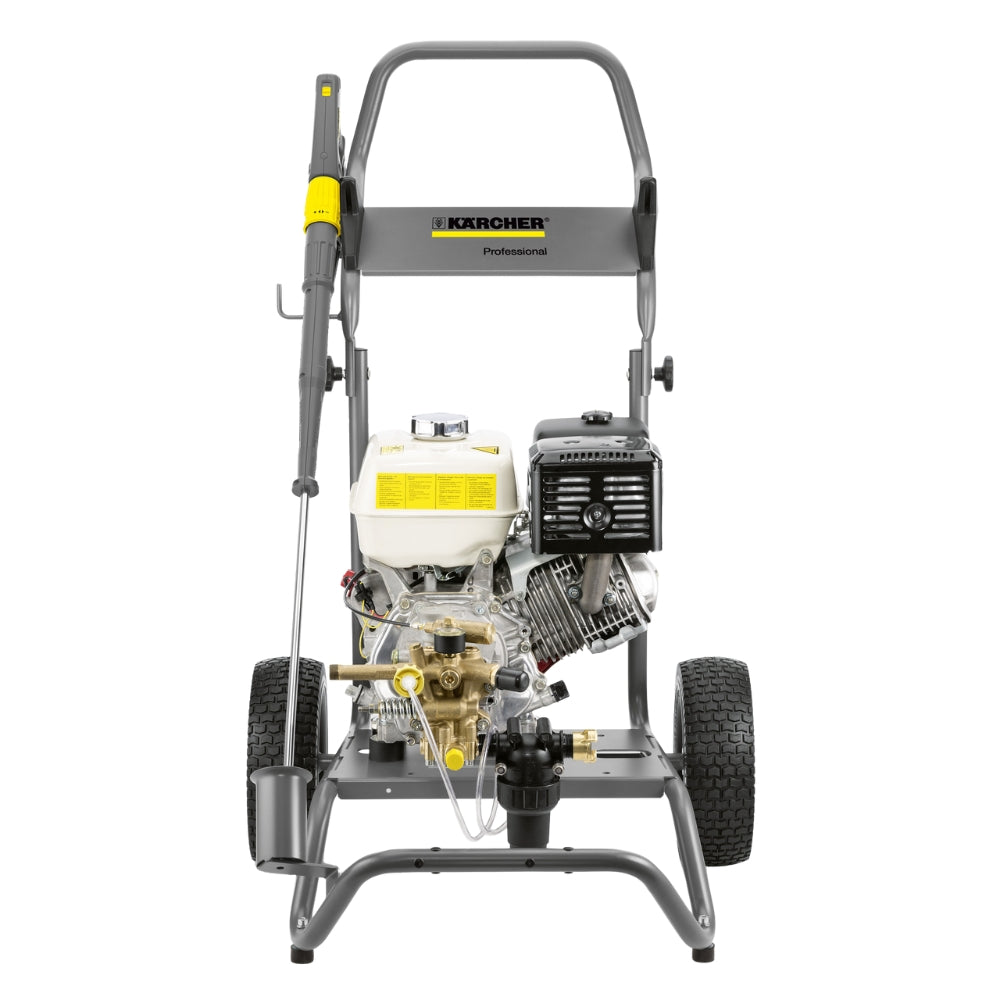
For commercial driveways and car parks, choose on flow rate first, then pressure: a machine around 15 L/min paired with a surface cleaner clears large concrete far faster than a high-pressure, low-flow unit. Use hot water where oil and gum dominate, keep petrol engines out of poorly ventilated basements, and plan wash-water control before starting.
Freshway's commercial pressure washer collection covers electric, petrol and hot water machines in these bands. For the technique of washing a single driveway without marking it, read how to pressure wash a driveway without damaging the concrete; this article is about matching the machine to the job.
What soil are you actually removing?
Name the soil before you pick the machine. Driveways and car parks usually carry a mix of:
- Loose silt, dust and leaf litter, which respond to flow.
- Tyre marks on ramps and turning bays, which need dwell time and agitation.
- Oil and fuel drips under parking bays.
- Chewing gum around entries, lifts and pay stations.
- Mould, moss or algae on shaded outdoor driveways.
TRHC, a Queensland equipment supplier, argues that hot water is often over-used and that a cold blast, detergent, dwell time and a cold rinse is frequently the better method, but also notes that at 80 to 90 degrees Celsius, where most hot water boilers are set, most oils melt and blast off easily. It warns too that turbo heads and close nozzles can damage vulnerable surfaces. That makes the soil list a machine list: silt-only jobs are a cold-water flow problem, while heavily oiled car parks either need a planned detergent routine or a hot water pressure washer.
How much concrete can one machine clean in a shift?
Melbourne Jetter Centre puts it simply: for many commercial applications, a higher flow rate is critical for efficient job completion. Pressure lifts the soil; flow carries it away.
The accessory sets the pace on large areas. Freshway lists the BE Pressure Whirl-A-Way 20 inch surface cleaner at a cleaning speed of 20 m² per minute, with 15 L/min as its ideal flow. On a 2,500 m² car park level that is 125 minutes of surface-cleaner time in theory. If real output is half the listed rate once you allow for edges, ramps, parked cars and pre-treatment, which is a planning assumption rather than a figure from the product page, the same level takes about 250 minutes, or 4 hours 10 minutes.
Run a timed test on one bay before quoting a whole level. It turns the assumption into your own number.

Where does the wash water go?
This is the question that stops jobs. The NSW EPA's stormwater guidance says that when any washing activity is carried out, the runoff must not enter stormwater drains, and that oils and chemicals do not belong there. Car park and driveway drains are almost always stormwater.
At a high level, that means blocking or protecting drains before you start, collecting dirty water rather than letting it run, and confirming with the site owner where collected water can lawfully go. Recovery-capable surface cleaners help: Freshway lists the Mosmatic FL-AER 300 with a recovery vacuum port, designed to clean and extract in one pass. Oily car parks need the most care, because detergent and hot water move oil further, not just faster.
Which spec bands fit which job?
Multiply pressure in bar by flow in litres per minute. WorkSafe Victoria explains that AS 4233.1 uses this figure to class systems: Class A covers 800 to 5,600 bar litres per minute, and Class B is anything above 5,600.
| Machine (Freshway listing) | Pressure | Flow | Bar × L/min | Typical job |
|---|---|---|---|---|
| Kranzle Quadro 599TST (electric, 15 A) | 150 bar | 10 L/min | 1,500 | Driveways, smaller car parks with a 15 A outlet |
| Karcher HD 7/15 G (petrol) | 150 bar | up to 650 L/h (10.8 L/min) | about 1,625 | Residential and strata driveways |
| Karcher HD 9/23 G (petrol) | 270 bar | up to 900 L/h (15 L/min) | 4,050 | Open-air car parks with a surface cleaner |
| BAR4013C-H (petrol) | 4,000 psi (about 276 bar) | 15 L/min | about 4,137 | Large concrete areas |
| Karcher HDS 13/20 De Tr1 (diesel, hot water, trailer) | 2,900 psi (about 200 bar) | up to 1,300 L/h (21.7 L/min) | about 4,332 | Oily car parks, service stations, multi-site rounds |
All five sit in Class A, so none of them is a Class B jetting system. Two details matter when reading the table. Some pages list maximum pressure and others operating pressure, so treat the products as approximate. And flow is what pairs a machine with a surface cleaner: the Whirl-A-Way lists 11 L/min minimum and 15 L/min ideal, which rules out the 10 L/min electric machines for that head.
Which accessories change the result?
On car parks, the accessory often matters more than the machine. Freshway's pressure washer accessories range includes the main ones:
- Surface cleaner sized to flow. The Whirl-A-Way 20 inch suits 15 L/min machines; the Kranzle UFO 300 mm lists 10 to 12 L/min and a D12 fitting, and names the Quadro 599TST among compatible models.
- Detergent injector or foamer. TRHC explains that detergent is drawn in at low pressure and diluted by roughly 90%, which suits pre-treating oily bays before the surface cleaner pass.
- Hose reel and correctly rated hose. Hoses and fittings must be rated at or above the machine's maximum pressure, and a reel keeps the hose off oily ground and away from wheels.
- Turbo or rotary nozzle for gum and stubborn tyre marks the surface cleaner leaves behind.

How many people does the job need?
One operator can do a driveway. A trading car park usually needs two: one on the machine and one managing the area, moving cones, watching for cars and pedestrians, and keeping the hose clear.
The person on the trigger needs protection first. WorkSafe Victoria says the employee in direct control of the water flow should, at minimum, wear safety glasses and a face shield, that operators should be trained by a competent person, and that all parts, fittings and hoses should be compatible and rated at or above the machine's maximum operating pressure. Leaking supply hoses and run-off also leave slippery patches away from the work zone, so the second person should watch those too.
Basements change the crew plan. SafeWork NSW's carbon monoxide guidance lists garages among the restricted spaces where combustion-engine plant should be minimised if ventilation is not adequate. In an enclosed level, park a petrol or diesel unit outside or at a well-ventilated entry and run hose in, or use an electric machine.
What mistakes cost the most time?
Buying for pressure and ignoring flow. Using a surface cleaner on a machine below its minimum flow. Starting before the drains are protected. Running a 15 A electric machine through a 10 A lead or socket. Skipping the water supply check: Melbourne Jetter Centre stresses that the supply must handle the machine's flow. Time a 10 L bucket at the tap; 20 seconds means 30 L/min, comfortably above a 15 L/min machine.
And leaving the service until it fails. Freshway's service and repairs page covers pressure washers with pressure loss, leaks and overheating at its Sydney workshop, with pick-up and delivery for commercial clients.
What should the site supervisor check before starting?
- Soil type logged: silt, oil, gum, tyre marks or growth.
- Drains protected and a plan for collected water agreed with the site owner.
- Water supply tested and comfortably above the machine's flow.
- Electric machines: correct socket rating and RCD protection; SafeWork NSW lists portable equipment moved between jobs, such as extension cords, among the higher-risk uses.
- Petrol or diesel machines kept out of enclosed, poorly ventilated levels.
- Hoses, fittings and the shut-off checked before use.
- Face shield, safety glasses and non-slip footwear on the operator.
- Cones, signage and a spotter in any area open to traffic.
Frequently asked questions
What L/min is right for large concrete car parks?
Around 15 L/min with a matched surface cleaner is a sensible starting band.
Is hot water worth it for car park cleaning?
Yes where oil, fuel and gum dominate; cold water is fine for silt and dust.
Can I use a petrol pressure washer in an underground car park?
Only with adequate ventilation; otherwise keep the engine outside or use electric.
Can wash water go down the car park drain?
Not in NSW if it is a stormwater drain; collect it and confirm disposal with the site owner.
Next steps with Freshway
Write down the area, soil type, power and water available, and whether the job is open-air or enclosed. Shortlist a machine and surface cleaner from the bands above, then compare them on Freshway's petrol pressure washer and accessories pages. Check each product page for current pricing.