Vinyl flooring fails from the top down, and the failure is usually chemical rather than mechanical. A floor that is mopped daily with a strong alkaline product loses its finish gradually, then starts to hold soil in the traffic lanes, then looks dull everywhere, and eventually the only remedy is a full strip and reseal. Learning how to clean vinyl floors commercially is mostly about what the finish will tolerate, and about doing that consistently across shifts.
This guide is written for facility managers, cleaning contractors and supervisors responsible for vinyl and linoleum floors in retail, healthcare, education and office buildings. It covers the chemistry and pads that protect a finish, the daily and periodic cycles that keep it looking right, and the checks that catch damage before it is permanent.
How to Clean Vinyl Floors Commercially Without Damaging the Finish
Vinyl and linoleum floors normally carry a factory wear layer plus, on most commercial sites, an applied polymer finish. That finish is what the cleaning program is protecting, because it takes the traffic and the chemistry instead of the floor. Everything in the method follows from that: use a cleaner that leaves the finish intact, a pad that removes soil without cutting into the surface, and a dose that can be rinsed off completely.
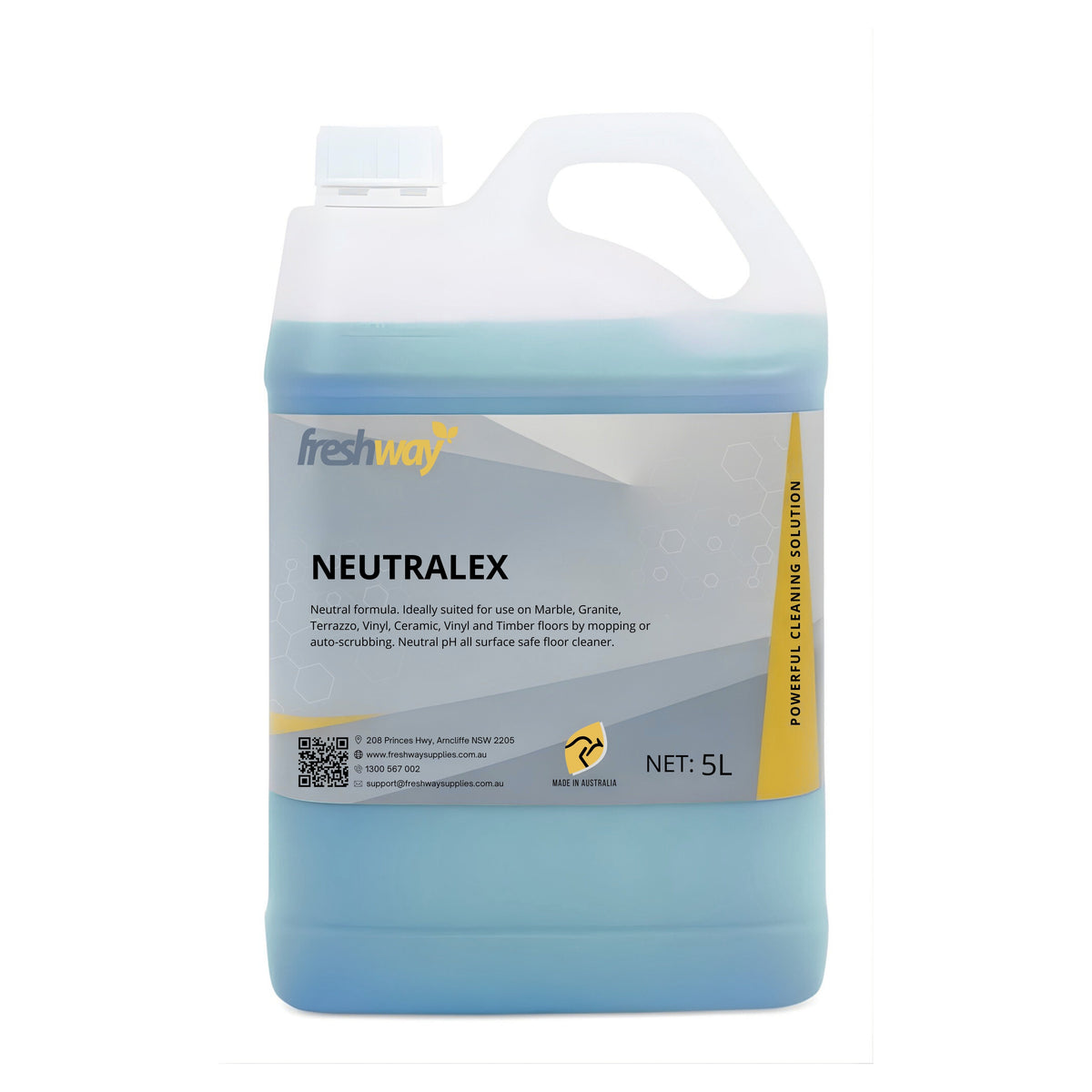
Neutral cleaners are the default for daily work, because they lift fresh soil and leave no residue that interferes with gloss. Mildly alkaline products suit heavier soil but need rinsing. Strong alkaline, solvent and abrasive products attack the finish, and repeated use of any of them shortens the interval between restorations. Water temperature matters less than most sites assume, and hot water on a damaged finish can lift edges and seams.
Where a site is failing its appearance standard, the fix is almost always in the cycle rather than in the product: clean more often and more thoroughly with a neutral product, maintain the finish with the correct pad and product, and restore the floor on a schedule instead of waiting for the finish to wear through.
Start With Floor Type, Finish and Soil
Establish what the floor actually is before specifying anything. Vinyl sheet, vinyl tile, luxury vinyl plank and linoleum behave differently: LVT in particular often carries a factory coating that is not designed to be stripped, and linoleum is sensitive to prolonged wetting and to strong alkalinity at seams and edges. Seams, welded joints and adhesives are the places where water does damage that only appears later as a lifting edge.
Then establish the finish. A factory wear layer alone needs gentle cleaning and no aggressive pads. An applied finish needs a maintenance cycle with the correct products, and a burnishable finish may also support buffing or burnishing. Where the finish is unknown, a test patch in a cupboard will show how the surface responds, and the site's floor contractor or the floor manufacturer's documentation is the authority on what the surface will tolerate.
Soil type completes the picture. Fine grit is a mechanical problem that needs removal by dust mopping before wet cleaning, because grit under a machine is what scratches a finish. Grease from food areas and entrances needs alkaline chemistry and dwell. Body oils and general traffic soil respond to a neutral product with proper agitation. Where the site has more than one soil type, matching the product to the area matters more than using one chemical everywhere.
Which Cleaner and Pad Suit a Vinyl Finish?
Use a neutral cleaner and the softest pad that removes the soil.
A neutral detergent at the labelled dose, applied with a soft or medium pad and rinsed or recovered completely, protects the finish, while alkaline, solvent or abrasive options trade short-term soil removal for a shorter interval between restorations.
Pad selection is where most damage happens, because a pad that is too aggressive can dull a finish in a single pass and the result is blamed on the cleaner. Colour and grade systems exist to make the choice obvious: a soft pad for daily cleaning and light buffing, a medium pad for heavier soil recovery, and a stripping pad only for stripping work, stored separately so it cannot be picked up by mistake. Where a site has several pad grades, colour coding the storage position matters as much as the pad colour.
Chemistry and pad work together. A neutral cleaner with a soft pad is the safe daily combination; an alkaline product with a medium pad is a periodic recovery step, not a daily routine. Products that combine cleaning and finish - spray buffs, restorers and maintainers - are useful where the finish is in reasonable condition, and they are the tools that extend the interval between strip and reseal cycles. The range of floor cleaners available through Freshway lists these by task, and this overview of choosing a floor machine covers the equipment side.

Daily Cleaning, Periodic Restoration and Stripping
Vinyl floors are managed in three cycles. Daily cleaning removes fresh soil: dust mop or vacuum the dry grit, then damp clean with a neutral product, using a flat mop or a scrubber with a soft pad and full recovery. Periodic maintenance, usually weekly to monthly depending on traffic, deep cleans with a slightly stronger product, removes the film that builds up, and applies a maintainer or buffs the finish. Restoration stripping happens when the finish is worn, discoloured or too thin to maintain, and it is a project rather than a routine.
The order matters. Grit removed before wet cleaning prevents scratches. Soil removed before buffing prevents burnishing dirt into the finish. Finish maintained before it wears through prevents a strip, because the useful rule is that a finish is restored while it is still intact rather than after it has failed. Where a site is stripping every year, the maintenance cycle between strips is usually the problem.
Moisture control is the discipline that holds the cycles together. Vinyl and linoleum do not tolerate standing water, particularly at seams, edges and against skirting, and a machine that leaves water behind is doing slow damage. Recovery should be complete, dry passes made where the machine allows, and air movement used in enclosed areas so the floor is dry before it returns to traffic.
Water Recovery and Wet-Floor Controls
Wet cleaning creates a slip risk, and on a vinyl floor the risk is higher than on carpet because the surface stays wet until it is recovered or evaporates. Signage and barriers should cover the routes people use, including lift lobbies and shared corridors, and they should stay in place until the floor is dry rather than until the machine has moved on.
Recovery quality decides both safety and the finish. A scrubber with a squeegee in good condition recovers most of the water in one pass; a worn blade leaves a film that dries into streaks and residue, and residue attracts soil, which brings the floor back to the same condition faster. Where the machine cannot reach edges, wall bases and around fixtures, those areas are finished by hand with a cloth or a mop that is not overloaded with water.
The electrical arrangement deserves the same attention as on any wet task. Confirm the supply can carry the machine, use the shortest lead that reaches the work, keep leads and connections out of the wet path, and protect the circuit appropriately. Australian duties require the risks of the task to be managed, and the framework sits in the Work Health and Safety Regulations 2011, with practical guidance published by the regulators including WorkSafe Victoria's plant guidance and the resources at SafeWork NSW.
Battery, Charging and Access Constraints
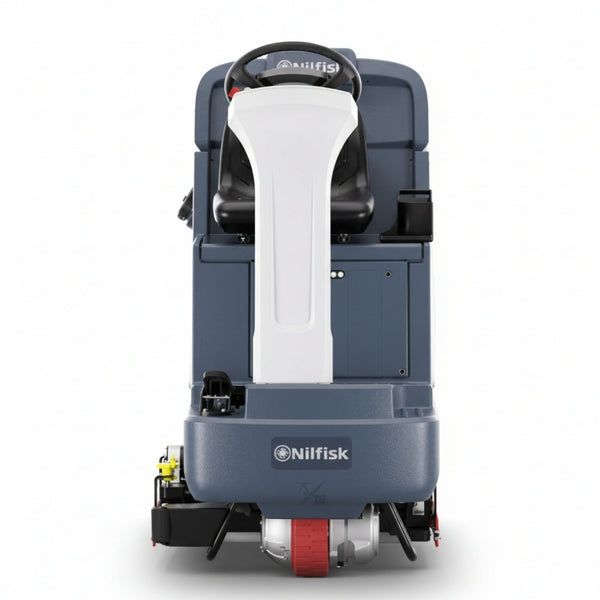
Machine choice on vinyl floors is usually decided by access rather than by size. Compact walk-behind scrubbers suit retail aisles, consulting rooms and classrooms, while larger machines suit long open corridors and halls. Where the work happens during trading hours, a battery machine removes the lead from the public floor, and noise becomes the limiting factor rather than the machine's cleaning ability.
Battery runtime depends on the surface, the pad and the load, so the specification should be sized against the actual session with margin rather than against a brochure figure. Charging needs a planned position with a safe supply and adequate ventilation, and the machine should be able to complete its area on one charge, because a floor half-cleaned before the battery fails shows a visible line.
Storage and deployment matter as much as the machine. A scrubber that has to be stored across the building, or charged in a corridor, will be used less often than the cycle requires, and the appearance standard depends on frequency. Planning the store, the charging point and the route before purchase is what makes the cycle achievable rather than aspirational.

Maintenance Inputs That Protect Uptime
Floor machines fail in predictable ways, and on vinyl floors the parts that matter are the squeegee, the pad or brush, the recovery system and the battery. Squeegee blades wear and need replacing when they stop leaving the floor dry. Pads load with soil and finish and stop working evenly long before they wear out. Filters and strainers in the recovery path block, which reduces recovery and leaves water behind. Batteries lose capacity with age and with poor charging habits.
The routine that keeps a floor machine working is short: check the squeegee and the pad before each use, clean the recovery tank and strainers after use, check the battery and charger connections, and keep to the manufacturer's schedule for drive and motor service. On vinyl floors, keeping a clean, dedicated set of soft pads for daily work prevents the accidental use of a stripping pad, which is the fastest way to damage a finish.
Consumables should be stocked to the cycle. Pads, squeegee rubbers, filters and chemistry used in the maintenance cycle are the items that stop a program when they run out, and substituting a different grade changes the result on the floor.
When Should the Selection Be Reviewed?
Review the method when the floor, the traffic or the appearance standard changes. A refurbishment that lays new vinyl, a change of finish, a shift in trading hours that moves cleaning into the day, or a new tenant with a different expectation can all invalidate what was working.
The symptoms that justify a review are visible on the floor: gloss fading in traffic lanes within days, marks that no longer respond to the normal pad, residue that streaks as it dries, edges lifting at seams, or a finish that has to be stripped more often than the cycle allows. Those point to a chemistry, pad or frequency problem rather than to the machine, and the cheapest response is to review the three together with the product specification rather than to buy a stronger product or a new machine.
Questions we get asked most
- What is the best way to clean vinyl floors?
- Dust mop or vacuum the grit first, then damp clean with a neutral detergent at the labelled dose using the softest pad that removes the soil, and recover the water completely. Grit removal prevents scratches, neutral chemistry protects the finish, and full recovery prevents both streaks and slips.
- Can I use a steam mop on vinyl?
- Only where the flooring manufacturer permits it. Heat and moisture can lift seams, soften adhesive and affect some wear layers, particularly on vinyl plank and linoleum. Where the floor's documentation allows steam, keep to the settings the manufacturer states; where it does not, a neutral cleaner and a soft pad do the job without the risk.
- How often should vinyl floors be stripped and resealed?
- As infrequently as the maintenance cycle allows. A finish that is cleaned daily, buffed or maintained regularly and restored while still intact can go years between strips, while a floor cleaned with aggressive chemistry and never maintained may need stripping annually. Frequency is a symptom of the cycle rather than a schedule in itself.
- Why does my vinyl floor look dull after mopping?
- Usually residue. Detergent left on the surface after a damp mop dries into a film that dulls the finish and attracts soil, and the same happens when the mop water is dirty or the dose is too strong. Rinsing, changing water frequently and dosing to the label restore the finish without additional product.
Conclusion
Cleaning vinyl floors without damaging them is a matter of protecting the finish: neutral chemistry at the labelled dose, the softest pad that removes the soil, complete water recovery, and a maintenance cycle that restores the finish while it is still intact.
Remove grit before wet cleaning, match the product to the soil and the area, keep the squeegee and pads in condition, and review the method when the floor or the traffic changes. The strip and reseal that follows a neglected vinyl floor costs far more than the cycle that would have prevented it.
Manufacturer technical information: Karcher Australia. Water discharge guidance: NSW EPA.
Compare neutral floor cleaners, pads and compact scrubber dryers in the Freshway floor care range, or ask the team to help set a vinyl floor cycle.