Covered Outdoor Walkways: Vacuum vs Blower for Commercial Sites
Blowers move soil; vacuums capture it. Choose by noise, drains and wet leaves.
Shop now
Twenty to seven, a covered walkway outside a row of shops in Sydney. The contractor fires up a blower, and within a minute the café owner at the far end is sweeping leaves, cigarette butts and grit back off her doorstep. The walkway looks clear. The soil has simply moved three metres to the left, onto someone else's tiles, into a garden bed, or towards the nearest drain.
Vacuum vs blower on a covered walkway: which should a commercial site use?
For a covered commercial walkway, use a backpack or wet and dry vacuum as the default and keep a blower for open edges, wet-leaf clearing and car-park margins. A vacuum captures grit and litter into a bag. A blower relocates it, often onto shopfronts or drains, and adds noise near tenants and residents.
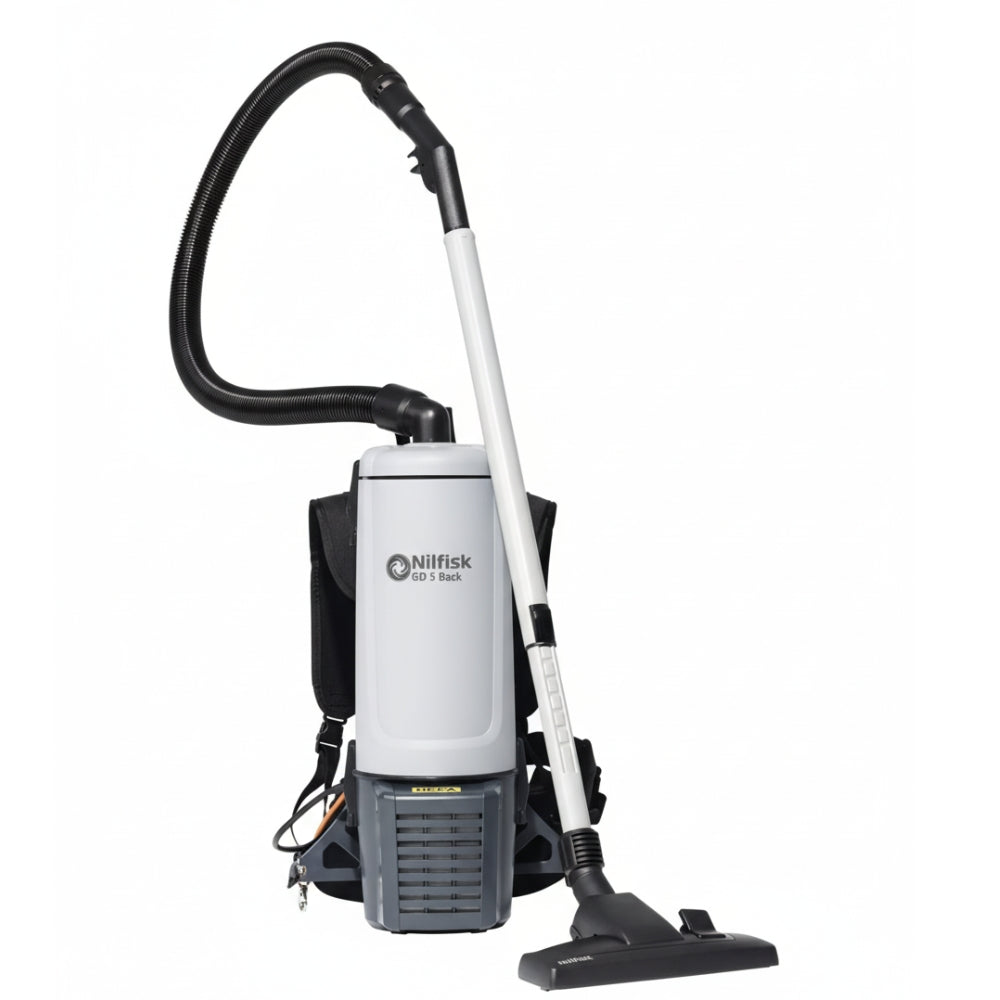
This guide is about one surface type, the roofed arcade, colonnade or breezeway that is too narrow for a sweeper and too public for a noisy clean. Freshway's comparison of backpack versus canister vacuums covers indoor format choice; here the question is whether the walkway crew carries a vacuum, a blower, or both.
Blowers move soil, vacuums capture it
From the operator's side, the difference is obvious after one shift. With a blower you chase a line of debris along the walkway and then have to collect it somewhere, usually with a broom and pan at the end. With a backpack vacuum the debris goes into the bag as you walk, and the job is finished when you reach the end of the run.
That matters for where the soil ends up. NSW EPA's stormwater guidance, the drain is just for rain, notes that it is against the law to place any material where it could flow into a local waterway. Blowing butts, leaves and fine grit off the walkway edge and towards a gutter is exactly the habit that guidance is aimed at.
Covered walkway constraints
A roofed walkway changes the job in three ways. First, the soil is dry for longer, so fine dust lifts easily and drifts back under the roof when blown. Second, shopfronts, seating and A-frame signs sit right at the edge, so there is nowhere harmless to push debris. Third, columns and planter boxes break the run into short sections, which suits a machine you wear rather than one you drag.
WorkSafe Victoria's guidance on a safer way to clean: vacuuming suggests light backpack vacuum cleaners with adequate lumbar support and cushioning for stairways and elevated surfaces. Those are the same features that make a backpack comfortable on a long colonnade with steps, ramps and ledges.

Noise and tenant storefronts
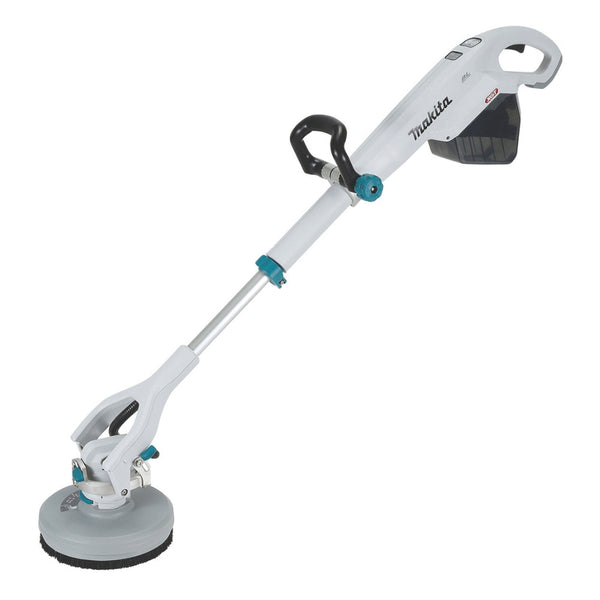
The figures Freshway lists show how far apart the two tools sit. The Nilfisk GD5 dry backpack is listed at 59 dB(A). The Makita DUB184 18V brushless blower is listed at 96 dB. The two pages may not use the same test method, so do not treat the gap as an exact measurement, but it is large enough to explain why tenants notice the blower and rarely notice the vacuum.
Noise is also a crew issue. SafeWork NSW's noise at work page explains that hazardous noise can cause permanent hearing loss and make it harder to hear verbal instructions and warning signals. On a walkway beside a loading zone or car park, hearing a reversing vehicle is part of working safely.
Wet leaves and wet-dry choices
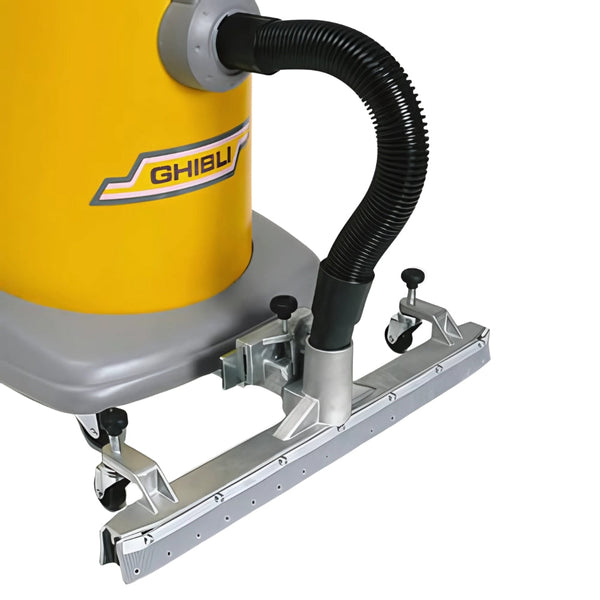
A roof keeps rain off the centre of the walkway, but wind drives wet leaves and puddles onto the edges. A dry backpack should not be used to pick up water. For those edges, a wet and dry machine is the right tool. Freshway lists the Ghibli AS9P at 1400 W, 58 L/sec airflow, a 35 litre tank and 62 dB, supplied with a squeegee floor tool. At 12.5 kg it is a trolley machine, so park it at the wet end of the run rather than carrying it the whole length.
Wet leaves are also where a blower earns its place. Matted leaves on open paving beside the walkway can be moved into a pile faster with air than with suction, as long as the pile is then collected and bagged rather than left near a drain.
Early-morning strata rules
Where the walkway belongs to a residential or mixed-use building, residents' hours apply. NSW EPA's page on preventing neighbourhood noise lists leaf blowers among powered garden tools whose noise from residential premises should not be heard in a neighbour's living space before 8 am or after 8 pm on weekends and public holidays, or before 7 am or after 8 pm on other days. The same page suggests choosing quiet models of leaf blowers and other garden equipment.
Strata schemes can add their own rules. The NSW Government's page on noise in strata tells residents to check the strata by-laws and the local council rules. Ask the strata manager for the by-laws before you set the walkway start time, not after the first complaint.
When a blower is still right
A blower is still the faster tool on open, unroofed areas: car-park margins, garden edges, wide paved forecourts away from shop doors, and leaf drifts after a storm. NSW EPA's brochure on dealing with neighbourhood noise suggests using a broom or rake instead of a leaf blower if you can, and, if you must use one, not starting too early and using it for short periods.
The DUB184 listing gives a continuous runtime of up to 12 minutes on the highest speed with a BL1860B 6.0Ah battery. That is a useful planning number. It suits short bursts on open edges, not a forty-minute walkway run.
Hybrid workflows
A practical walkway routine for a two-person crew looks like this:
- Walk the run and pick up large litter, glass and anything sharp by hand or with a picker.
- Vacuum the covered section with the backpack, working away from shop doors and towards your power point.
- Use the wet and dry machine on puddles and wet leaf drifts at the open ends.
- Use the blower only on open paving, in short bursts, blowing into a pile you collect straight away.
- Bag everything. Nothing is left at a kerb or drain.
If the site wants a single operator, run steps 1 to 3 and drop the blower entirely during trading hours.
Spec picks for walkway crews
Work out power reach before you buy. A 15 metre cord plugged in at one point reaches 15 metres each way, so it covers about 30 metres of straight walkway, less around columns. A blower run is limited by battery minutes instead.
| Planning figure | Nilfisk GD5 dry backpack | Makita DUB184 blower | Worked example |
|---|---|---|---|
| Reach or runtime | 15 m detachable cord | Up to 12 min at highest speed (6.0Ah battery) | 60 m walkway: about 2 outlets for the vacuum; 30 min of blowing needs 3 batteries (30 / 12 = 2.5) |
| Listed noise | 59 dB(A) | 96 dB | Different listings; use as a guide, not a measured comparison |
| Weight | 4.2 kg | 3.0 kg with battery | Both are carried; the vacuum load sits on the hips and back |
| What happens to soil | Captured in a 5 litre bag | Moved to a pile | The pile still needs collecting |
Compare more formats in the backpack vacuums and wet and dry vacuums collections, and keep blowers for the jobs above from the blowers range.

Frequently asked questions
Can I use a dry backpack on wet leaves?
No. Use a wet and dry vacuum for water and wet leaves, and keep the dry backpack for dry soil.
Is a battery blower quiet enough for 6 am?
Not automatically. The DUB184 is listed at 96 dB. Check residential noise hours and strata by-laws first.
How many power points does a 15 m cord need?
Roughly one outlet for every 30 metres of straight walkway, fewer metres around columns and planters.
Can the blower push debris into the gutter?
No. NSW EPA says it is against the law to place material where it can flow into a waterway. Collect and bag it.
Walkway vacuums delivered across Sydney
Set the walkway routine around capture, not relocation, and keep the blower for open edges. Freshway offers same-day delivery across Sydney, including the Inner West and Parramatta; call before ordering to confirm the delivery window. Click and collect is available from our Arncliffe warehouse by prior arrangement. Call 1300 567 002, or browse the vacuum cleaners collection.