Colour-Coded Washroom Cloths for Infection-Control Discipline
Red stays in the washroom: storage, laundering and audits keep it there.
Shop now
7.15 am, a shopping centre amenities block. A new casual finishes the urinals, drops the cloth into the trolley's top tray and picks it up again twenty minutes later to wipe the parents' room change table. Nobody told her the red cloths stay in the washroom. The trolley had red, blue and green cloths mixed in one tray, and that is where the discipline broke.
What are colour-coded washroom cloths?
Colour-coded washroom cloths are reusable or single-use cloths reserved, by colour, for toilets and bathrooms only. In the convention set by NSW Health, red is for toilets, bathrooms and dirty utility rooms, so red cloths never touch kitchens, desks or patient areas. The colour only works when storage, laundering and audits enforce it.
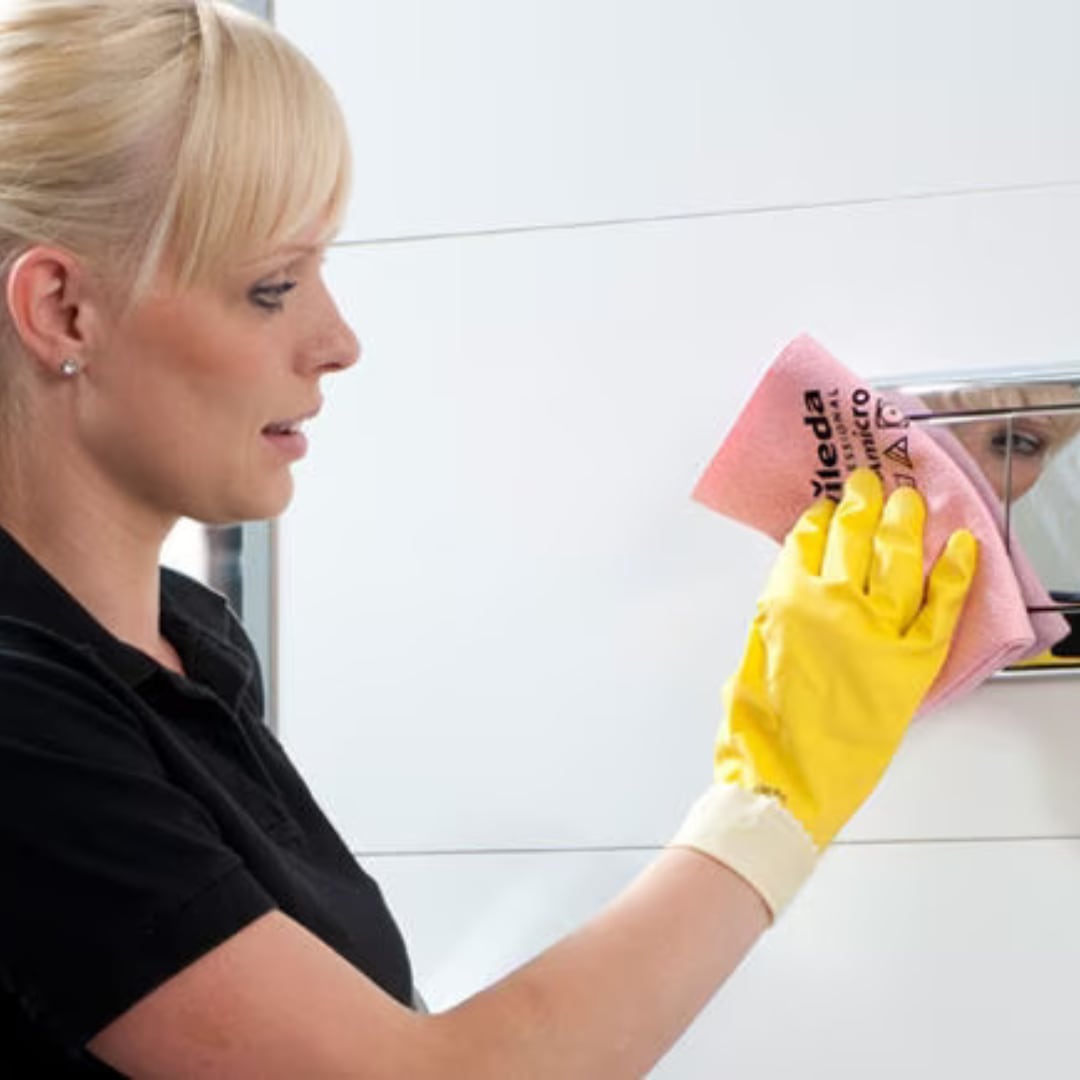
NSW Health's policy directive Cleaning of the Healthcare Environment (PD2023_018) recommends colour coding reusable cleaning equipment as the most effective way to restrict equipment to individual areas. This guide is written for supervisors and buyers setting up a washroom cloth system on commercial sites; for the whole-site picture, see Freshway's cleaning colour coding system for Australia.
The Australian colour convention
| Colour | Area under PD2023_018 | Washroom rule |
|---|---|---|
| Red | Toilets, bathrooms, dirty utility rooms | All washroom cloths, mops and buckets |
| Yellow | Infectious and isolation areas | Use when a washroom is part of an isolation zone |
| Blue | General cleaning | Never enters the washroom |
| Green | Food service and preparation | Never enters the washroom |
| White | Operating theatres | Not used on commercial sites |
Suppliers' wall charts follow the same scheme. Taren's colour coding cleaning equipment chart shows blue for general, green for kitchens, red for toilets and bathrooms and yellow for isolation, citing NSW Health. If a client already uses a different chart, follow theirs and write it into the site manual.
Why washroom cloths need their own discipline
Washrooms carry the highest soil load on most sites, and the cloth is the easiest tool to carry from room to room. A mop stays in its bucket; a cloth fits in a pocket. That is why washroom cloth rules have to be stricter than the rest of the colour system, with fixed storage, fixed laundering and a hard rule that red never leaves the amenities.
Order of work inside the washroom
The NSW Clinical Excellence Commission's work procedures for cleaning say areas should be cleaned from high to low and clean to dirty, and cloths changed as they become dirty. In a washroom that means:
- Dispensers, mirrors and high touch points.
- Basins, taps and benches.
- Cubicle doors, partitions and locks.
- Toilet and urinal exteriors, seats last.
- Floors, finishing at the exit.
Change to a fresh red cloth between basins and toilets, or fold to a clean face, and never go back up the order with a used cloth.
Choosing the cloths
Freshway lists several washroom-ready options. The Oates Vileda PVAmicro cloth comes in a red 5-pack sized 38 × 35 cm, colour-coded for washrooms and sanitary areas and suited to streak-free mirrors and stainless steel. Edco's TUF microfibre cloths come in 10-packs of 36 × 36 cm in blue, red, green and yellow, machine washable up to 40 °C. Compare more options in the Freshway commercial microfibre cloth guide.

Single-use or reusable?
Victoria's Department of Health says in its infection control cleaning procedures that single-use cleaning items such as lint-free cloths are preferred where possible, and that cleaning items should be changed immediately after cleaning blood or body fluid spills. Many contractors use reusable red microfibre for routine washroom cleans and keep single-use cloths for body-fluid events and high-risk sites. PD2023_018 adds that single-use items must go into the correct waste stream, and reusable equipment must be cleaned, laundered and stored to the manufacturer's instructions.
How many cloths a site needs
Work the count out before ordering, or the system fails the first time the laundry runs late. A worked example for one site:
- 6 washroom blocks, cleaned twice a day.
- 2 red cloths per block per clean (one for basins and fittings, one for toilet and urinal exteriors) = 6 × 2 × 2 = 24 cloths a day.
- Laundry turnaround of one day means one set in use, one in the wash and one spare: 24 × 3 = 72 red cloths.
- In TUF 10-packs, that is 8 packs, allowing for losses.
Run the same sum for blue and green so no colour runs short and tempts a swap.
Trolley storage and laundering
Give red cloths their own lidded tub or a clearly marked trolley compartment, below clean cloths, never in a shared tray. Bag used red cloths separately and wash them in their own load. Wash below the cloth's rated temperature, skip fabric softener, and dry fully before storage. Freshway's guide on how to launder microfibre mops applies to cloths too, and laundry products sit in the laundry and fabric care range.

Chemicals and PPE that travel with red
Keep the washroom chemical, gloves and cloths together so the whole kit stays in the amenities. Agar Fresco is a concentrated washroom cleaner for toilets, urinals, showers, basins and tiled floors, and the Agar bathroom and shower cleaners range covers other options. Colour-matched gloves from the gloves and PPE range make the rule visible at a glance. Keep each product's SDS on site, as WorkSafe Victoria's safety data sheet guidance requires.
Audits that keep it honest
PD2023_018 ties cleaning to scheduled audits by risk category. Commercial sites can borrow the idea: check one trolley a week for mixed colours, count red cloths in and out of the laundry, and photograph washroom storage. Fix one gap at a time, and retrain casuals in their first shift.
Frequently asked questions
Isn't colour coding only for hospitals?
No. Hospitals set the convention, but any site with washrooms and kitchens benefits from keeping red cloths out of food and office areas.
Can one red cloth do the whole washroom if it is folded?
Only for very small rooms. Work clean to dirty and switch to a fresh cloth before toilets and urinals.
Do red cloths need a separate wash?
Yes. Wash them in their own load to the cloth's rated temperature, without fabric softener, and dry fully before storage.
Are single-use cloths always safer?
Not always. They suit body-fluid events and high-risk sites, while laundered microfibre works well for routine cleans when storage and washing are controlled.
Next steps with Freshway
Count the cloths each site needs, fix trolley storage and train the order of work. Freshway stocks red microfibre, washroom chemicals and gloves across its cleaning chemical and consumables ranges; contact the team to build a colour kit for each site.