Carpet vs Hard Floor: Does Vacuum Format Matter More Than Brush Type?
Match carpet and hard-floor tools first, then choose backpack or canister format.
Shop now
Brush type usually decides carpet versus hard floor results faster than backpack versus canister. A low-pile carpet tool with the bristles set for pile, or a hard-floor tool that holds its seal, changes recovery more than swapping the machine on the operator's back for one on wheels. Format still matters for stairs, furniture density and bag changes, but it is the second decision, not the first.
This guide walks that decision the way an end user on a mixed Sydney site would: myths about floor type, airflow versus brush action, tool choice, what format really changes, how to trial a kit, and a supervisor checklist.
Carpet vs hard floor commercial vacuum: the short answer
Match the floor tool and brush setting to carpet or hard floor first, then choose backpack or canister for access and capacity. Use a combination head on pile, a sealing hard-floor tool on vinyl and tile, keep bags and filters clear, and treat format as secondary for stairs, reach and emptying.
The sections below unpack each of those choices with Freshway-listed examples and a site trial method.
Floor type myths that waste money
Three myths show up on Australian commercial sites every week.
- "Any commercial vacuum is fine on both surfaces." The motor may be, but the head is not. WorkSafe Victoria's vacuuming guidance ties the head to the surface: bristles extended for low carpets or hard floors, smooth heads for thick carpets, and combined heads when both appear on the same run.
- "A stronger motor fixes a poor carpet result." Airflow helps, but carpet soil often needs agitation at the pile. Without the right brush or tool setting, higher wattage mostly lifts surface dust.
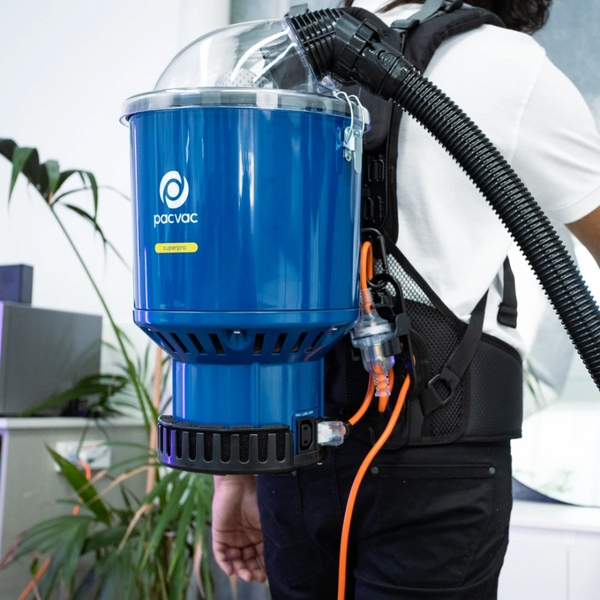
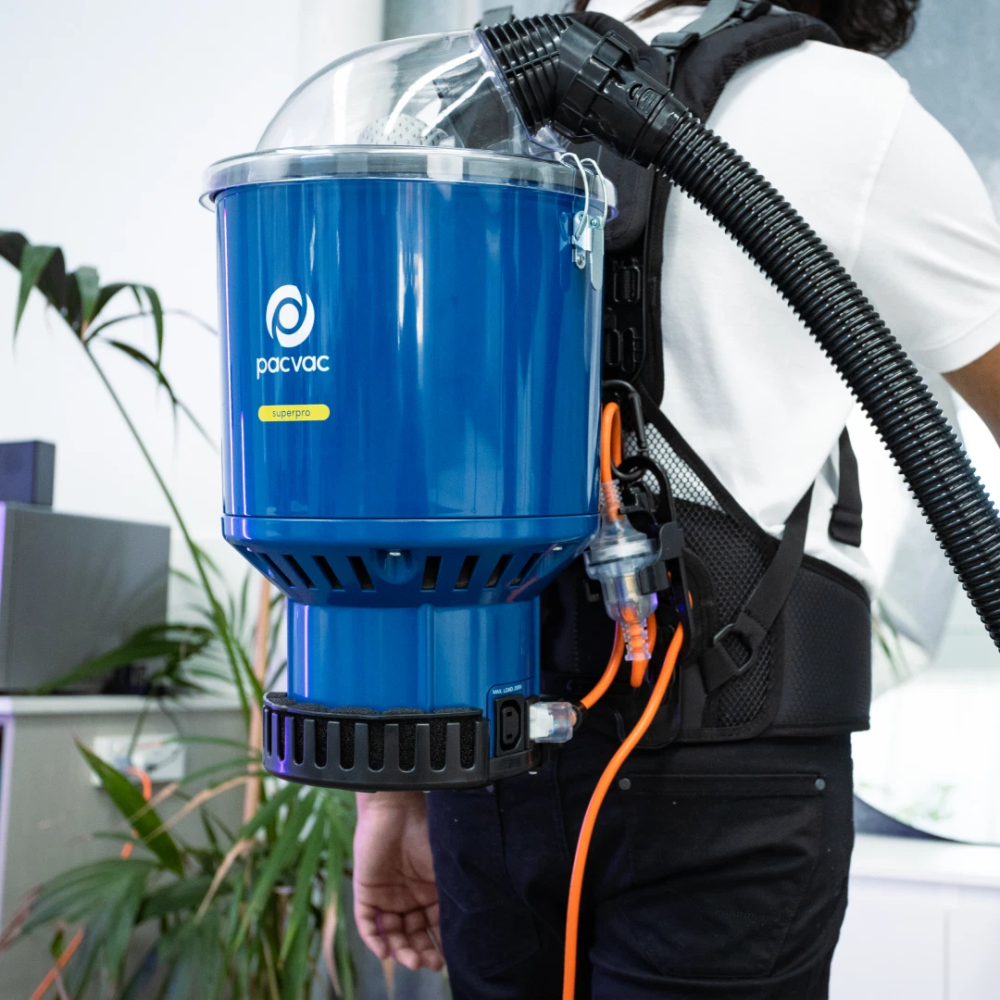
- "Backpacks are only for carpet and canisters only for hard floor." Freshway lists both formats with combination floor tools. The Pacvac Superpro 700 backpack and the Pacvac Glide 300 canister both ship with a combination floor tool and the same 32 mm tool family, so surface fit is not locked to format.
SafeWork NSW treats repetitive force and awkward posture as hazardous manual task risks. Fighting the wrong head across carpet or hard floor adds both.
Airflow vs brush: what each one actually does
Airflow moves fine dust and loose grit into the bag. Brush action loosens soil that is stuck in carpet pile or sitting in tile texture. On a hard floor with little texture, a sealing tool and steady airflow usually win. On dense commercial carpet, a combination head or turbo brush does work the airflow alone will not.
Freshway's listing for the Pacvac Superpro 700 quotes a 1000 W single-stage flow-through motor, 38 L/sec airflow and 22 kPa vacuum pressure, with a 5-litre capacity and HEPA-rated Hypercone filtration. The Pacvac Glide 300 listing quotes a 1300 W motor, the same 38 L/sec airflow figure, a 15-litre capacity and 64 dB(A). Same listed airflow class, very different bag size and how the machine travels with the cleaner.
That is why format is secondary: two machines can share an airflow band and still need different tools on carpet versus vinyl.
Tool choice before format
Start with the head that matches the dominant floor, then keep a second head for the other surface.
- Combination / all-purpose tool: Freshway lists the Pacvac FLT001 all-purpose floor tool at 285 mm width with a 32 mm neck and a foot pedal that raises or lowers bristles for carpet or hard floor.
- Multi-purpose wheeled tool: The Pacvac FLT002 is listed at 285 mm cleaning width with a 32 mm neck and twin rear wheels, for Superpro 700 series, Thrift 650 and other 32 mm wands.
- Above-floor tools: Crevice, dusting and upholstery tools handle edges and soft furnishings on either format. WorkSafe Victoria lists matching the attachment to the surface among its vacuuming controls.

If the site is mostly hard floor with carpet inserts, keep the hard-floor setting or dedicated hard-floor tool on the wand and change only for the carpet islands. If the site is mostly carpet with vinyl corridors, do the reverse. The tool change takes seconds; dragging the wrong format through a building does not fix a wrong tool.
What vacuum format still changes
Format is not irrelevant. It changes three job factors that floor type does not.
- Access. Backpacks free both hands on stairs and between desks. WorkSafe Victoria's cleaning injury hotspots page names backpack vacuums as a mechanical aid and tool extensions as a control for awkward postures.
- Reach from a parked machine. Canisters keep weight off the operator and suit long corridors when the hose and wand are set correctly.
- Emptying frequency. The Superpro 700 is listed at 5 litres; the Glide 300 at 15 litres. Large hard-floor lobbies with heavy grit may empty a backpack bag faster than a big canister.

On a mixed commercial floor plate, many Sydney crews run a backpack for the fit-out floors and a canister for the long hard-floor concourses. That is a logistics choice after the tool choice.
Mixed buildings: a practical split
Use a simple split when carpet and hard floor share the same contract:
- Map carpet percentage versus hard floor percentage per building, not per brand brochure.
- Issue one primary floor tool that matches the majority surface, plus one alternate tool in the trolley.
- Assign backpacks where stairs, dense furniture or short daytime windows dominate.
- Assign canisters where long open hard floors and larger debris loads dominate.
- Standardise on one connection size where possible. Pacvac's FLT001 and FLT002 both list a 32 mm neck, which keeps Superpro and Glide kits interchangeable at the wand.
SafeWork NSW's slips, trips and falls guidance flags dust, paper and cleaning methods among common contaminants. Leaving grit on a hard floor because the carpet tool bounced and sealed poorly is a slip risk as well as a quality miss.
Spec-sheet fields worth reading
When you open a Freshway vacuum listing, read these fields before the marketing lines:
| Field | Why it matters for carpet vs hard floor | Freshway examples |
|---|---|---|
| Included floor tool | Shows whether carpet and hard floor are covered out of the box | Superpro 700 and Glide 300 both list a combination floor tool |
| Connection size | Decides which spare tools you can share across the fleet | FLT001 and FLT002 list 32 mm necks |
| Airflow and motor | Sets recovery of loose soil once the tool seals | Superpro 700 and Glide 300 both list 38 L/sec |
| Capacity | Affects emptying on long hard-floor grit runs | 5 L backpack vs 15 L Glide canister |
| Noise | Limits daytime work in occupied offices and clinics | Glide 300 listed at 64 dB(A); Superpro 700 at 66 dBA |
| Weight / format | Stairs, furniture density, operator fatigue | Superpro 700 listed at 5.4 kg excluding cord and hose |
Skip slogan fields. Pacvac's Australian site at pacvac.com is useful for brand context, but the Freshway product page is the source for the figures used in this article.
Trialling on site
- Pick one carpet bay and one hard-floor bay of similar soil.
- Vacuum each bay with the current tool, then with the alternate tool, same machine and same operator.
- Check the bag or cloth for soil difference and run a hand over the surface for grit left behind.
- Time a 10-metre pass. A tool that seals on hard floor often sounds quieter at the edges and leaves less grit under the shoe test.
- Repeat the two bays with the other format only after the winning tool is fixed.
- Record connection size, tool part number and format against the asset number.
That order stops buyers blaming format for a tool problem.
Checklist for site supervisors
- Majority floor type per building is written on the job sheet.
- Primary and alternate floor tools are on the trolley, labelled with neck size.
- Bags and filters are stocked so airflow does not collapse mid-run.
- Wand length is set so shoulders stay close to the body, as WorkSafe Victoria recommends for vacuuming posture.
- Backpack versus canister assignment matches stairs and corridor length, not habit.
- Spare 32 mm tools are held for the Pacvac fleet if that is the site standard.
Frequently asked questions
Does vacuum format matter more than brush type on commercial floors?
Usually no. Match the floor tool and brush setting to carpet or hard floor first. Choose backpack or canister afterwards for stairs, reach and capacity.
Can one commercial vacuum cover both carpet and hard floor?
Yes, if you change tools or bristle settings between surfaces. Freshway lists combination and multi-purpose 32 mm floor tools that fit Pacvac backpacks and canisters.
Is a backpack better for hard floors?
Not by default. Backpacks help on stairs and tight furniture. Hard floors mainly need a sealing floor tool and clear airflow; a canister can do that job on long open areas.
What should I check on a Freshway vacuum listing?
Included floor tool, connection size, airflow, capacity, noise and weight. Those fields decide carpet versus hard floor performance and how the machine fits the building.
Next steps with Freshway
Map each building's carpet and hard floor share, then pick tools before format. Compare machines in the vacuum cleaners, backpack vacuums and canister and barrel vacuums ranges, and keep spare heads in vacuum parts and accessories. For maintenance routines that protect airflow, see the Knowledge blog and check current stock on each product page.