Squeegee and Vacuum Shoe Setup for Streak-Free Results
Set squeegee pitch, replace worn blades and clear the vacuum shoe to stop streaks.
Shop now
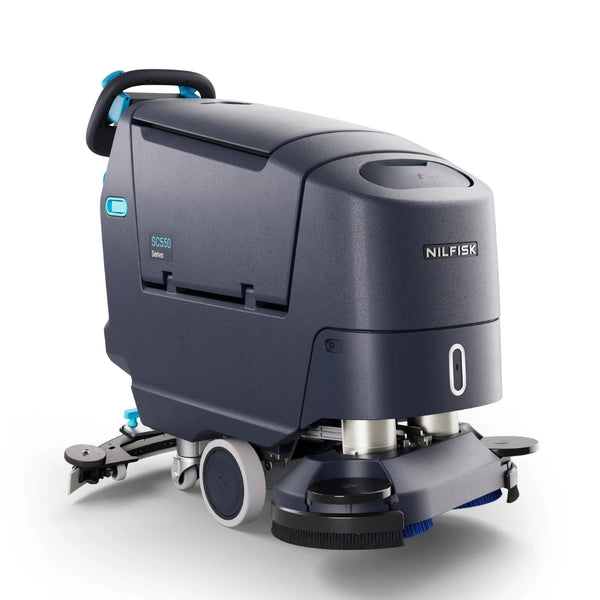
Two café floors, same compact scrubber model, same detergent dilution. On the first site the night cleaner leaves a dry path you can walk on immediately. On the second, every pass leaves twin wet stripes that force a cone line and a second dry mop. The machines are not different. The squeegee pitch, blade wear and vacuum shoe seal are.
This guide is a decision path for engineers and leading hands: why streaks form, how to set angle and pitch, what wear looks like, how floor type changes the setup, quick tests, parts to stock, and mistakes that undo a good adjustment.
Floor scrubber squeegee setup: the short answer
Set the rear squeegee blade to a light even seal, replace blades before the edge rounds, clear the vacuum shoe and hose, match hard-floor kits to vinyl and tile, and confirm with a one-metre wet test before the full run. Pitch and recovery air matter as much as detergent strength.
Everything below turns that sequence into checks you can teach on a toolbox talk.
Why streaks happen
Streaks are recovered slurry that the squeegee failed to feed into the vacuum shoe. Common causes on Australian commercial sites:
- Rear blade worn round, so it skates instead of wiping.
- Pitch too flat or too aggressive, so one side lifts.
- Uneven clamp pressure or a bent channel.
- Vacuum shoe blocked with lint, gum or pad fibre.
- Turning with the squeegee loaded on a textured floor without slowing down.
- Solution rate higher than recovery can clear on a porous tile.
SafeWork NSW lists water and cleaning methods among common causes of slips, trips and falls on the same level. A streaky aisle is not only a quality fail; it is a wet contaminant left behind the machine. WorkSafe Victoria's slips, trips and falls page makes the same link between wet floors and injury risk.
Angle and pitch: the engineer’s setup order
- Park on a level hard floor with the solution off and the deck raised if the machine allows.
- Inspect both blades for nicks, glazing and a square wiping edge. Freshway lists replacement kits such as the Nilfisk 370 mm squeegee kit (9100000077) and the Nilfisk SC100 hard-floor squeegee kit at 321 mm when the edge is gone.
- Seat the blades in the channel with the slotted or bevelled edge facing the direction the manual shows. Front and rear blades are not always interchangeable.
- Set pitch so the rear blade leans just enough that the full width kisses the floor when the squeegee is lowered. Too upright leaves centre streaks; too laid-over flutters and chatters.
- Equalise clamp pressure left to right. A single tight wing nut on one side is a classic streak maker.
- Lower the vacuum shoe and confirm the hose cuff is fully home. Recovery air matters as much as rubber.
- Run a one-metre wet test at normal scrub speed, then adjust pitch in small steps.
On compact uprights the geometry is tighter. Freshway's listing for the Kärcher BR 30/4 describes powerful squeegees extracting dirty water behind a 300 mm, 150 RPM cylindrical brush path, with separate 4 L fresh and 4 L recovery tanks. The same seal logic applies: if the rear wipe fails, the 4 L recovery tank never sees the water that is still on the floor.
Wear indicators you can see without gauges
| Symptom on the floor | Likely squeegee or shoe cause | First action |
|---|---|---|
| Two wet rails at the blade ends | Channel bowed or uneven clamp pressure | Loosen, reseat, retighten evenly |
| Centre wet stripe | Rear blade rounded or pitch too upright | Flip or replace blade; ease pitch |
| Whole path damp, machine sounding weak | Vacuum shoe, hose or tank gasket leak | Clear shoe; check hose cuffs and lid seal |
| Streaks only on turns | Squeegee swinging late or blade too soft for speed | Slow before turns; check swing linkage |
| Streaks only on textured safety floor | Hard-floor blade not conforming; speed too high | Confirm hard-floor kit; reduce speed and solution |
Freshway's Nilfisk 370 mm kit listing describes front slotted and rear blades in natural rubber or polyurethane and stresses that worn, rounded blades leave wash-water trails. Replace on edge condition, not on a calendar alone.

Floor types change the setup
- Smooth vinyl and polished tile: a sharp rear edge and light pitch usually dry in one pass.
- Textured safety flooring: slow down, keep solution modest, and confirm you are on a hard-floor blade kit. Freshway lists a Nilfisk SC100 hard-floor squeegee kit at 321 mm specifically for that machine class.
- Grouted ceramic: expect more passes near low spots; do not flood the joint lines hoping the squeegee will invent suction.
- Epoxy warehouse aisles: watch for expansion joints that kick the squeegee and break the seal for half a metre.
RapidClean's Australian guide to preparing floors for scrubbing notes that scrubbing solution can turn loose dirt into mud that spreads, forcing another scrub. Debris under the squeegee also lifts the blade. Pre-sweep before you chase streaks with more water.
Quick tests before the full shift
- Dry drag test: with solution off, lower the squeegee and pull one metre. You should feel even drag, not a scrape on one side and float on the other.
- Wet stripe test: lay a narrow detergent band, scrub and recover. The floor behind should be uniformly damp-to-dry, not rail-marked.
- Paper wipe: blot the path with a paper towel. Heavy wet patches map where the seal failed.
- Sound check: a sudden hiss at the shoe often means a cuff popped or the tank lid is open.
- Turn test: make a tight 90-degree turn on a wet patch. If streaks appear only then, train operators to slow before the swing.
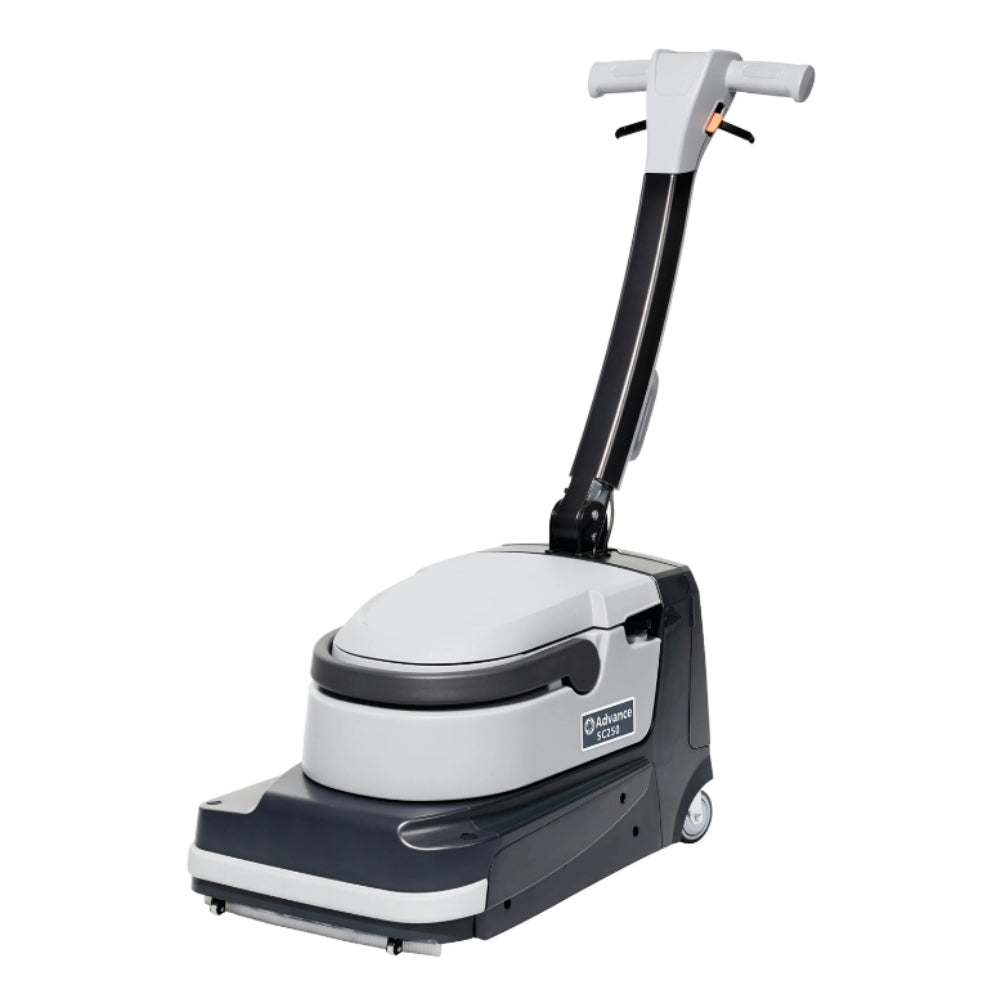
Freshway lists the Nilfisk SC250 compact scrubber with a 34 cm cleaning path, 6 L solution and 6 L recovery tanks, and single-pass drying. On a machine that small, a mis-set squeegee wastes a large share of the tank on rework.

Parts and consumables to stock
- One full squeegee blade kit per machine type in service (for example Nilfisk 370 mm kit or the SC100 321 mm hard-floor kit).
- Spare vacuum hose cuff and a length of recovery hose if the fleet shares a size.
- Channel screws or clamps that match the deck.
- Clean-out brush for the vacuum shoe.
- Correct detergent from the cleaning chemicals range, dosed per label so foam does not choke recovery.
Kärcher Australia at karcher.com.au publishes compact scrubber support material for machines such as the BR 30/4; match Nilfisk blade kit part numbers to the Freshway listing before you order.
Common mistakes to avoid
- Turning the pitch screw a full rotation at a time instead of small steps.
- Replacing only the rear blade when the front blade is glazed and dragging water under the rear.
- Raising solution flow to "help" drying. More water makes a bad seal look worse.
- Ignoring a blocked shoe filter or strainer.
- Running with the recovery tank lid ajar after a dump.
- Skipping pre-sweep so grit props the blade off the floor. Kennards Hire's sweeper or scrubber advice warns that loose dirt can clog squeegees and recovery systems.
Checklist for site supervisors
- Blade edge condition checked weekly on high-traffic machines.
- Pitch and clamp pressure recorded after any deck knock.
- Vacuum shoe cleaned at the end of each wet shift.
- Spare kit on the shelf before the in-service blades are finished.
- Operators trained on the one-metre wet test after any adjustment.
- Wet-floor signage used until the path is safe, consistent with SafeWork NSW slip guidance.
Frequently asked questions
How do I set a floor scrubber squeegee to stop streaking?
Seat sharp blades, set a light even pitch across the full width, clear the vacuum shoe and hose, then confirm with a one-metre wet test before the full run.
When should squeegee blades be replaced?
When the wiping edge rounds off, nicks appear, or wet rails remain after pitch is set correctly. Stock a full kit per machine type so changeover is immediate.
Why does my scrubber streak only on turns?
The squeegee often lifts or swings late in the turn. Slow before the corner, check the swing linkage, and confirm clamp pressure is even.
Do textured safety floors need a different squeegee kit?
Often yes. Use the hard-floor kit listed for your machine, reduce speed and solution rate, and expect more care over deep texture than on smooth vinyl.
What else should I check if new blades still leave water?
Inspect the vacuum shoe, recovery hose cuffs, tank lid seal and solution rate. A perfect blade cannot dry the floor if recovery air is leaking or starved.
Next steps with Freshway
Pick the scrubber class for the floor area in the floor scrubbers and commercial cleaning machines ranges, then keep blade kits with the machine cards. For workshop help in Sydney, see service and repairs, and browse related technique guides on the Knowledge blog. Confirm current stock and kit fitment on each product page before you order.