Power Plugs and Extension Leads: AU Rules for Corded Commercial Vacuums
Match lead rating to listed watts, then keep every cord tagged and clear of walkways.
Shop now
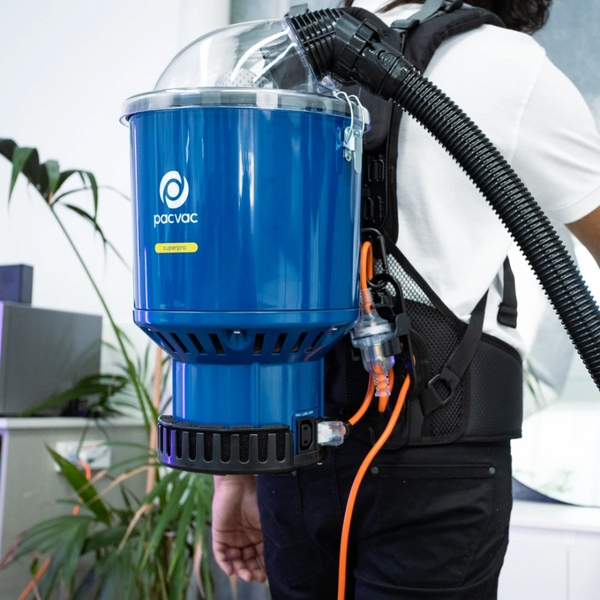
The night cleaner on level five of a Sydney CBD tower clips a backpack vacuum into a wall outlet, then reaches for a battered extension lead coiled under the trolley. Halfway down the corridor the lead warms, the RCD trips, and the rest of the floor waits. The vacuum is rarely the first fault: frayed cords, underrated leads and untested plug-in gear trip more shifts than a weak motor.
This guide walks site supervisors through corded commercial vacuum power the Australian way: typical draw from listed watts, lead ratings, trip hazards, multi-storey practicalities, testing tags, when a battery unit makes sense, and a supervisor checklist.
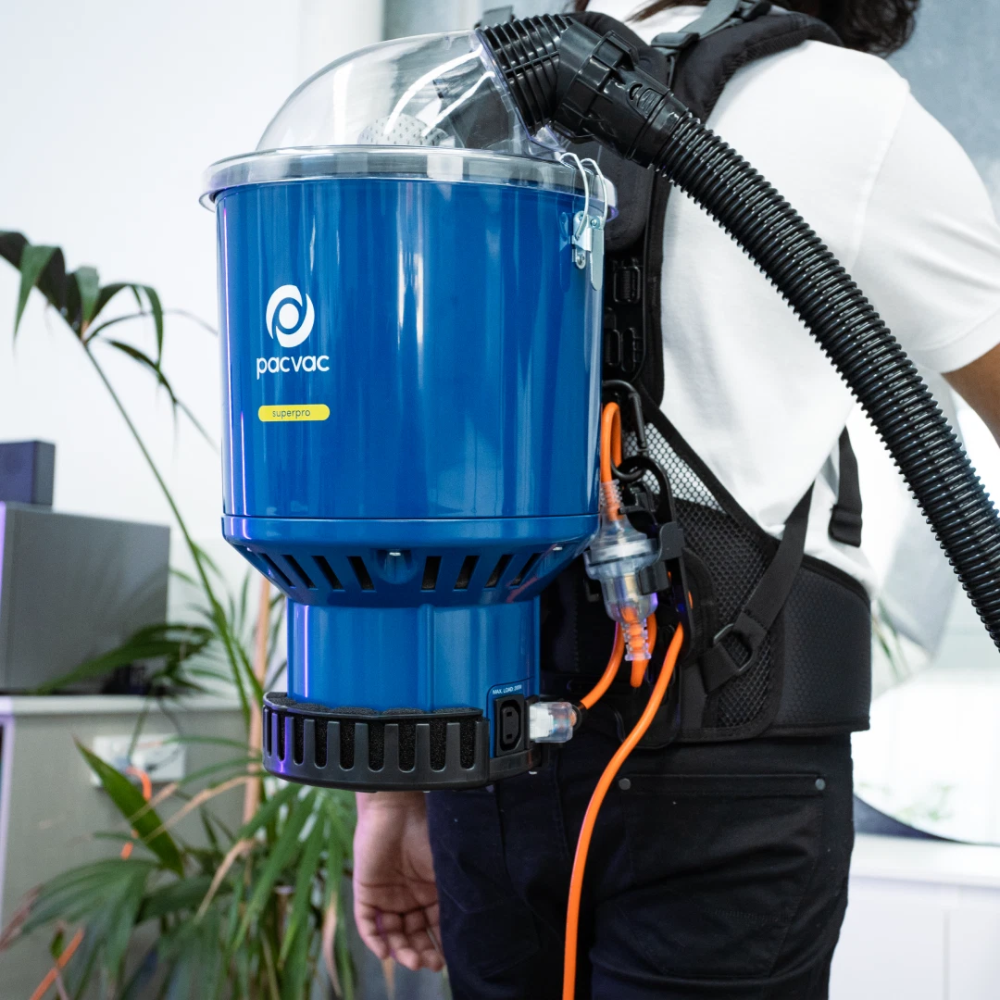
Corded commercial vacuum Australia power: the short answer
Corded commercial vacuum Australia power starts with listed watts, a sound lead and a tested outlet path. Freshway corded models here list about 620 W to 1300 W, so draw at roughly 240 V stays under a typical 10 A outlet. Keep cords intact, avoid chained leads, and follow SafeWork NSW rules for harsh conditions.
The sections below unpack draw, lead choice, site layout and tagging, then close with a supervisor checklist.
Typical draw from listed wattage
Australian commercial sites mostly run 230/240 V single-phase general-purpose outlets. Approximate current is listed watts divided by about 240. Freshway's listings give the wattage; they do not always state plug current, so treat the figures below as estimates for planning outlet load, not as plug ratings stamped on the machine.
| Machine (Freshway listing) | Format | Listed motor power | Approx. draw at ~240 V | Listed cord length |
|---|---|---|---|---|
| Pacvac Superpro 700 | Corded backpack | 1,000 W | ~4.2 A | 18 m |
| Pacvac Thrift 650 | Corded backpack | 1,300 W | ~5.4 A | 18 m |
| Pacvac VELO corded | Corded backpack | 900 W | ~3.8 A | 18 m |
| Pacvac Glide 300 | Corded canister | 1,300 W | ~5.4 A | 18 m |
| Numatic Henry HVR200 | Corded canister | 620 W | ~2.6 A | 10 m |
A single vacuum in that range leaves headroom on a 10 A outlet. Trouble starts when someone shares the circuit with heaters, polishers or several machines on the same board. If a circuit already trips under load, do not "fix" it with a longer lead; find a free circuit or schedule the other load.

Lead ratings that match the vacuum
Use an extension lead only when the on-board cord cannot reach a safe outlet. Match the lead to the job:
- Current rating. Choose a lead rated above the vacuum's approximate draw, with margin for continuous commercial use. A 1,300 W machine at ~5.4 A still wants a robust commercial lead, not a light domestic reel left coiled.
- Length. Longer leads drop voltage and heat more under the same load. Prefer plugging the vacuum's own cord into a nearer outlet before adding metres of extension.
- Condition. Cracks, crushed plugs, missing earth pins and taped joins are out. SafeWork NSW's electrical risks fact sheet links higher risk to wet surrounds and damaged equipment.
- One lead, not a chain. Daisy-chaining extensions is a common site shortcut and a common trip cause. One properly rated lead is the rule.
WorkSafe Victoria's electrical safety guidance expects employers to maintain systems for providing, using, inspecting, testing and maintaining electrical equipment. Put lead checks on the same schedule as the vacuum.
Trip hazards and wet-area risks
Trailing cords are both an electrical and a slips issue. SafeWork NSW lists contaminants and clutter among common causes of slips, trips and falls on the same level. Route cords along walls, use cord covers on cross-aisle paths, and keep leads out of doorways that swing shut on the cable.
Wet work is a hard stop for dry-only machines. SafeWork NSW's hospitality page lists electric shocks when vacuuming wet carpets among industry harms. Keep dry backpacks and dry canisters on dry floors; use a wet and dry machine for spills and rinse water.
Where plug-in equipment is used in higher-risk conditions, SafeWork NSW explains when residual current devices (RCDs) must be provided. An RCD trip is a signal to find the fault, not a reason to bypass the switch.
Multi-storey and long-corridor tips
On multi-storey sites the long cord is the productivity tool. Freshway lists 18 m cords on the Pacvac Superpro 700, Thrift 650, VELO and Glide 300, and a 10 m cable on the Henry HVR200. Plan outlet points so a cleaner can finish a wing without walking the lead across a wet lobby or a fire stair.
- Map outlets that stay accessible after hours.
- Prefer the machine's own cord before adding an extension.
- Stage a spare tested lead on the trolley rather than borrowing random site cables.
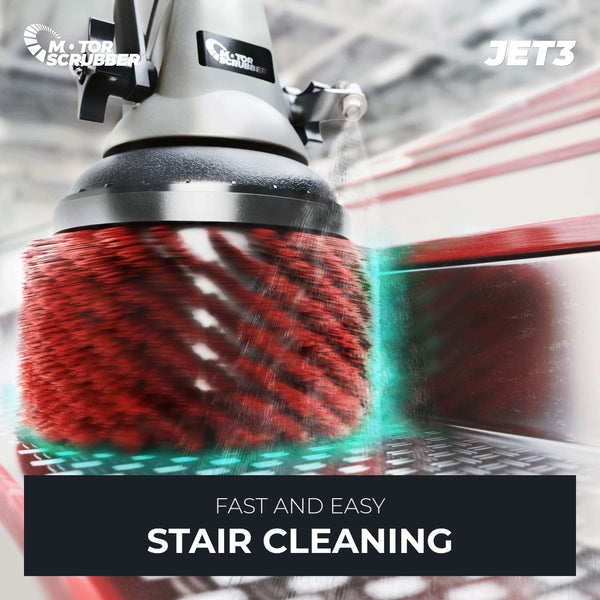
- On stairs, work from the landing outlet and keep the lead above the tread edge so it cannot snag.
- Never run a cord under a door that will pinch the insulation.
WorkSafe Victoria's vacuuming guidance also stresses wand length and posture; a long cord that lets the operator stand square to the work reduces both electrical and musculoskeletal risk. Format choice between backpack and canister is covered in Freshway's corded vs cordless commercial vacuums guide and the corded backpack range.
Testing tags and inspection
SafeWork NSW requires regular inspection and testing by a competent person for plug-in electrical equipment used where moisture, heat, vibration, mechanical damage, corrosive chemicals or dust are likely to shorten its life. Commercial cleaning fits that description on many sites. The same page points to AS/NZS 3760 for in-service inspection, testing and tagging methods and frequency.
Practical rules for vacuum fleets:
- Keep current tags readable on the vacuum body and on any extension lead that travels with it.
- Remove damaged cords from service immediately; do not wait for the next tagging date.
- Record which machine failed and why, so the same lead fault does not rotate back onto another cleaner.
- Treat a missing tag as out of service until a competent person checks it.
When a battery vacuum is the safer path
If the job keeps putting a cord across public walkways, day-trade aisles or wet entries, a cordless backpack can remove the trip hazard. Freshway lists the Pacvac Superpro Go as a battery backpack with a 5 L dust capacity and no mains cord on the operator. Battery machines bring their own charging and lithium-ion controls; SafeWork NSW's lithium-ion batteries page is the starting point for charging-area rules.
Corded units still win where runtime must match a long night shift without battery swaps, and where outlet access is already safe. Choose by site layout, not by habit.

Spec-sheet fields to check on a vacuum
- Motor watts on the Freshway product page, then approximate amps at ~240 V.
- Cord length against the longest continuous area you expect to cover from one outlet.
- Dry-only or wet and dry, so water never meets a dry motor.
- Weight and harness for backpacks, or castors and pull strain for canisters.
- Dust capacity, because emptying mid-floor often means coiling and uncoiling the cord again.
- Noise if the machine runs while the building is occupied.
Browse Freshway's vacuum cleaners, backpack vacuums and canister and barrel vacuums ranges and read each listing before you order.
Checklist for site supervisors
- Outlet map for each floor, with circuits that already trip under load marked.
- Only site-supplied, tagged extension leads on the trolley; no personal cables.
- Daily visual check of plugs, cords and strain relief before the shift starts.
- Cord routing plan for public corridors and glass doors.
- Current inspection tags on every corded vacuum and lead in the fleet.
- Clear rule: dry machines stay off wet floors; RCD trips are investigated, not ignored.
- Spare bags and filters stocked so cleaners are not forcing overloaded machines.
Frequently asked questions
Does a longer extension lead make the vacuum safer?
No. Extra length adds voltage drop and trip risk if the lead is underrated or damaged. Use the machine's own cord first, then one correctly rated lead only if needed.
Will a 1,300 W vacuum overload a 10 A outlet?
On its own, usually not: 1,300 W at about 240 V is roughly 5.4 A. Overloads appear when other loads share the circuit or when a poor lead heats under continuous use.
Do I need to test and tag commercial vacuums?
SafeWork NSW requires regular inspection and testing by a competent person for plug-in equipment used in conditions likely to cause damage, and points to AS/NZS 3760 for methods and frequency.
Can I vacuum a wet lobby with a corded dry backpack?
No. Keep dry machines on dry floors. Use a wet and dry vacuum for water, and treat trailing cords on wet floors as both an electrical and a slip hazard.
Next steps with Freshway
List every corded vacuum with its listed watts, cord length and tag due date, then retire damaged leads before the next night shift. Compare machines in Freshway's vacuum ranges and check each product page for current pricing and stock. For multi-storey cord strategy, also read the Knowledge hub guides on corded and cordless options.