After Scrubbing: When to Burnish or Polish for Retail Shine
Recover, wait until the vinyl is dry, then decide if burnishing is needed.
Shop now
A retail floor that looks dull after the scrubber is often still damp, not unfinished. Burnishing that haze drives slurry into the sealer and leaves a polished film for the first shoppers. The useful sequence is the opposite of “more shine now”: recover the water, wait until the vinyl is dry to the touch, then decide whether a burnisher is needed at all.
Scrub versus burnish roles on retail floors
Burnish after a floor scrubber on retail floors only when the soil is gone and the sealer is dry. A compact unit such as the Karcher BR 40/10 C can scrub and extract in one pass. Add a hi-speed polisher when sealed vinyl still shows scuffs after it has dried.
The scrubber’s job is to lift daily soil and leave a dry, safe floor. The burnisher’s job is to restore appearance on a sealed surface that is already clean. Mixing the two into one wet pass does not save time. It smears dirty water, loads the pad with slurry and can leave a glossy, slippery film. SafeWork NSW notes that slippery floor surfaces from cleaning products and methods are a common source of slips, trips and falls on the same level.
When retail needs both machines
Use the scrubber alone when the floor is unsealed concrete, heavily soiled grout, or a back-of-house area where a uniform clean matters more than a mirror finish. Use both machines when the specification is sealed vinyl, terrazzo or similar polished retail aisles, and nightly traffic has left black scuffs that survive a clean, dry recover.
Freshway lists the Karcher BR 40/10 C Anniversary Edition as a corded compact scrubber dryer with a 400 mm working width, dual 10-litre solution and recovery tanks, twin roller brushes at 1100 RPM, adjustable contact pressure up to 30 kg, bidirectional extraction and a 35.5 kg body without accessories. That combination suits narrow retail aisles and spill response because the floor is scrubbed and dried in the same pass.

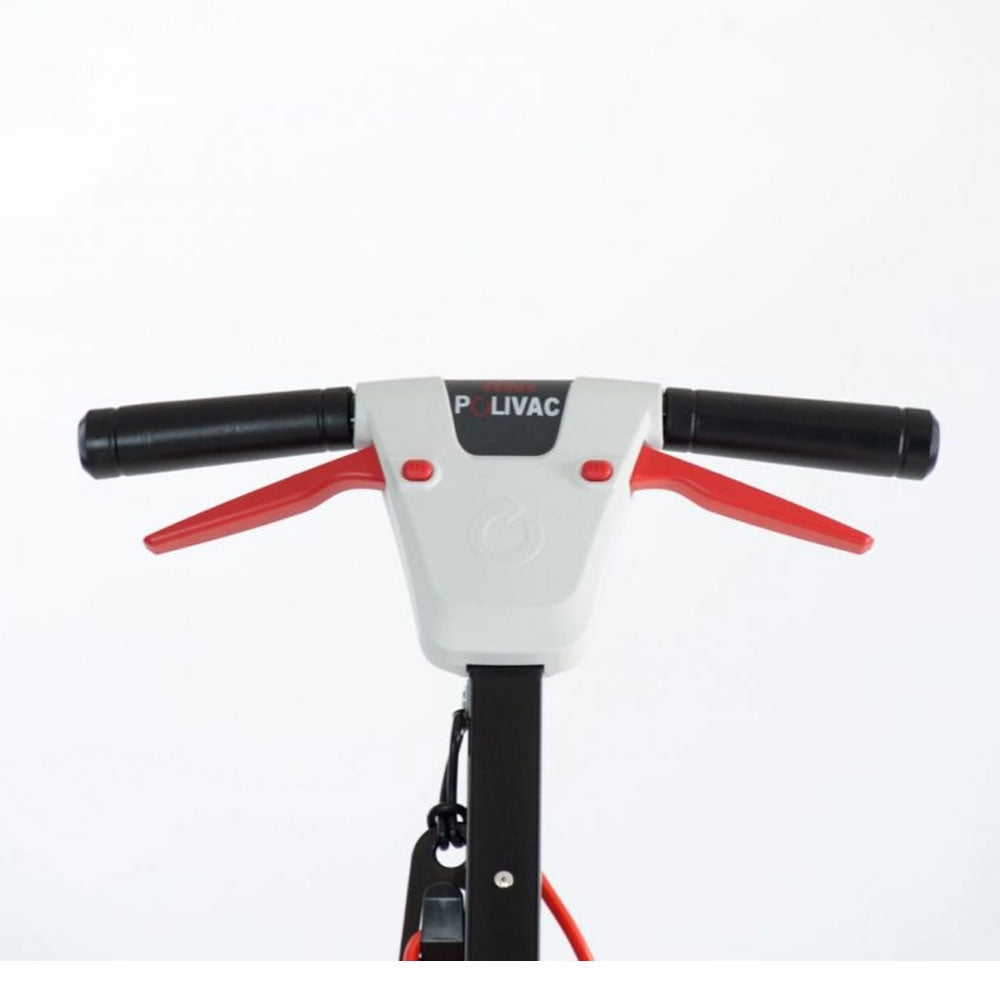
Freshway lists the Polivac A23HS as a compact hi-speed floor polisher with a 30 cm pad, a 1.3 kW motor, a consistent 375 RPM brush speed and a 32 kg body. The smaller pad is listed for tight washrooms, office kitchenettes and other spaces where a full-size burnisher will not turn. That is the machine you bring out after the scrubber has left those sealed floors clean and dry, not while they are still flashing wet.

Timing while floors are dry
Dry means dry to the touch along the traffic line, including low spots where the squeegee skipped. A floor that looks shiny under night lighting is often just wet. Give the recover pass time to finish, then walk the aisle in flat, closed shoes and look for heel marks in any remaining film.
If the site uses a wash-and-polish detergent in the scrubber, that film needs to dry before anyone chase-buffs it. Freshway lists Agar Scrub 'N' Shine as a 5-litre, low-to-moderate foam wash-and-polish detergent for sealed and polished hard floors, including auto-scrubber use at 1 part to 80–100 parts water. It is written to clean and deposit a thin polish layer in one step. Burning that layer while it is still wet does not speed the gloss. It smears it.
Pad colours and what the chemical page actually names
Do not invent a grit ladder the product pages do not list. Freshway lists Agar Spraybuff C as a 5-litre spray-buff liquid with a listed pH of 6–8, for use neat on neglected scuffed floors or diluted 1:10 for daily maintenance. The product page tells you to spray lightly and buff immediately with a rotary machine using a white or pink pad. That is the pad colour pair to write on the wall chart when Spraybuff C is the chosen restorer.
A dry pad on a hi-speed machine grabs and chatters. Spraybuff C is described as a thermal lubricant for that reason: it lets the pad glide while the solvents lift black scuffs. Use the listed dilution for nightly work and reserve neat product for the isolated, heavily scuffed bay, not the entire supermarket. Browse Agar floor cleaners when you print the chemical name next to the pad colour so night crews are not guessing from a faded bottle.
Slip risk after polishing
A polished retail aisle is still a walking surface for staff who are carrying cages and for customers who arrive before the night crew has packed up. SafeWork NSW’s same-level slips page specifically lists cleaning products and methods among indoor risk sources, and its guide to preventing slips, trips and falls at work is written for consultation with the people who walk those floors. WorkSafe Victoria’s slips, trips and falls pages apply on Victorian sites.
Keep pedestrians off the aisle until the spray-buff has flashed off and the floor is dry again. Do not leave residue, extension leads or a parked polisher on the traffic line. If a section feels greasy underfoot after buffing, stop, inspect the dilution and the pad, and do not open the store on a film you would not walk in socks.
Night crew sequencing
Write the sequence as a one-page run sheet, not as folk memory.
- Barricade the bay or aisle and clear litter so the scrubber is not grinding paper into the sealer.
- Scrub and recover with the listed detergent and dilution. On Scrub 'N' Shine that is 1:80 to 1:100 in an auto-scrubber.
- Empty recovery, check the squeegee, and walk the floor for wet skips.
- Wait until the vinyl is dry to the touch.
- Decide: stop if the floor is evenly clean and the site does not require extra gloss; continue if scuffs remain on sealed vinyl.
- Spraybuff C lightly, then buff immediately with the A23HS and a white or pink pad.
- Coil leads, park machines, and reopen the aisle only when the surface is dry and even.
SafeWork NSW hazardous manual tasks guidance applies when crews lift, load or chase a 32 kg polisher and a 35.5 kg scrubber between docks and lifts. WorkSafe Victoria’s hazardous manual handling pages cover the same discipline on Victorian sites. Plan the lift path before the shift, not at 2 am on a mezzanine ramp.
| Situation after the scrubber | Usual next step | Why |
|---|---|---|
| Floor still damp or streaked with recover skips | Re-recover and wait | Burnishing wet soil polishes slurry, not gloss |
| Unsealed or heavily soiled back-of-house concrete | Stop after a clean recover | A polish pass will not create a retail sealer that is not there |
| Sealed vinyl, dry, with remaining black scuffs | Spraybuff C and the A23HS | The restorer and 375 RPM pad are listed for that scuffed, sealed surface |
| Sealed vinyl, dry, already even and clean | Stop | Extra passes wear pads and add slip risk without a clearer specification |
Measuring gloss without hype
You do not need a marketing adjective to decide if the pass worked. Walk the aisle at customer eye height after the floor is dry. Look for an even sheen, removed black scuffs, no halo around fixtures, and no sticky pick-up on a clean fingertip. Compare one untreated control tile if the client is unsure whether burnishing added anything that night.
If the floor dulls again by mid-morning, the problem is often soil being walked back in, a detergent residue, or a sealer that is worn through. Those are reasons to review the scrub chemistry and the recoating cycle, not to add another burnish pass on a wet Thursday.
Consumables planning
Stock the named items together so the sequence cannot be improvised:
- Scrubber rollers or pads that fit the BR 40/10 C, plus spare squeegee lips.
- White or pink rotary pads that fit the 30 cm A23HS.
- Scrub 'N' Shine for the scrubber tank when the program is wash-and-polish.
- Spraybuff C for the rotary pass, with the 1:10 daily mix written on the bottle.
Browse floor scrubbers, burnishers and polishers and floor strip, buff and sealers when you rebuild the kit. Confirm current pad size, tank volumes and listed dilutions on each product page before the next order. SafeWork NSW chemicals guidance applies to how those drums are stored, decanted and labelled on the trolley.
Frequently asked questions
Does every retail night clean need a burnisher after the scrubber?
No. If the scrubber has left sealed floors clean and dry, and scuffs are gone, stop. Burnish when the specification still calls for restored gloss on a dry, sealed surface.
How dry should the floor be before polishing?
Dry to the touch along the traffic line, including low spots. A wet shine under night lighting is not a ready floor.
Which pad should we use with Spraybuff C?
The Spraybuff C page tells you to buff immediately with a white or pink pad on a rotary machine. Write that pair on the run sheet rather than mixing leftover pads.
Can Scrub 'N' Shine replace a separate burnish pass?
It can maintain gloss on sealed floors when used as directed in the scrubber or mop bucket. Use a separate spray-buff pass only if scuffs remain after that film has dried.
Next steps with Freshway
Set the night sequence first: scrub and recover, wait until the floor is dry, then decide whether a polish pass is warranted. Review the Karcher BR 40/10 C for compact retail recover work and the Polivac A23HS for tight sealed areas that still need 375 RPM. Pair them with the Agar floor cleaners already linked above and check each product page for the current dilution and pad note before the next night shift.