Rainwater and Tank Water Feeding Commercial Pressure Washers
Tank water works only when filtration and inlet flow protect the pump.
Shop now
A contractor on Sydney's North Shore opened a cold washer after a wet-season tank run and found the pump valves scored by grit. The hose was fed from a rainwater tank that looked clear. The damage was classic inlet contamination: fine sediment that mains water rarely carries at the same load. Tank water can feed a commercial pressure washer, but only with filtration, flow checks and a honest backup plan.
Why tank water stresses pumps
Rainwater tank pressure washer commercial setups fail when pumps see grit, air or low inlet flow. Fit a rated inlet strainer, match tank delivery to the pump litres per minute rating, purge air from the suction hose, and keep a mains backup ready for warranty-critical or low-tank days.
SafeWork NSW's hazardous manual tasks guidance also matters when crews haul hoses and filters on tank sites — plan hose runs so operators are not fighting kinks and dry suction all day. Detergent storage on the same trailer sits under SafeWork NSW chemicals controls.
Sediment and pre-filtration
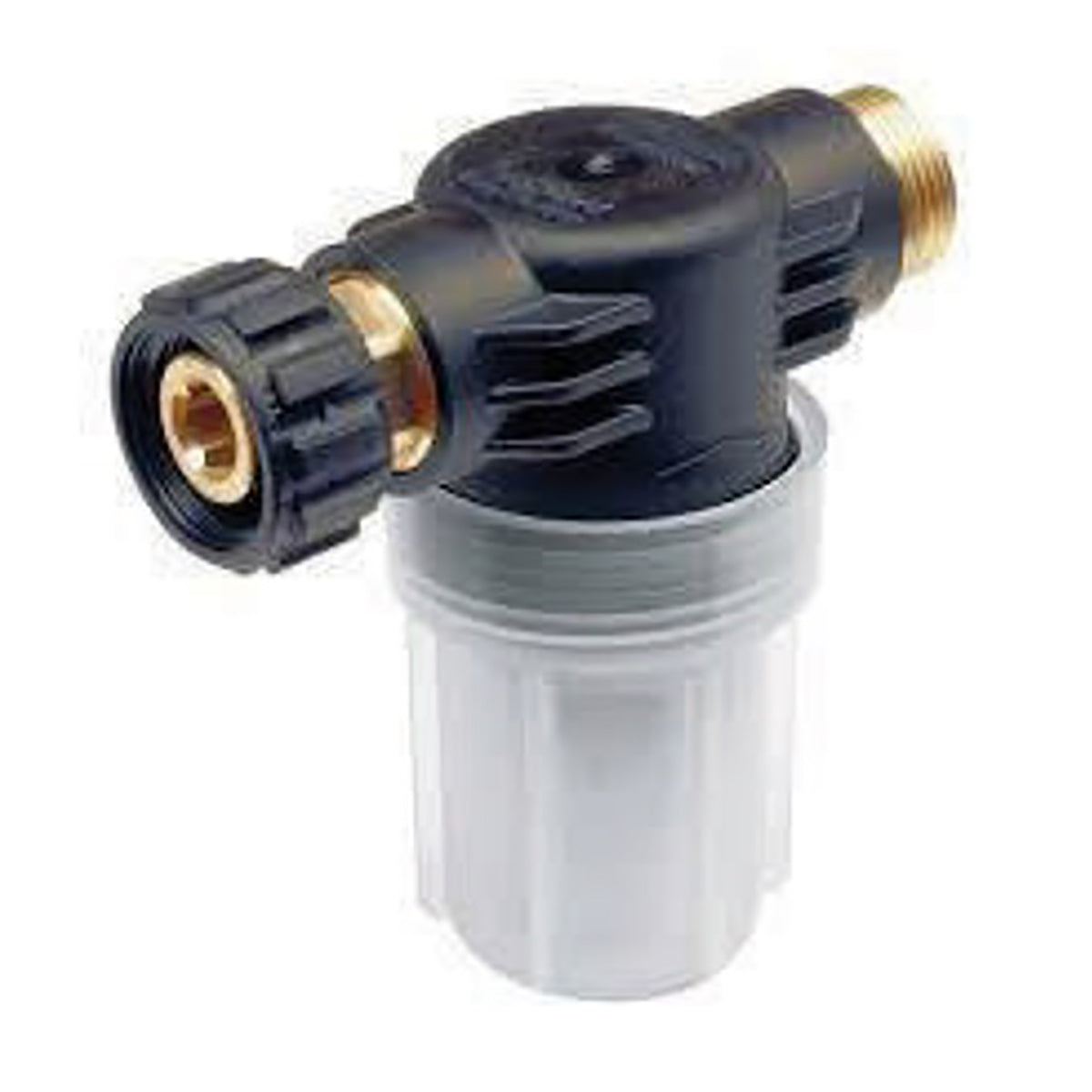
Fit a washable inlet strainer before the pump, sized for the machine's flow. Freshway lists the Kranzle Water Inlet Filter (133003) with 3/4" female inlet and 3/4" male outlet brass connections and a maximum listed flow of 40 L/min. That headroom sits above many single-phase commercial washers, so the filter is less likely to starve the pump when the screen is clean.

Clean the screen on a fixed cadence after dusty roof events, not when pressure collapses. Pair the strainer with a coarse tank outlet sock if the tank has no settled sump.
Inlet flow vs pump LPM
Match tank delivery to the washer's litres per minute. Freshway lists the Kranzle K2160TST at 1740 PSI and 11 L/min on a standard 10 A 240 V plug. If the tank outlet and hose cannot sustain that flow, the pump cavitates. Gravity feed from a roof tank may need a taller head or a transfer pump into a header, not a long skinny hose on the washer inlet.
| Check | Pass condition | Fail signal |
|---|---|---|
| Inlet filter clean | Screen free of grit | Brown sludge on mesh |
| Flow vs L/min | Tank delivery ≥ pump rating | Surging, noise, vapour in inlet hose |
| Air exclusion | Flooded suction, no bubbles | Dry run trips or seal heat |
| Hose diameter | Full-bore garden or larger | Collapsed soft hose under suction |
Hot washers and scale
Hot-water machines add scale risk when tank water is hard or when roof dust carries minerals into the coil. Keep inlet filtration strict and follow the maker's descaling intervals. Do not invent hardness numbers — test the tank if you run hot plant regularly, and keep mains backup for coil-critical work.
WorkSafe Queensland's pages on hazardous chemicals apply when you store descalers and detergents on the same trailer as the washer — segregate and label them under the same discipline as WorkSafe Victoria hazardous substances guidance.
Wet-season vs dry-season supply
Wet seasons fill tanks but also wash grit off roofs. Dry seasons drop water level and stir settled sludge when the outlet sits low. Raise the pick-up above the sludge layer and flush the inlet line after the first big storm. Water Corporation's Waterwise advice is aimed at saving water, but the same discipline — know your tank, avoid waste — helps commercial crews plan when tank water is usable and when to switch.
When mains backup is required
Keep a mains tap option for warranty-critical machines, indoor plant rooms that forbid tank water, and any day the tank level cannot guarantee flooded suction. NSW EPA's "drain is just for rain" guidance still applies to wash water disposal: detergent-laden runoff must not enter stormwater, whether the source was tank or mains.
Contractors who trailer washers between tank sites should carry a clear changeover checklist: isolate power, open the filter bowl, rinse the screen, refill the inlet hose with clean water, and purge air before loading the next job. That five-minute habit costs less than a scored valve plate. Keep a laminated torque note for the brass 3/4" fittings so night crews do not overtighten soft seals.
If the site stores rainwater for both washdown and irrigation, label the washer tap clearly so nobody cross-connects into potable lines. Australian drinking-water expectations differ from wash water — when in doubt, keep the pressure-washer circuit physically separate and signposted. Browse Karcher pressure washers alongside Kranzle if the fleet mixes brands, but keep inlet filtration habits identical across both.
Spec inlet accessories
- Brass inlet filter with known L/min rating (Kranzle 133003 lists 40 L/min).
- Spare screens on the truck.
- Short, full-bore inlet hose dedicated to tank feed.
- Quick way to switch to mains without tools mid-job.
Browse Freshway's pressure washer accessories and Kranzle pressure washers when you build the kit.
Maintenance after dirty water events
After a muddy tank draw: rinse the inlet filter, inspect the pump oil sight glass if the machine has one, run clean water through the system, and note the event in the plant log. If pressure stays low after a clean filter, stop and book service rather than "turning it up". Freshway's service and repairs page is the path for pump work.

Frequently asked questions
Can I run a commercial pressure washer on rainwater?
Yes if inlet filtration and flow match the pump, and you have a mains backup when the tank cannot keep up.
What filter should I use on a Kranzle inlet?
A brass inlet strainer such as Kranzle 133003 (3/4" connections, up to 40 L/min listed) ahead of the pump.
Why did my pump fail on clear-looking tank water?
Fine grit and low flow still cavitate and score valves. Clear water is not the same as filtered, flooded suction.
Where can wash water go?
Not to stormwater. Follow EPA NSW drain rules and site trade-waste conditions.
Next steps with Freshway
Add an inlet filter from pressure washer accessories, then confirm washer flow on the pressure washers and Kranzle or Karcher collections. Check each product page for current fittings before the next tank job.