Unloader Valves Bypass and Pulsing: Parameter Symptoms
Read the pulse: most surging starts at the inlet, the nozzle or the unloader.
Shop now
The gun is open, the lance is pointed at a greasy loading dock, and the spray keeps surging: strong, weak, strong, weak, about once a second. The operator turns the pressure knob up, and the surging gets worse. Ten minutes later the machine is back in the van and the job is rebooked. In most cases, the cause was a supply, nozzle or unloader problem that could have been diagnosed on site.
Our article on why a pressure washer pulses or surges covers the general causes. This one is a checklist for purchasing and maintenance staff who need to link each symptom to a parameter.
Pressure washer pulsing and the unloader: the short answer
Pulsing usually means the pump is not getting enough water, the nozzle does not match the machine's flow and pressure, air is entering the inlet, or the unloader valve is sticking or worn. Check supply and filters first, then nozzle size, then the unloader. Book a service if the pump knocks, leaks or overheats.
What pulsing means
A pressure washer pump pushes a set volume of water per stroke. When the outlet path is open and matched, pressure stays steady. When the inlet runs short, air gets in, or the outlet path is too tight or too open, pressure rises and falls with each cycle. Those swings are the pulse you feel at the gun.
The unloader's role
The unloader valve diverts water back to the pump inlet (bypass) when the trigger is released, so pressure does not build to a dangerous level. On machines with total-stop or auto-stop systems, a switch also shuts the motor down. If the unloader sticks, wears or is set wrongly, the machine can cycle between bypass and spray while the trigger is held, which feels like pulsing.
Spec-related causes
Three parameters cause most pulsing:
- Inlet supply below pump flow. A pump rated at 10.2 L/min needs at least that much water at the inlet. Spitwater explains inlet flow set-up.
- Wrong nozzle size. A worn or oversized nozzle lets pressure fall; an undersized one pushes pressure up into the unloader. Powerblast's nozzle size chart shows the match between nozzle size, flow and pressure.
- Accessories that restrict flow. Long hoses, small fittings and blocked inlet filters all reduce flow or add pressure drop.

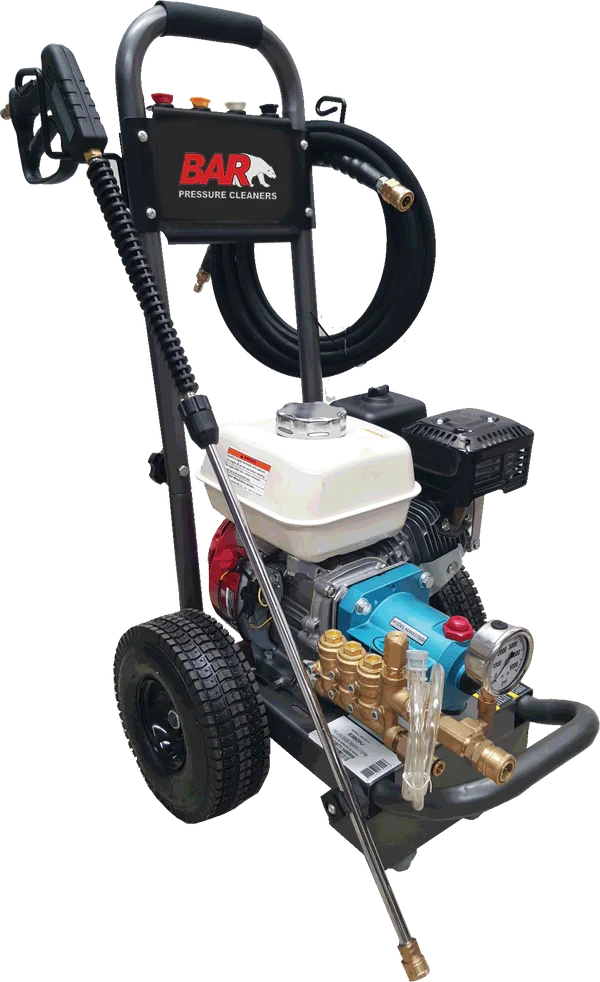
Freshway lists the BAR3065J-H with 3000 PSI at 10.2 litres per minute from a Honda GX200 6.5HP engine and a Cat plunger pump on a two-wheel steel trolley. A 10.2 L/min pump fills a 10-litre bucket in under a minute (10 ÷ 10.2 × 60 ≈ 59 seconds), so the tap must fill the same bucket at least that fast.
Safe checks on site
With the machine stopped, pressure released and (for petrol units) the engine cool:
- Time a bucket fill from the tap and compare with pump flow.
- Check the inlet filter and hose washer for blockage or air leaks.
- Check the inlet hose for kinks and loose fittings.
- Inspect the nozzle for wear or debris; swap in a new one of the correct size.
- Run the machine with a short hose to rule out hose and fitting losses.
- Listen for knocking or rattling at the pump.
Never adjust the unloader while the machine is running unless you are trained to do so, and never point the lance at anyone; WorkSafe Victoria's high pressure water jetting alert explains why injection injuries are serious.
Symptom map
| Symptom | Likely cause | First check |
|---|---|---|
| Steady surging while spraying | Low inlet supply or air leak | Bucket test, inlet filter, hose washers |
| Pressure low and steady | Worn or oversized nozzle | Swap nozzle |
| Surging when nozzle is new | Unloader sticking or mis-set | Book service |
| Pulsing only with long hose | Pressure drop in hose or fittings | Test with short hose |
| Motor cycles on and off with gun shut | Leak in gun, hose or unloader | Check for drips, book service |
| Knocking from pump | Cavitation or valve damage | Stop and book service |
Records that speed up diagnosis
Keep a simple fault card on each machine with the date, site, tap bucket-test time, hose length, nozzle size and what the operator felt at the gun. When the same machine pulses only at one site, the cause is almost always that site's water supply. When it pulses everywhere, the cause is inside the machine. Machinery used at work must be kept in safe condition; SafeWork NSW's machinery and equipment page explains the duty to maintain plant and remove faulty items from service.
When to repair, not adjust
Stop using the machine and book a service when:
- The pump knocks or rattles.
- Water or oil leaks from the pump.
- The machine cycles on and off with the trigger closed.
- Pulsing continues after supply, filter and nozzle checks.

Electric machines show the same symptoms. Freshway lists the Kranzle Quadro 599TST at 2175 PSI and 10 L/min on a 15 A circuit, so the same bucket test applies. Jetblaster's note on what to tell your repair technician is a good template for writing up a fault. Our service and repairs page explains how to book one.
Mistakes that make pulsing worse
- Turning the pressure up instead of fixing the supply.
- Fitting a smaller nozzle to "get more pressure".
- Running from a long garden hose on a low-pressure tap.
- Ignoring a dripping gun or fitting.
- Adjusting the unloader without training.
Frequently asked questions
Is pulsing always an unloader fault?
No. Most pulsing comes from low inlet supply, air leaks or the wrong nozzle. Check those first.
Can I adjust the unloader myself?
Only if you are trained and the machine's manual allows it. Incorrect settings can over-pressurise hoses and fittings.
Why does the machine cycle with the trigger closed?
Usually a leak somewhere downstream lets pressure drop, so the system restarts. Find the drip or book a service.
Does a worn nozzle cause pulsing?
It usually causes low steady pressure rather than surging, but it can contribute when combined with a weak supply.
Next steps with Freshway
Keep spare nozzles, inlet filters and hose washers on every vehicle, and record the bucket-test result for each site. Compare machines in petrol pressure washers and check each product page for current pricing and full specifications.