Hospitality Floor Scrubbers: Kitchens Bars and Front of House
Choose for the kitchen first, then make sure front of house stays quiet.
Shop now
It is 10.40 on a Saturday night. Service has finished, the fryer station has a sheen on the tiles, and the closing crew is pushing a string mop that spreads the grease into a wider, thinner film. The bar floor is sticky, the dining room still has a few guests finishing dessert, and someone has to be back at 6 am for breakfast prep. Most hospitality venues meet the scrubber question at a moment like this.
This guide is written for the person signing off the purchase: what a hospitality floor scrubber has to handle, which compact formats suit kitchens, bars and dining rooms, and the checks to run before you buy.
Hospitality floor scrubber: the short answer
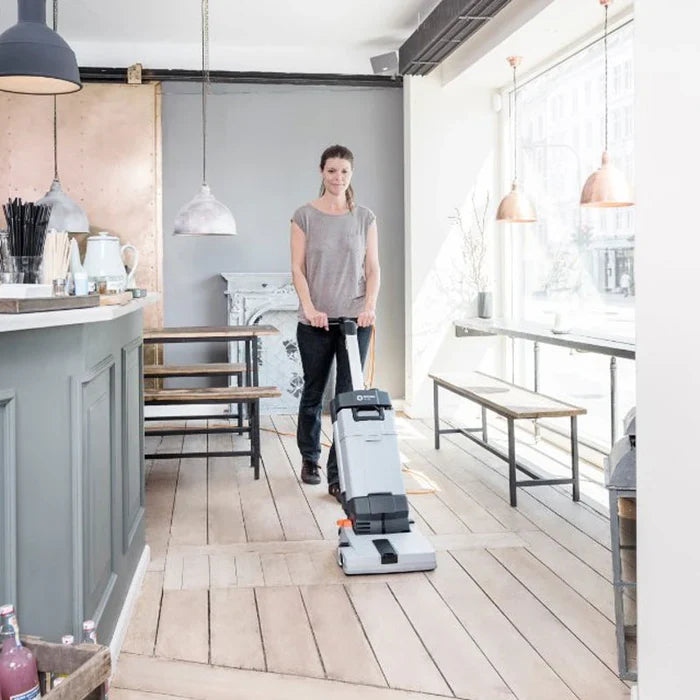
A hospitality floor scrubber should fit between benches and tables, use a roller or stiff brush that reaches into grouted kitchen tiles, and pick up its water in one pass. It should also run quietly enough for nearby guests. Most venues end up with a small kitchen machine plus a quieter front-of-house option.
The checklist below works through each of those points, then sets out how to train staff and sign off the machine.
Grease and slip risk: what the machine is really for
Kitchen floors are a slip hazard before they are a cleaning job. SafeWork NSW lists contaminants or spills such as water, grease and oil, slippery surfaces resulting from cleaning methods, and changes in traction between floor types among the common sources of slip risk. WorkSafe Victoria names wet and slippery floor conditions among the most common causes of slips, trips and falls.
Food safety rules point the same way. Food Standards Australia New Zealand's cleaning and sanitising guidance says food businesses must keep premises clean, with grease and food scraps not left to accumulate. It also says cleaning has to come before sanitising. A mop moves grease around. A scrubber dryer lifts it into a recovery tank and leaves the floor dry.
Checklist:
- The machine scrubs and recovers in one pass, so no wet film is left behind.
- The brush can reach into grout and textured safety tiles.
- The routine includes wet-floor signs until the floor is dry.
Compact machines that fit hospitality floors
Hospitality floors are small, broken up and full of obstacles, so the machine shortlist is mostly compact walk-behinds and hand-held scrub tools. The figures below are taken from each Freshway listing.
| Machine | Listed path | Power | Listed noise | Hospitality fit |
|---|---|---|---|---|
| Hako Wizzard W24N | 215 mm | Mains | 68 dBA | Bars, washrooms, tight kitchens |
| Hako Wizzard W34N | 315 mm | Mains | 69 dBA | Small kitchens and cafés |
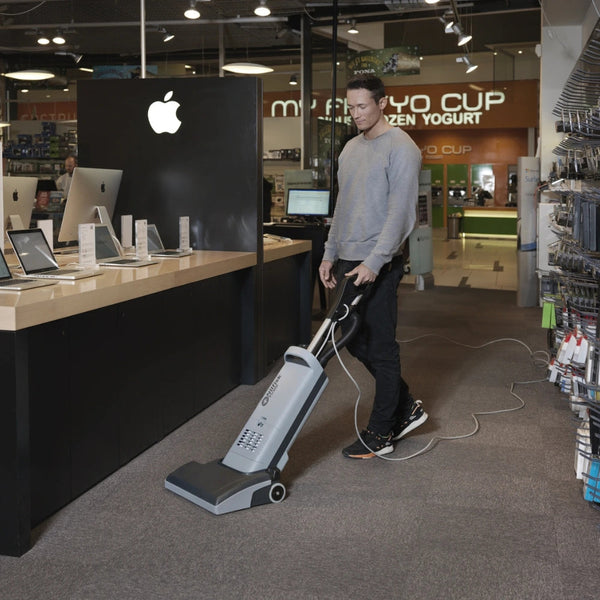
| Nilfisk SC100 | 31 cm | Mains (corded) | 72 dB(A) | Cafés, under tables, carpet kit included |
| Nilfisk SC250 | 34 cm | Lithium battery | 66 dB(A) | Dining rooms and hotel corridors during trade |
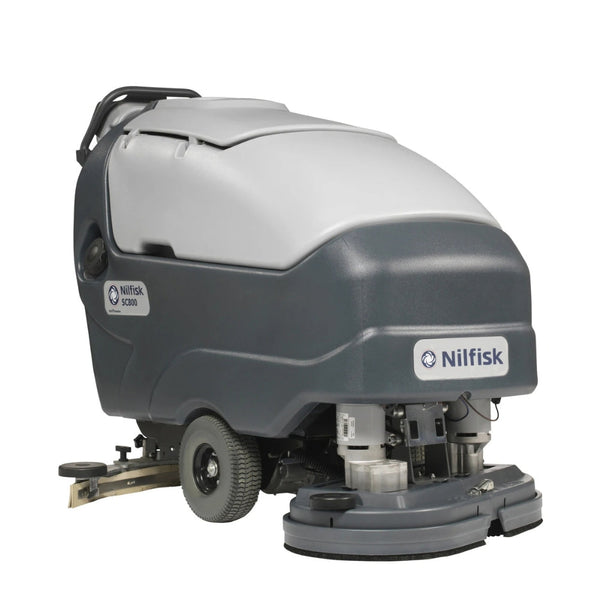
| Kärcher BR 40/10 C | 400 mm | Mains | Not listed | Larger kitchens with greasy tile |
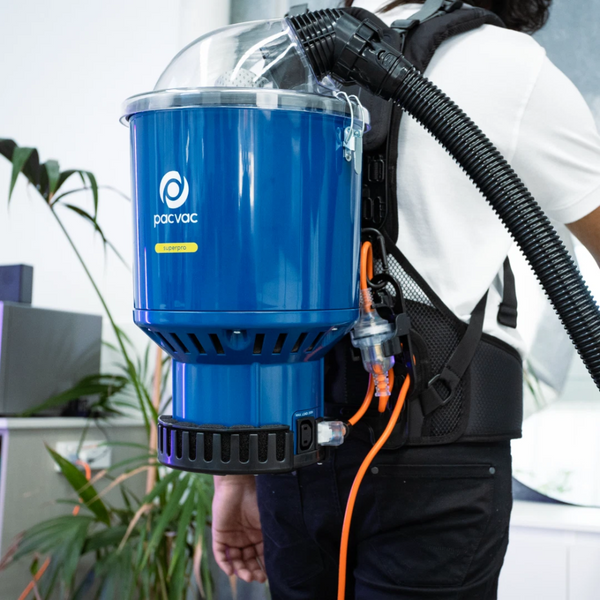
| MotorScrubber JET3 | 18 cm head | Battery backpack | Not listed | Under fryers, benches and coving (needs separate pick-up) |
The roller machines suit grouted kitchen tile. Freshway lists the Wizzard W24N and W34N with a cylindrical roller at 650 RPM. It describes the hard black roller for the SC100 for commercial kitchens with textured safety tiles. It also lists commercial kitchens among the uses for the BR 40/10 C, which runs twin rollers and picks up water forwards and backwards. The Wizzard range sits in its own Wizzard floor scrubbers collection.

For the spots no walk-behind reaches, such as under fryers, behind combi ovens and along coving, a hand-held scrub tool fills the gap. The JET3 carries a 1-litre solution tank in its backpack and has a scrub head that Freshway lists as waterproof. It does not pick up water, so plan a wet-and-dry vacuum or squeegee to follow it.

Chemical pairing for kitchens and dining rooms
The machine and the chemical have to suit each other. Foam fills a recovery tank fast, so scrubbers need a low-foaming or controlled-foaming product. Three examples from Freshway's listings:
- Kitchen floors: Agar Once Off is listed as a low-foaming, high-alkaline (pH 13 to 14) tile cleaner for auto-scrubbers, diluted up to 1:120 for routine maintenance. Whiteley Tile Plus is listed for auto-scrubbers in commercial kitchens.
- Front of house: Freshway Neutralex 383 is a pH-neutral floor cleaner listed for auto-scrubbing and for sealed stone, tiles and sealed timber.
- Keep out of the tank: Agar pH-7 is listed as medium-to-high foaming. It suits a mop bucket, not a recovery tank.
Strong alkaline degreasers belong on kitchen tile, not on sealed timber or stone in the dining room. Read the label and the safety data sheet before mixing. Freshway's restaurant and commercial kitchen chemicals guide covers the rest of the kitchen, and the full range is in cleaning chemicals.
Noise for guests: reading the dB(A) figure
Scrubber noise in hospitality is about guest comfort far more than hearing risk. SafeWork NSW's hazardous noise guidance sets the workplace limit at 85 dB(A) averaged over eight hours. Every listed figure in the table is well under that.
The same guidance says every 3 dB increase doubles noise intensity. So the 6 dB gap between the SC250 (66 dB(A)) and the SC100 (72 dB(A)) is two doublings, or about four times the sound intensity. If you clean while guests are still in the room or hotel guests are sleeping nearby, that gap matters. Treat the figures as the brands' own test results and listen to a demonstration in the actual room if you can.
Front of house vs back of house
Few venues can use one machine everywhere. The two zones ask for different things:
| Zone | Typical floor and soil | Priorities | Chemical type |
|---|---|---|---|
| Kitchen and scullery | Quarry or safety tile, grout, fats and oils | Roller reach, recovery, stiff brush | Low-foaming alkaline degreaser |
| Bar and cellar | Tile or vinyl, sticky sugar spills, glass | Compact path, pick up glass first | Neutral or mild cleaner |
| Dining room and lobby | Sealed timber, stone, vinyl, some carpet | Low noise, low water, finish safety | pH-neutral floor cleaner |
The SC100's included carpet kit suits venues with mixed hard floors and carpet. For broader venue supplies, see Freshway's shop-by-industry page.
Recovery handling: where the greasy water goes
Kitchen recovery water is full of fat and food waste, and it has to go somewhere legal. The NSW EPA's "the drain is just for rain" guidance says washing runoff, including water from cleaning work floors, must not enter stormwater drains. It points instead to areas that drain to sewer, which need a Trade Waste Agreement.
- Agree on one dump point that the venue's trade waste arrangement allows, and keep it away from food preparation sinks.
- Empty and rinse the recovery tank after every shift. Fat left overnight sets hard and smells.
- Leave the tank lid open to dry.
- Small tanks mean frequent emptying. The SC100's 4-litre recovery tank suits spot and small-area work, not a whole function centre.
Spec-sheet fields to check on a floor scrubber
- Path width against the narrowest gap between benches.
- Brush type and grades: roller or disc, and whether a stiffer brush is listed for the model.
- Solution and recovery litres, listed separately.
- Power: corded mains or battery. Cords near wet floors need careful routing.
- Listed noise in dB(A), and whether it is listed at all.
- Weight, if the machine has to be lifted into a van or carried upstairs.
Common mistakes to avoid
- Putting a high-foaming mopping detergent in the solution tank.
- Running a degreaser across sealed timber in the dining room.
- Scrubbing over broken glass at the bar instead of sweeping first.
- Buying one large machine that cannot fit between kitchen benches.
- Emptying recovery water into an outdoor or car park drain.
Training and sign-off
Hospitality crews turn over quickly, so a short written method and a sign-off sheet matter more than a long manual. SafeWork NSW lists forceful pushing, lifting and awkward postures among the factors that make manual tasks hazardous. Lifting machines into vans and carrying tanks to the sink both count. Corded machines in wet kitchens also need regular electrical inspection and testing, and SafeWork NSW gives commercial cleaning equipment as an example for testing at least once every six months.
Before a new staff member runs the machine alone, sign off that they can:
- Pick up glass and large debris, then put out wet-floor signs.
- Mix the chemical at the label dilution.
- Route the cord or check the battery charge.
- Scrub the front of house first with the neutral cleaner, then the kitchen with the degreaser, so kitchen grease is not carried out front.
- Empty, rinse and dry the tanks at the approved dump point.
- Report damaged cords, worn brushes or squeegees.
Summary: what to take away
Choose for the kitchen first: a compact roller machine with a stiff brush and one-pass recovery. Then check whether the front of house needs a quieter or battery option, pair each zone with the right chemical, fix the dump point, and train to a one-page method.
Frequently asked questions
Can one scrubber do the kitchen and the dining room?
Sometimes, on small venues. Do the front of house first with a neutral cleaner, then empty the tank, switch to the degreaser for the kitchen, and rinse the machine afterwards.
Roller or disc for kitchen tiles?
Usually a roller. It reaches into grout lines and textured safety tiles better than a flat disc.
Battery or corded in a kitchen?
Either can work. Battery removes the cord from wet floors. Corded machines need careful cord routing and regular test and tag.
Is any listed scrubber loud enough to need hearing protection?
The figures listed for the compact machines here are well below the 85 dB(A) workplace limit. Noise is mainly a guest-comfort issue.
Do I still need a mop?
For spills between scrubs and for corners the machine cannot reach, yes. A hand-held scrub tool can cover the tight spots.
Next steps with Freshway
Measure the narrowest gap in your kitchen, note your floor types and when you clean, then compare the compact machines above. Freshway's Service & Repairs team in Sydney services floor scrubbers and offers pick-up and delivery for commercial clients. Check each product page for current pricing, and ask the Arncliffe team which brushes and chemicals are listed for the model you choose.