Floor Scrubber Recovery Tanks: Capacity Sizing for Real Shifts
Count minutes between dumps, not litres on the brochure, before you choose a scrubber.
Shop now
27 minutes. That is how long the 75-litre tank on a Kärcher BR 75/75 W Classic Bp lasts at its maximum water consumption of 2.75 litres a minute, as listed on Kärcher Australia's product page. The same page gives a battery runtime of up to 2.5 hours. On paper the battery outlasts the tank more than five times over.
If you are the one walking the machine, you already know which of those numbers ends your run. This guide is written from the operator's side of the handle: how to size a recovery tank against a real shift, and how to stop losing half an hour a night to the dump sink.
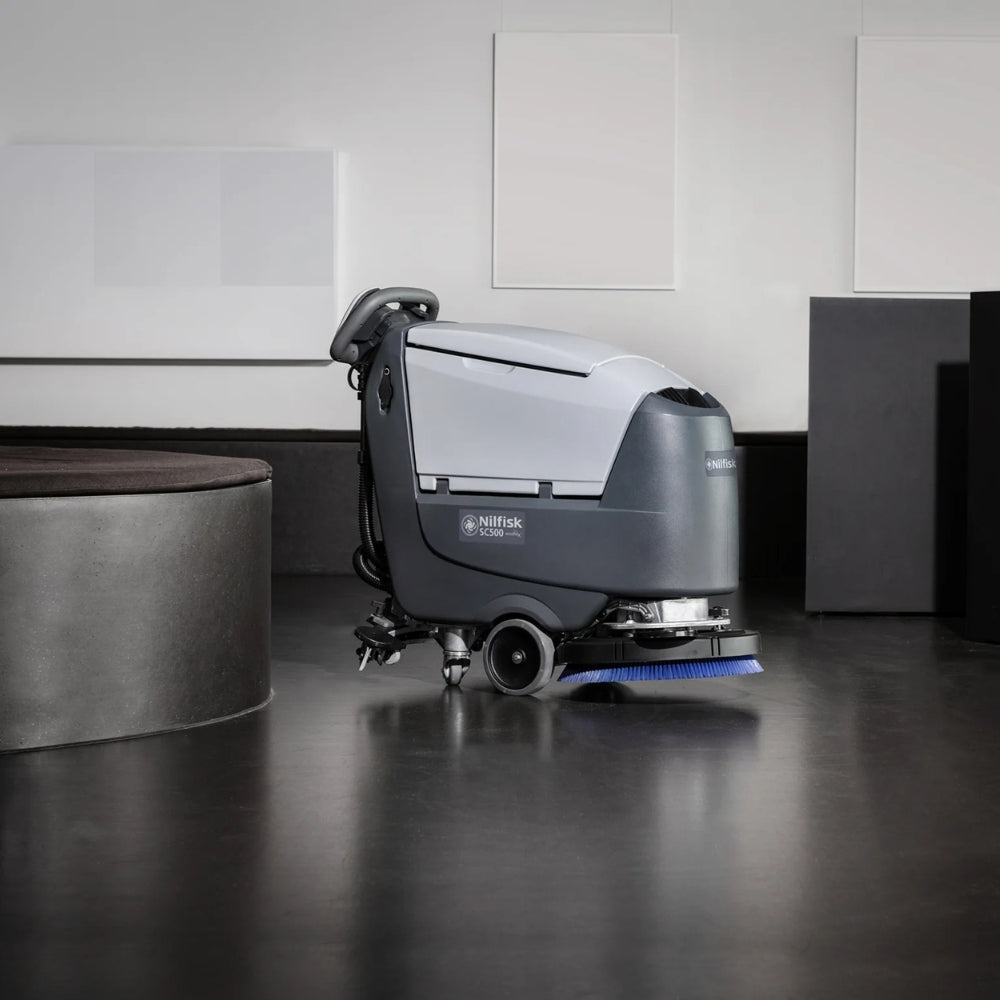
Floor scrubber recovery tank capacity: the short answer
Size the recovery tank to the solution you lay down, not to floor area. Divide recovery litres by litres used per minute to get minutes between dumps, then count dumps per shift. Choose a recovery tank at least as big as the solution tank, and leave room for foam and water already on the floor.
The steps below take you from that rule to a machine shortlist.
Why the recovery tank ends the run
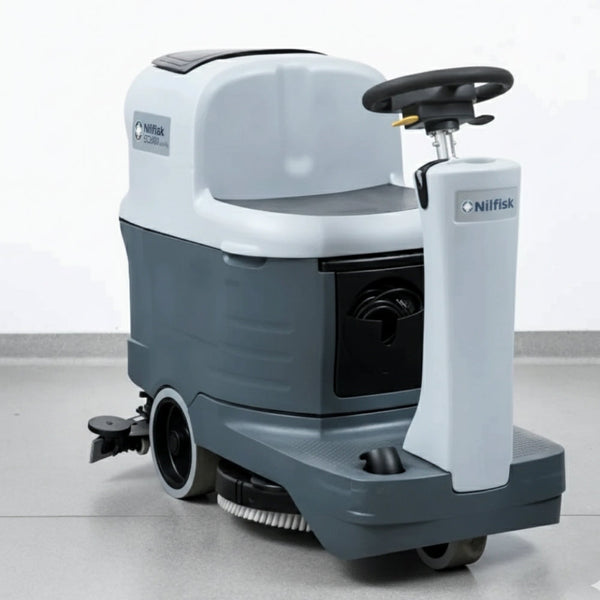
You can top up solution anywhere there is a tap. You can only empty the recovery tank where dirty water is allowed to go, and once it is full the squeegee stops doing its job. Nilfisk Australia's ride-on scrubber dryer page puts it simply: a larger recovery tank means fewer interruptions. The same page says a squeegee in poor condition will not pick up dirty water effectively.
That matters for safety as much as speed. SafeWork NSW lists slippery floor surfaces resulting from cleaning products or methods among slip hazards, and WorkSafe Victoria names wet and slippery floor conditions among the most common causes of slips, trips and falls. A machine that keeps going with a full tank leaves exactly that behind it.
Dirty water maths
Three numbers from the Kärcher Australia page are enough to see the pattern on the BR 75/75 W Classic Bp:
- Minutes per tank. 75 litres ÷ 2.75 litres per minute = about 27.3 minutes at maximum flow.
- Tanks per charge. 2.5 hours is 150 minutes. 150 ÷ 27.3 = about 5.5 tank loads, so roughly five dump-and-refill stops before the battery is the limit.
- Area per tank. The page lists a practical working capacity of 2,250 m² per hour. 2,250 × 27.3 ÷ 60 = about 1,020 m² per tank at maximum flow.
Now add your own stop time. If walking to the sink, dumping, rinsing and refilling takes 10 minutes on your site, five stops cost 50 minutes of a shift. Halve the walk and you win back 25 minutes without buying anything.
The 2.75 litres per minute is a maximum. Many machines let you turn the flow down, and the true figure depends on soil and floor type, so measure it: fill the solution tank to a marked level, scrub for five minutes, and measure how much it takes to refill to the mark. Divide by five for litres per minute.
Solution vs recovery balance
Most of the Freshway-listed machines below have equal tanks, so every refill is also a dump. A few list more recovery than solution. Ratios below are worked out from the tank figures on each Freshway product page.
| Machine (Freshway listing) | Solution (L) | Recovery (L) | Recovery ÷ solution |
|---|---|---|---|
| Cleanstar MIRA 40 | 3 | 5 | 1.67 |
| Nilfisk SC250 | 6 | 6 | 1.00 |
| Kärcher BR 40/10 C Anniversary Edition | 10 | 10 | 1.00 |
| Hako Scrubmaster B12 | 16 | 22 | 1.38 |
| Nilfisk SC401 | 30 | 30 | 1.00 |
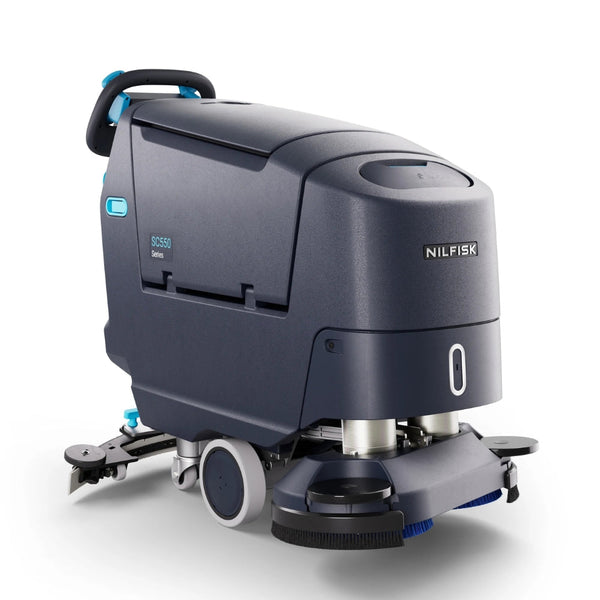
| Nilfisk SC500 | 40 | 40 | 1.00 |
| Nilfisk SC2000 53B | 70 | 70 | 1.00 |
| Kärcher BR 75/75 W Classic Bp | 75 | 75 | 1.00 |
| Nilfisk SC901 | 114 | 121 | 1.06 |
A ratio above 1 buys headroom. On the B12, the 22-litre recovery tank holds 6 litres more than the 16-litre solution tank, which is 37.5% extra. That space absorbs water that was already on the floor and the foam that rides on top of it. With equal tanks, any extra water means the recovery side fills before the solution side runs dry.

Foam: the litres you did not plan for
Foam takes up recovery space without adding cleaning. Over-dosing detergent is the usual cause. Freshway lists defoamers made for this, including Kärcher FoamStop Neutral, described as a defoamer for foam build-up in water recovery systems. Its listing for Agar Once Off describes a low-foaming profile that prevents foam blockages in recovery tanks.
The cheaper fix is less detergent. Nilfisk Australia's Ecoflex page describes water-only, ultra-low detergent and standard detergent modes, with water and detergent dispensed separately at the scrub deck and a detergent-free default start-up mode. Whatever the machine, start at the lowest dose that cleans, and choose a low-foaming product from Freshway's cleaning chemicals range.
Dump station design
Where you empty decides how many minutes each stop costs, and what you are allowed to do with the water. NSW EPA guidance, the drain is just for rain, says washing runoff, including from work floors, must not enter stormwater drains. It points to a wash area that drains to sewer, which needs a Trade Waste Agreement.
- Put the dump point as close to the route as the plumbing allows, and mark it on the site plan.
- If the machine has a drain hose, run it straight into a floor waste or sink rather than filling buckets. SafeWork NSW counts lifting and carrying as manual tasks, and lists sustained or awkward posture among the risk factors that make them hazardous.
- Keep a hose and a strainer at the station so the tank gets rinsed every time, not once a week.
- Leave the recovery tank lid open at the end of the shift. Nilfisk Australia says this helps the machine dry and stops odour-causing bacteria.
Spec-sheet fields to check on a floor scrubber
- Solution and recovery capacity, listed separately, in litres.
- Water consumption or flow in litres per minute. If it is missing, ask, or measure it on a demo.
- Practical working capacity as well as theoretical. Kärcher Australia lists both for the BR 75/75.
- Drain hose and tank access: can you rinse the tank fully, or is it a blind tank?
- Detergent dosing: premix in the tank, or a separate dosing system.
- Battery runtime, then check which runs out first. For battery sizing, Freshway's battery floor scrubber guide covers the battery side in detail.
Industry examples
Warehouses and logistics. Tennant Australia's scrubber selection guide says ride-ons suit industrial and logistics sites with long aisles and heavy soils, and links large tank capacities with fewer stops. Put the dump point at the end of the longest aisle, not by the office.
Offices and medical suites. Small floors, but the sink may be on another level. A compact machine with tanks you can lift out, such as the Kärcher BR 40/10 C listed with a removable tank, saves the trip with the whole machine.
Retail and shopping centres. Kärcher Australia lists retail stores, shopping centres and hardware stores among the application areas for the BR 75/75 W Classic Bp. Trading-hours cleaning makes recovery a public safety job, so dump before the tank is full rather than after.

Common mistakes to avoid
- Comparing machines on solution tank size alone.
- Running until the tank is full, then crossing the floor with a dripping squeegee.
- Pouring detergent by eye. Over-dosing fills the recovery tank with foam.
- Emptying into a car park or yard drain.
- Skipping the rinse, so silt hardens in the tank and shrinks the usable space.
Worksheet: put your own numbers in
Fill in column two from your own site and the machine's spec sheet. The worked example uses the Kärcher BR 75/75 figures above and a 10-minute stop.
| Step | Your figure | Worked example |
|---|---|---|
| A. Recovery capacity (L) | 75 | |
| B. Measured flow (L/min) | 2.75 (maximum) | |
| C. Minutes per tank = A ÷ B | 27.3 | |
| D. Scrubbing minutes in the shift | 150 | |
| E. Tank loads = D ÷ C | 5.5 | |
| F. Minutes per dump-and-refill stop | 10 | |
| G. Minutes lost = stops × F | 5 × 10 = 50 |
If G is more than you can spare, you have three levers: a lower flow, a closer dump point or a bigger recovery tank. Try them in that order, because the first two are free.
Frequently asked questions
Should the recovery tank be bigger than the solution tank?
It should be at least equal. A larger recovery tank, such as the 22 litres against 16 litres listed for the Hako Scrubmaster B12, leaves headroom for foam and water already on the floor.
How do I work out how long a recovery tank lasts?
Divide the recovery capacity in litres by the solution flow in litres per minute. Kärcher Australia lists 75 litres and up to 2.75 litres per minute for the BR 75/75 W Classic Bp, which gives about 27 minutes.
Why does my recovery tank fill faster than the solution tank empties?
The squeegee also picks up water that was already on the floor, plus foam. Spills, rinse water and too much detergent all take up recovery space.
Where should scrubber waste water go?
Into a sink or wash bay connected to sewer, never a stormwater drain. NSW EPA guidance says washing runoff, including from work floors, must not enter stormwater.
Next steps with Freshway
Run the worksheet for your longest route, then compare tank figures across Freshway's floor scrubbers range. The Nilfisk SC500 lists 40-litre tanks for mid-size floors, and the B12 suits narrow sites. Check each product page for current pricing, and ask the Arncliffe team to confirm flow rates before you order.