Bagged vs Bagless in Backpack and Canister Commercial Vacuums
Choose bags or reusable liners by containment and filter care, not habit.
Shop now
Bagless is not automatically cheaper. On commercial backpacks and canisters, a machine run without a disposable liner usually loads its filters faster, puts more dust into the operator's breathing zone at every empty, and needs more frequent filter washing or replacement. The saving on bags can disappear in filter spend and lost suction.
Our earlier article on bagged vs bagless commercial vacuums introduces both systems. This guide works through the problem the way a site supervisor meets it: what goes wrong at the emptying point, and how to fix it with the right bag, liner or filter routine.
Bagged vs bagless commercial vacuum: the short answer
For most commercial backpack and canister vacuums, a disposable bag inside a reusable cloth bag or chamber gives better dust containment, cleaner filters and safer emptying. Running with a reusable cloth bag only suits low-dust sites with trained staff. Choose by dust type, hygiene needs, operator compliance and filter cost, not bag cost alone.
Fault one: dust cloud at the bin
The most common complaint is a grey cloud every time the vacuum is emptied. Emptying a reusable cloth bag or bagless chamber into a bin releases fine dust straight back into the air, and the operator breathes it.
A disposable bag fixes this because the dust stays sealed inside. WorkSafe Victoria's guidance on vacuuming addresses manual handling and exposure risks in commercial vacuuming, and is a useful reference when setting emptying procedures.
Fault two: suction drops halfway through a shift
Without a disposable liner, fine dust passes into the cloth bag fabric and onto the pre-motor filter. As those clog, airflow drops and the motor works harder.

Freshway's listing for the Pacvac Superpro Disposable SMS Cone Dust Bag describes a 5-litre, multi-layer SMS synthetic cone bag sold in packs of ten. Synthetic bags generally hold airflow better than paper as they fill, which is why they suit high-suction backpacks.
Fault three: filters replaced too often
Filters are the hidden cost in bagless operation. Track how often pre-motor and exhaust filters are washed or replaced. If a machine's filters clog weekly without a liner and monthly with one, the bag cost is easily justified. Browse replacement bags and filters in dust bags and vacuum parts and accessories.
Backpack considerations
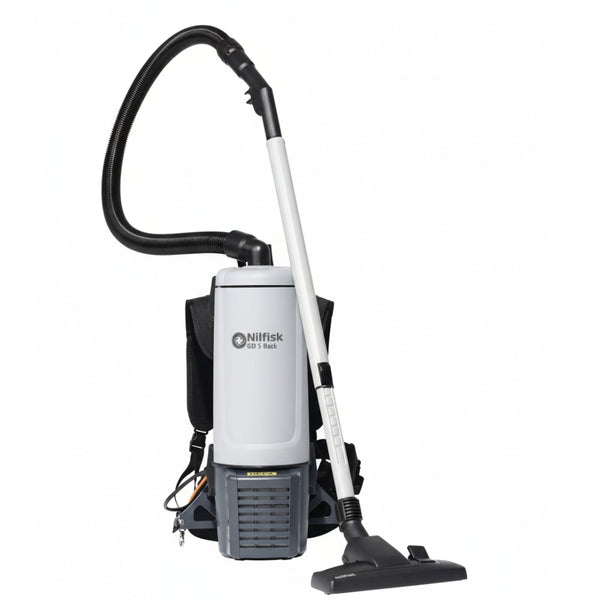
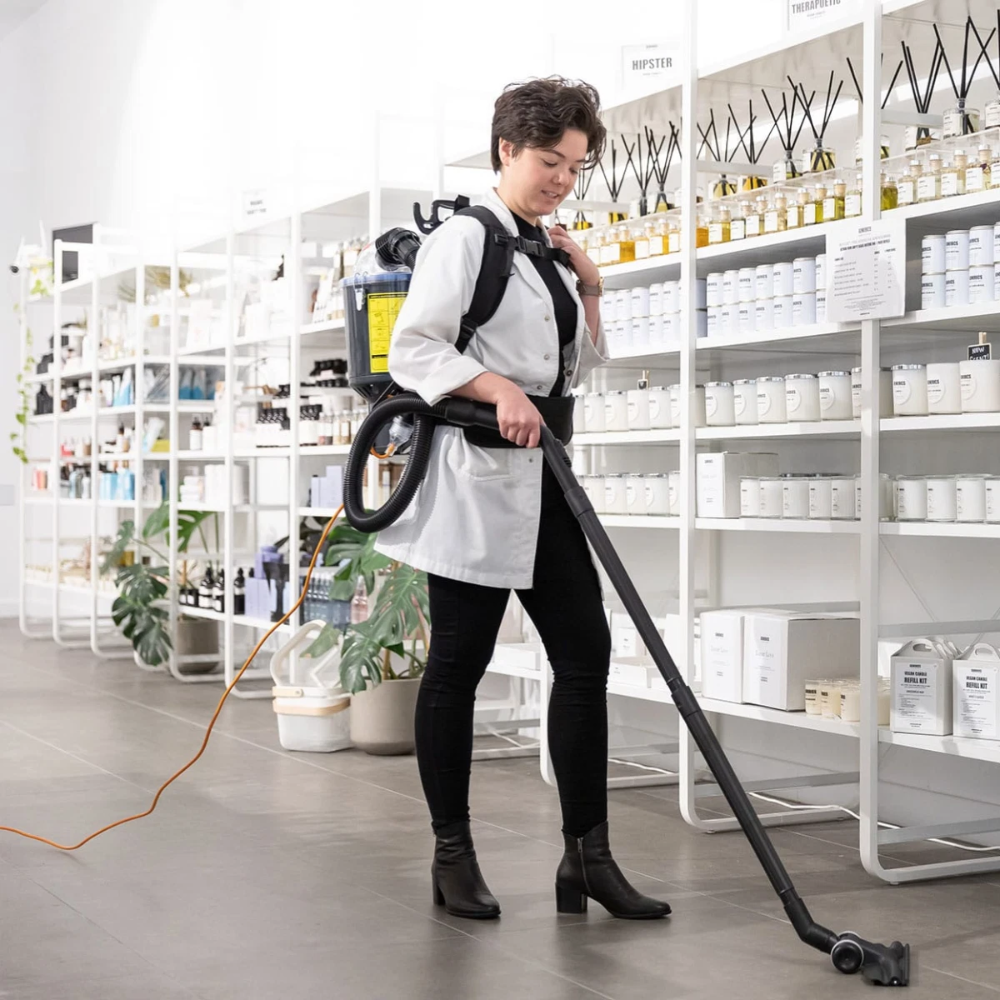
Backpacks carry the dust load on the operator's back, so containment is closer to the face. Freshway lists the Pacvac Thrift 650 with a 1300 W flow-through motor, 55 litres per second of airflow and a weight of 4.8 kg. On a machine like this, a well-fitted disposable bag protects both the motor and the operator.

Canister considerations
Canisters hold more dust and sit on the floor, so the operator is further from the dust. The trade-off is that a big chamber filled without a liner makes a bigger cloud when emptied. Freshway lists the Pacvac Glide 300 canister with a 15-litre dust capacity and 3-stage filtration; capacity that large makes a disposable liner even more useful at emptying time.
Cost per empty, worked through
Compare systems by cost per shift rather than cost per pack. List what each shift uses: bags (if any), the share of a filter replacement, and the minutes spent emptying and washing filters. A disposable bag adds a consumable, but it shortens emptying time and stretches filter life; a reusable cloth bag removes the consumable but adds cleaning time and filter wear. Write both columns for one month on two identical machines and the answer for your site usually becomes obvious. Check current pack pricing on each product page rather than relying on old quotes.
Hygiene and hazardous dust
Healthcare, aged care, schools and food sites have tighter hygiene expectations. The Victorian Department of Health's cleaning and waste disposal procedures describe how cleaning equipment should be maintained to avoid spreading contamination.
Some dust is hazardous. WorkSafe Queensland's guide to industrial vacuum cleaners and hazardous dust explains that standard commercial vacuums are not designed for hazardous dusts; those jobs need a vacuum of the correct class, not just a better bag.
Operator compliance
Even a clear policy fails if staff remove the bag "to get more suction". Make the rule visible:
- Label each machine with the bag type it uses.
- Store bags beside the machines.
- Check a random machine each week.
- Record bag and filter use against each machine.
Environmental claims: be careful
Some buyers prefer bagless to cut waste. That is a reasonable goal, but compare the whole picture: filter replacement, water used for washing filters, and motor wear. If you promote a cleaning program as environmentally better, the claim must be accurate; business.gov.au explains Australian Consumer Law obligations on misleading claims. Dispose of full bags under your site's waste plan; the NSW EPA's waste pages set out the general framework.
Decision table
| Site type | Recommended system | Reason |
|---|---|---|
| Offices, low dust | Disposable bag in cloth bag | Clean emptying, stable suction |
| Schools and childcare | Disposable bag | Hygiene and fine dust control |
| Healthcare and aged care | Disposable bag plus suitable filtration | Infection control procedures |
| Construction clean-up | Class-rated vacuum, not a standard commercial unit | Hazardous dust rules |
| Low-budget, low-dust warehouse | Reusable cloth bag with strict filter routine | Acceptable only with training |
Frequently asked questions
Do disposable bags reduce suction?
A correctly fitted synthetic bag usually keeps suction steadier than running without one, because it stops fine dust reaching the filters.
Can I run a backpack vacuum without any bag?
Only if the machine is designed for it. Many commercial backpacks rely on a bag or cloth bag to protect the motor; check the manual.
Are paper or synthetic bags better?
Synthetic bags generally resist tearing and hold airflow better as they fill. Paper bags are suitable where the listing specifies them.
Is bagless better for the environment?
Not automatically. Filter replacements, washing water and motor wear also count. Compare the whole running cost and waste stream.
Next steps with Freshway
Check which bag each machine uses, stock a month of spares and set a weekly filter check. Compare machines in backpack vacuums and check each product page for current pricing and full specifications.